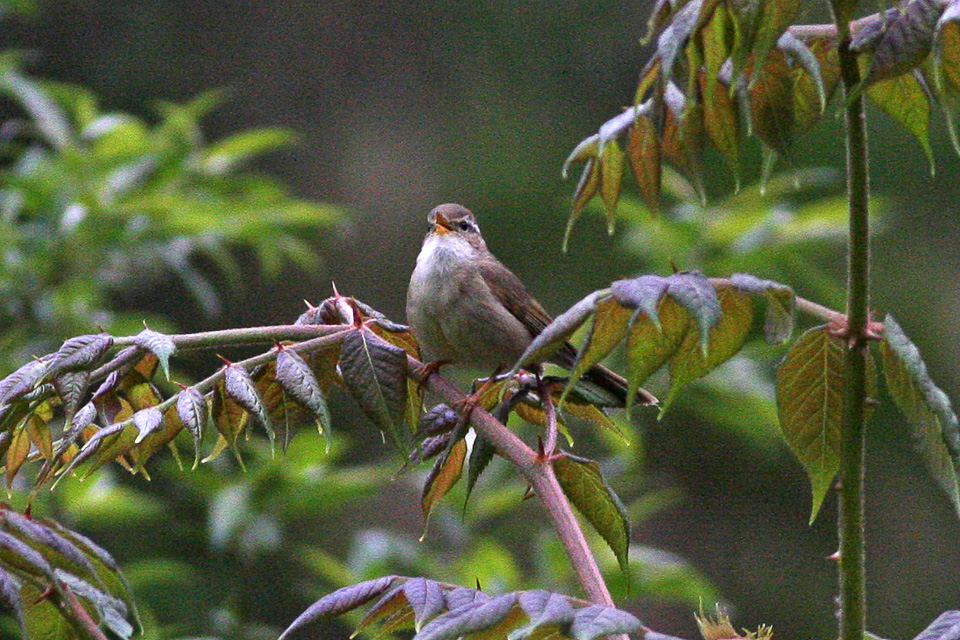
Canary Islands Chiffchaff
Phylloscopus canariensis
Order: Passeriformes / Family: Phylloscopidae

Wikimedia Commons
About the Canary Islands Chiffchaff
The Canary Islands Chiffchaff, scientifically known as Phylloscopus canariensis, is a passerine bird endemic to the Canary Islands. This small, active warbler thrives across the archipelago, particularly on the islands of Tenerife, La Gomera, La Palma, and El Hierro. Unlike its migratory relatives, the Canary Islands Chiffchaff is a resident species, maintaining territories throughout the year. Its presence is vital in maintaining the ecological balance of the islands, as it plays a significant role in controlling insect populations. The species exhibits remarkable adaptability to various habitats, from dense laurel forests in the north to dry scrublands in the south. Seasonal behaviors include increased vocal activity during the breeding season, when males sing persistently to attract mates and defend territories. During the autumn and winter months, these chiffchaffs often join mixed-species flocks, which aids in foraging efficiency and predator avoidance. Their adaptability extends to urban areas, where they are often observed in parks and gardens, demonstrating resilience in the face of habitat modifications.
The Canary Islands Chiffchaff belongs to the family Phylloscopidae, within the order Passeriformes. These birds typically live average 5-7 years, with a maximum recorded of 10 years..
How to Identify a Canary Islands Chiffchaff
The Canary Islands Chiffchaff is a small bird, measuring approximately 10-12 cm in length. Adults display a muted olive-brown upper plumage with paler underparts, making them well-camouflaged in their wooded habitats. The bird features a distinct pale eye stripe above a dark eye, which is one of its key field marks. Juveniles resemble adults but generally show a fresher, more vibrant plumage with a distinct buff tinge. Both sexes look alike, although males may appear slightly brighter during the breeding season. Its agility and upright posture on perches are characteristic, helping to differentiate it from similar species. While it shares its range with other Phylloscopus species, its distinctive song and resident status make it relatively easy to identify once its vocalizations are known.
Having trouble telling birds apart? Upload a photo to our bird identification tool for an instant species match.
Canary Islands Chiffchaff Habitat and Range
Preferred Habitat
The Canary Islands Chiffchaff occupies a diverse range of habitats across its native islands. It thrives in laurel and pine forests found at elevations between 200 and 2,000 meters. In lower elevations, these chiffchaffs are commonly seen in macchia and farmland landscapes, demonstrating their adaptability. Seasonally, they may shift slightly within habitats to access food resources, but they remain on their islands year-round. Urban environments also support healthy populations, as the species can often be heard singing from city parks and suburban gardens, making it a familiar presence to residents.
Geographic Range
The Canary Islands Chiffchaff is endemic to the Canary Islands, with notable populations on Tenerife, La Gomera, La Palma, and El Hierro. The absence of a migration period distinguishes this species from its relatives, as it does not leave its breeding grounds. It inhabits a varied range of altitudes on these islands, from coastal areas to mountainous regions. Population densities are highest in suitable forested habitats, with significant numbers also present in cultivated and urban settings. This limited geographic range underscores the importance of local conservation efforts to ensure the species' continued survival.
Want to know which birds visit your area? Browse our backyard birds by location guides for region-specific species lists.
What Does the Canary Islands Chiffchaff Eat?
The primary diet of the Canary Islands Chiffchaff consists of a variety of insects and other small invertebrates. These birds employ a methodical foraging technique, gleaning insects from leaves and branches in a manner typical of Phylloscopus species. They are adept at capturing prey in flight, particularly during the warmer months when insect activity peaks. In cooler seasons, they may supplement their diet with small fruits and seeds, reflecting their opportunistic feeding habits. The chiffchaff's feeding schedule is largely dictated by daylight, with peak activity occurring in the early morning and late afternoon.
Canary Islands Chiffchaff Behavior and Social Structure
The social structure of the Canary Islands Chiffchaff revolves around territorial pairs, especially during the breeding season. Males establish and defend territories through their persistent singing. These birds display a remarkable level of territorial aggression, often engaging in aerial pursuits to deter intruders. Courtship involves the male performing a series of display flights accompanied by song to attract a mate. Though primarily solitary or found in pairs, outside the breeding season, these chiffchaffs may join mixed-species flocks. This social behavior aids in foraging and increases vigilance against predators. Their daily activities include active foraging interspersed with periods of rest and preening.
Canary Islands Chiffchaff Nesting and Reproduction
The Canary Islands Chiffchaff constructs its nest in a variety of low shrubs and bushes, often well-concealed among dense foliage. Nests are typically cup-shaped and built using a combination of fine grasses, moss, and feathers, providing a secure environment for their young. The female lays a clutch of 3-5 eggs, which she incubates for about 13-15 days. Both parents participate in feeding the chicks, which fledge approximately 15-17 days after hatching. These birds usually raise one to two broods per year, depending on environmental conditions.
Canary Islands Chiffchaff Sounds and Vocalizations
The song of the Canary Islands Chiffchaff is a distinctive series of repetitive notes, often described as a rhythmic 'chiff-chaff,' from which its name is derived. These notes are delivered in a descending pattern with a clear, melodious quality. Calls include a sharp 'huit' or 'tchiff,' typically used as contact calls between individuals. Alarm calls are more strident, signaling potential threats to nearby birds. During the breeding season, males are particularly vocal at dawn, contributing to the vibrant soundscape of the Canary Islands' forests.
Interesting Facts About the Canary Islands Chiffchaff
- 1The Canary Islands Chiffchaff is one of the few non-migratory Phylloscopus species, residing year-round on the Canary Islands.
- 2This bird's song is so distinctively rhythmic that it's often used as a key identifier for birders visiting the Canary Islands.
- 3Despite its small size, the Canary Islands Chiffchaff can be found at elevations up to 2000 meters in the archipelago.
- 4The species plays a crucial role in pest control, feeding on a wide range of insects that could otherwise impact local agriculture.
- 5Its adaptability to urban areas has allowed the Canary Islands Chiffchaff to thrive despite significant human development.
Canary Islands Chiffchaff Conservation Status
Currently classified as Least Concern by the IUCN, the Canary Islands Chiffchaff benefits from stable population numbers. However, habitat loss due to urban expansion and agricultural development poses ongoing threats. Conservation efforts focus on protecting key habitats and maintaining the ecological integrity of the Canary Islands. Historical efforts to preserve native forests have contributed positively to the species' stability, though vigilance is required to manage potential threats from introduced species and climate change.