Chabert Vanga
Leptopterus chabert
Order: Passeriformes / Family: Vangidae

Wikimedia Commons
About the Chabert Vanga
The Chabert Vanga, scientifically known as Leptopterus chabert, is a remarkable avian species endemic to Madagascar. This bird is a member of the Vangidae family, which is renowned for its diverse and unique forms across the island. The Chabert Vanga stands out due to its striking black and white plumage, a feature that makes it easily identifiable among the island's avifauna. The bird's ecological significance is noteworthy as it plays a crucial role in insect control within its habitat. Its primary diet consists of a variety of insects, and its foraging habits help maintain the ecological balance by keeping insect populations in check. Found predominantly in the dry deciduous forests and woodlands of Madagascar, the Chabert Vanga adapts remarkably well to the seasonal changes typical of these regions. During the rainy season, the bird takes advantage of the abundance of insects, which are its main food source. Its adaptability to different habitats is a testament to its resilience, though it is most commonly associated with mature forested areas. The bird's ecological role extends beyond insect control. As a secondary seed disperser, the Chabert Vanga aids in the regeneration of its wooded habitats. By consuming fruits occasionally along with its insect diet, it helps disperse seeds across its range, thereby contributing to forest renewal. The bird's presence in various parts of Madagascar underscores its adaptability and importance in maintaining the delicate ecosystems of the island. The Chabert Vanga has also intrigued researchers and ornithologists due to its unique evolutionary traits and behaviors. Its nesting habits, vocalizations, and social structures provide valuable insights into the evolutionary paths of Madagascar's avian species. As such, the Chabert Vanga serves as an important study subject for understanding the broader ecological dynamics of Madagascar's avifauna. Its presence is vital not only for the ecological balance but also for the cultural and scientific appreciation of Madagascar's rich biodiversity.
The Chabert Vanga belongs to the family Vangidae, within the order Passeriformes. These birds typically live average 5-6 years, with a max recorded of 8 years..
How to Identify a Chabert Vanga
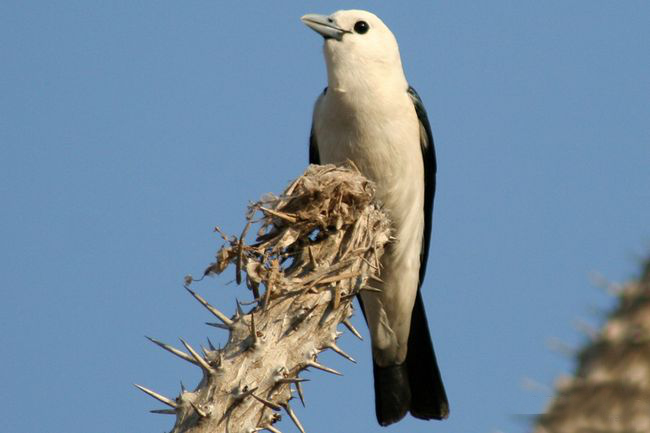
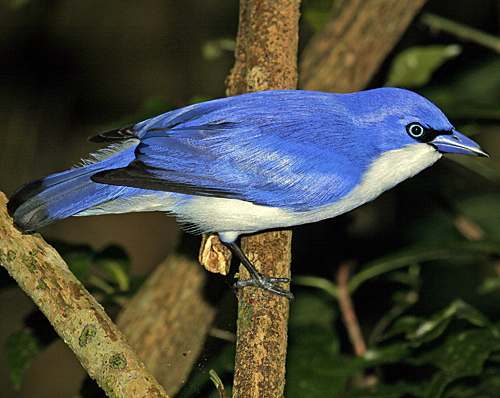
The Chabert Vanga is a medium-sized bird measuring about 18 cm in length. Its plumage is striking, with bold black and white coloration. The head, back, and wings are predominantly black, while the underparts are white, providing a stark contrast that aids in identification. The bird's beak is strong and slightly curved, adapted for its insectivorous diet. Both male and female Chabert Vangas exhibit similar plumage, which can make gender identification challenging in the field. Juvenile birds are slightly duller, with brownish tones on the upper parts instead of the adult's crisp black. This coloration helps juveniles blend into their surroundings, providing some camouflage against predators. One of the most distinctive features of the Chabert Vanga is its flight silhouette. The bird displays a rapid, direct flight pattern with quick wingbeats, often giving it a characteristic bounding appearance. When perched, the bird maintains an upright posture, often seen in pairs or small family groups. While it is distinctive, the Chabert Vanga can sometimes be confused with other black and white birds of Madagascar. However, its combination of size, plumage, and habitat preference generally aids accurate identification.
Having trouble telling birds apart? Upload a photo to our bird identification tool for an instant species match.
Chabert Vanga Habitat and Range
Preferred Habitat
The Chabert Vanga primarily inhabits the dry deciduous forests and woodlands of Madagascar. These areas, such as the Ankarafantsika National Park, provide the ideal environment for the bird's foraging and nesting needs. Within these habitats, the bird occupies a range of elevations, from sea level to about 800 meters. Seasonal habitat shifts occur as the bird moves to exploit different food resources, particularly during the rainy season when insect populations flourish. The Chabert Vanga is adaptable and can also be found in secondary forests and degraded woodlands, though it is less common in these areas compared to primary forests. While not typically associated with urban environments, the bird occasionally ventures into rural areas where suitable habitat fragments persist, demonstrating its adaptability in seeking food and nesting sites.
Geographic Range
The Chabert Vanga is endemic to Madagascar, with its range extending across much of the island. It occupies a variety of forested habitats, from the northern to the southern regions, though it is more prevalent in the west. The bird's breeding range is largely restricted to these forested regions, and it does not undertake long-distance migrations. However, local movements occur, particularly in search of food during different seasons. In areas like the western dry forests, such as those found in Menabe and Mahajanga, the Chabert Vanga is a common sight. These regions serve as population density hotspots where the bird thrives due to abundant prey and suitable breeding sites. Although it remains a resident species throughout the year, some seasonal shifts in range occur as the bird follows food availability, especially during the breeding season when insect populations peak.
Want to know which birds visit your area? Browse our backyard birds by location guides for region-specific species lists.
What Does the Chabert Vanga Eat?
The diet of the Chabert Vanga primarily consists of insects, which it actively hunts in the forest canopy and mid-levels. Its strong, slightly curved beak aids in capturing a variety of insects, including beetles, caterpillars, and spiders. During the rainy season, when insect populations are at their peak, the bird's diet is almost exclusively insectivorous. However, in the dry season, the Chabert Vanga supplements its diet with some fruits and seeds, showcasing its opportunistic feeding behavior. The bird employs a variety of foraging techniques, including gleaning insects from leaves and bark and occasionally sallying to catch flying insects. Prey size varies, but the bird typically targets small to medium-sized insects, which it can handle efficiently. The Chabert Vanga is most active during the early morning and late afternoon when it engages in intensive foraging sessions. This schedule allows it to take advantage of the cooler temperatures and the activity patterns of its prey.
Chabert Vanga Behavior and Social Structure
Chabert Vangas exhibit a complex social structure, often found in monogamous pairs or small family groups. These groups maintain territories within their forest habitats, defending them vigorously against intruders. Territorial disputes involve vocal displays and physical posturing to deter rivals. During the breeding season, the Chabert Vanga engages in elaborate courtship displays. These displays include mutual preening, offering food, and synchronized movements between mates. Such behaviors strengthen pair bonds and ensure successful reproduction. The bird exhibits a strong diurnal activity pattern, with peak activity occurring during the cooler parts of the day. This timing aligns with the activity patterns of its prey, maximizing foraging efficiency. In response to predators, the Chabert Vanga employs alarm calls to alert group members, and it may engage in mobbing behavior to drive off threats. Though generally solitary or found in pairs, the Chabert Vanga sometimes joins mixed-species foraging flocks, particularly outside the breeding season. This behavior likely provides safety in numbers and increases foraging success.
Chabert Vanga Nesting and Reproduction
The Chabert Vanga constructs cup-shaped nests, typically using twigs, leaves, and other plant materials. These nests are often situated in the forks of trees, several meters above the ground, providing safety from ground-based predators. The preferred location is within dense foliage, offering concealment from aerial threats. Clutch size for the Chabert Vanga generally ranges from two to three eggs. The incubation period lasts approximately 14 days, with both parents sharing incubation duties. This cooperative breeding behavior ensures that the eggs receive constant warmth and protection. After hatching, the chicks remain in the nest for about 18 to 20 days before fledging. During this period, both parents actively feed and care for the chicks, demonstrating strong parental roles. The Chabert Vanga typically raises one brood per year, although in particularly favorable conditions, a second brood may occur.
Chabert Vanga Sounds and Vocalizations
The Chabert Vanga's primary song is a series of melodious whistles and trills, characterized by a rhythmic and musical quality. These vocalizations serve both to establish territory and to communicate between mates. The bird also produces a variety of call notes, including sharp 'tsek-tsek' sounds used in alarm situations. Alarm calls are more urgent and louder, designed to alert other birds in the vicinity of potential threats. During the dawn chorus, the Chabert Vanga is particularly vocal, contributing to the rich soundscape of the forest. Its song is reminiscent of other Vangidae species, yet distinct enough to be recognized by experienced birders.
Interesting Facts About the Chabert Vanga
- 1The Chabert Vanga's name pays homage to Chabert, a 19th-century French naturalist who explored Madagascar.
- 2Despite being insectivorous, the Chabert Vanga occasionally consumes small frogs and lizards, showcasing its dietary adaptability.
- 3In Madagascar's folklore, the Chabert Vanga is considered a symbol of perseverance due to its resilient nature.
- 4The Chabert Vanga contributes significantly to the control of insect populations, playing a crucial ecological role.
- 5Researchers have observed that Chabert Vangas engage in sunbathing behavior, possibly to maintain feather condition.
- 6The bird's call is often likened to the sound of a flute, contributing to its reputation as a melodious songbird.
- 7The Chabert Vanga can adapt to secondary growth forests, indicating its resilience to some habitat changes.
Chabert Vanga Conservation Status
The IUCN lists the Chabert Vanga as a species of Least Concern, indicating that its population is currently stable. However, ongoing habitat destruction poses a significant threat. Deforestation for agriculture and logging continues to reduce suitable habitats, potentially impacting future populations. Conservation efforts focus on preserving Madagascar's forest habitats, with several protected areas established to safeguard biodiversity. Historical data suggest that while the Chabert Vanga's population remains stable, localized declines may occur if habitat loss continues unchecked.