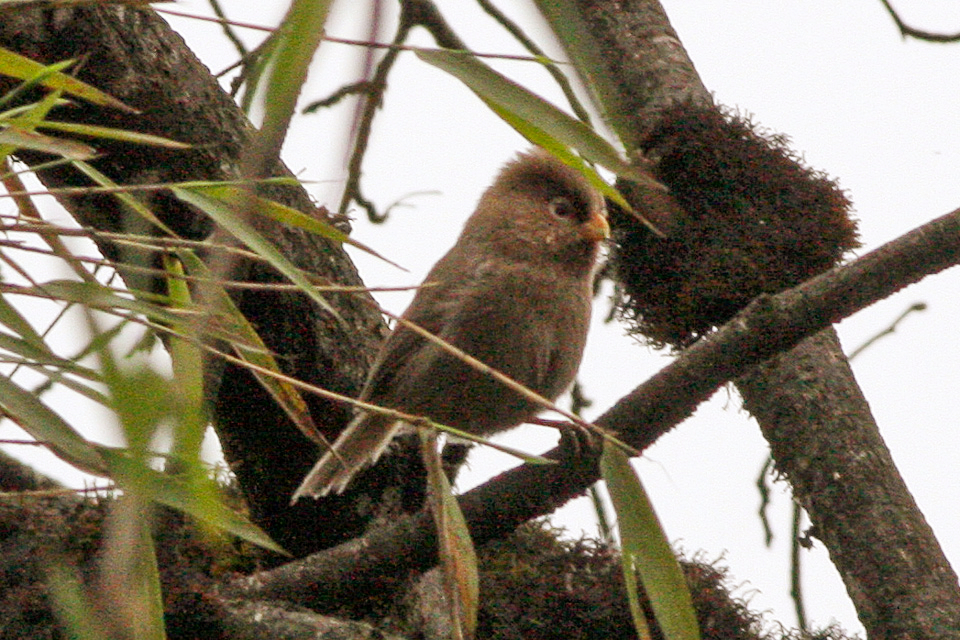
Chestnut-vented Warbler
Curruca subcoerulea
Order: Passeriformes / Family: Sylviidae

Wikimedia Commons
About the Chestnut-vented Warbler
The Chestnut-vented Warbler, known scientifically as Curruca subcoerulea, is a small passerine bird belonging to the Sylviidae family. This species is primarily found in southern Africa, with its range extending through countries like South Africa, Namibia, Botswana, and Zimbabwe. These warblers are typically associated with dry, open woodland and scrub habitats, where they play a significant ecological role as insectivores. By consuming a wide variety of insects, they help maintain the balance within their ecosystems, controlling insect populations that could otherwise become overabundant.
Significance to local biodiversity is profound, as the Chestnut-vented Warbler contributes to the health of the vegetation by reducing insect herbivory. During the breeding season, which generally spans from August to January, these birds become more conspicuous as they engage in courtship and nesting activities. They are known for their distinctive song, which resonates through the bush, marking their territory and attracting mates. Outside the breeding season, the warbler becomes less territorial and may join mixed-species flocks, a behavior that aids in foraging efficiency and predator detection.
The ecological role of the Chestnut-vented Warbler extends beyond mere insect control. Their foraging behaviors, which often involve gleaning insects from the foliage, inadvertently aid in pollination and seed dispersal. This activity strengthens the vegetation structure and diversity, supporting a wide range of wildlife. Additionally, these warblers are part of a complex food web, serving as prey for larger avian predators. Their presence in a habitat is often an indicator of healthy, functioning ecosystems, underscoring their importance in biodiversity conservation efforts.
The Chestnut-vented Warbler belongs to the family Sylviidae, within the order Passeriformes. These birds typically live average 4-6 years, max recorded 9 years.
How to Identify a Chestnut-vented Warbler
The Chestnut-vented Warbler can be identified by its distinctive chestnut-colored undertail coverts, which contrast with its otherwise grayish-brown plumage. The upperparts are a soft gray, while the underparts are lighter, often with a faint buff wash on the flanks. Adult males and females look similar, though males may exhibit slightly richer coloration during the breeding season. Juveniles resemble adults but tend to have duller plumage and less distinct chestnut coloring.
In terms of field marks, look for the bird's slender build, long tail, and relatively small size, measuring about 13 cm in length. The tail is often held cocked, a posture that can aid in identification. The warbler's bill is thin and pointed, adapted for insectivory, and its eyes are dark, adding to the overall subtlety of its appearance.
Confusion may arise with similar species like the Layard's Warbler, but the latter lacks the chestnut vent feature. In flight, the Chestnut-vented Warbler appears swift and agile, with rapid wingbeats and a characteristic undulating flight pattern. When perched, it is often seen actively flicking its tail, a behavior that can help observers confirm its identification.
Having trouble telling birds apart? Upload a photo to our bird identification tool for an instant species match.
Chestnut-vented Warbler Habitat and Range
Preferred Habitat
The Chestnut-vented Warbler inhabits dry, open woodlands and scrub areas, particularly favoring regions with thornveld and acacia. It is commonly found at elevations ranging from sea level to 1800 meters, adapting well to the varied topography of southern Africa. This warbler shows a preference for areas with dense undergrowth, which provides ample foraging opportunities and nesting sites.
Seasonally, the warbler may shift habitats slightly, moving to areas that offer more abundant food resources during the non-breeding season. While primarily a resident species, it can exhibit some local movement in response to environmental conditions, such as drought or food scarcity. Although they are typically found in rural settings, Chestnut-vented Warblers can also adapt to suburban gardens and parks, especially where native vegetation is preserved.
Geographic Range
The Chestnut-vented Warbler is endemic to southern Africa, with its breeding range extending across South Africa, Namibia, Botswana, and Zimbabwe. It is a resident species throughout much of its range, although some local movements occur based on seasonal food availability. Within these countries, the warbler is most frequently encountered in regions characterized by dry woodlands and scrub.
Populations are densest in areas with a combination of acacia and thornveld habitats, such as the Kalahari Desert's peripheries and parts of the Highveld. These warblers do not engage in long-distance migration but may undertake altitudinal migrations, moving to lower elevations during colder months. In terms of population density, the warbler is considered relatively common in suitable habitats, with few significant barriers to its distribution.
Want to know which birds visit your area? Browse our backyard birds by location guides for region-specific species lists.
What Does the Chestnut-vented Warbler Eat?
The diet of the Chestnut-vented Warbler mainly consists of insects and other small invertebrates, making it a crucial player in controlling pest populations. It forages by gleaning from leaves and branches, using its slender bill to extract insects from foliage and bark. Common prey items include caterpillars, beetles, and spiders, though the bird is opportunistic and will consume a variety of available prey.
Seasonal changes in diet are influenced by insect abundance, with the warbler consuming more larvae during the spring and summer months when these are more plentiful. During the dry season, it may also consume small quantities of nectar and fruit, supplementing its diet when insects are scarce. The warbler's foraging behavior is typically solitary or in pairs during the breeding season, though it may join mixed-species flocks at other times to increase foraging success.
Chestnut-vented Warbler Behavior and Social Structure
Chestnut-vented Warblers exhibit a range of interesting behaviors that include territoriality, social interaction, and courtship displays. During the breeding season, males establish and aggressively defend territories, communicating their presence with a loud and melodious song. These warblers are generally monogamous, forming pairs that remain together for the breeding season.
Courtship behaviors include singing displays and mutual preening, which help strengthen the pair bond. Males may also perform aerial displays, flitting about to catch the attention of females. Outside of breeding, the warbler becomes less territorial and may be seen foraging in small groups or mixed-species flocks, which provide increased vigilance against predators.
Daily activity patterns are predominantly diurnal, with peak foraging occurring in the early morning and late afternoon. In response to predators, these warblers are vigilant, often relying on their cryptic plumage and quick, agile movements to evade capture.
Chestnut-vented Warbler Nesting and Reproduction
Chestnut-vented Warblers construct small, cup-shaped nests made from grass, twigs, and spider silk, often placed in dense shrubs or low trees. The choice of nesting site is crucial for protection from predators and adverse weather. Nests are typically built at heights ranging from 1 to 3 meters above the ground, well-concealed within the foliage.
The breeding season extends from August to January, with females laying a clutch of 2 to 3 eggs. Incubation lasts about 11 to 13 days, and both parents share in feeding the young. The fledglings leave the nest approximately 14 days after hatching, though they may remain dependent on the parents for some time afterward. These warblers typically raise one to two broods per year, depending on environmental conditions and food availability.
Chestnut-vented Warbler Sounds and Vocalizations
The primary song of the Chestnut-vented Warbler is a series of melodious whistles and trills, often described as rhythmic and clear. This song serves both territorial and mate-attraction purposes. Call notes are generally soft and contact calls, whereas alarm calls are sharp and distinct, often emitted in response to threats.
During the dawn chorus, the Chestnut-vented Warbler is particularly vocal, contributing to the morning symphony of sounds in its habitat. Compared to other warblers, its song is considered more musical and less choppy, making it a pleasant addition to the soundscape of southern African woodlands.
Interesting Facts About the Chestnut-vented Warbler
- 1The Chestnut-vented Warbler's song can be heard over 100 meters away in open habitats, making it an effective territorial marker.
- 2Despite its small size, the Chestnut-vented Warbler can consume up to 500 insects per day during peak breeding season.
- 3These warblers are known to join mixed-species flocks, which can increase foraging efficiency by up to 20%.
- 4The warbler's nesting period is synchronized with the rainy season, ensuring abundant food supply for chicks.
- 5Chestnut-vented Warblers can live up to 5 years in the wild, with survival rates varying based on environmental factors.
- 6Their cryptic plumage provides excellent camouflage, reducing predation risk in the dense undergrowth.
- 7Both male and female Chestnut-vented Warblers participate in nest-building, a behavior that strengthens pair bonds.
Chestnut-vented Warbler Conservation Status
The Chestnut-vented Warbler is currently listed as Least Concern by the IUCN, with stable population trends across its range. Primary threats include habitat loss due to agricultural expansion and urbanization, though these impacts are mitigated by the warbler's adaptability to disturbed habitats. Conservation efforts focus on preserving native vegetation and managing land use to maintain suitable habitat conditions. Historically, the population has remained stable, supported by the bird's broad distribution and adaptability. Monitoring continues to ensure that potential threats do not escalate to levels that could impact population stability.