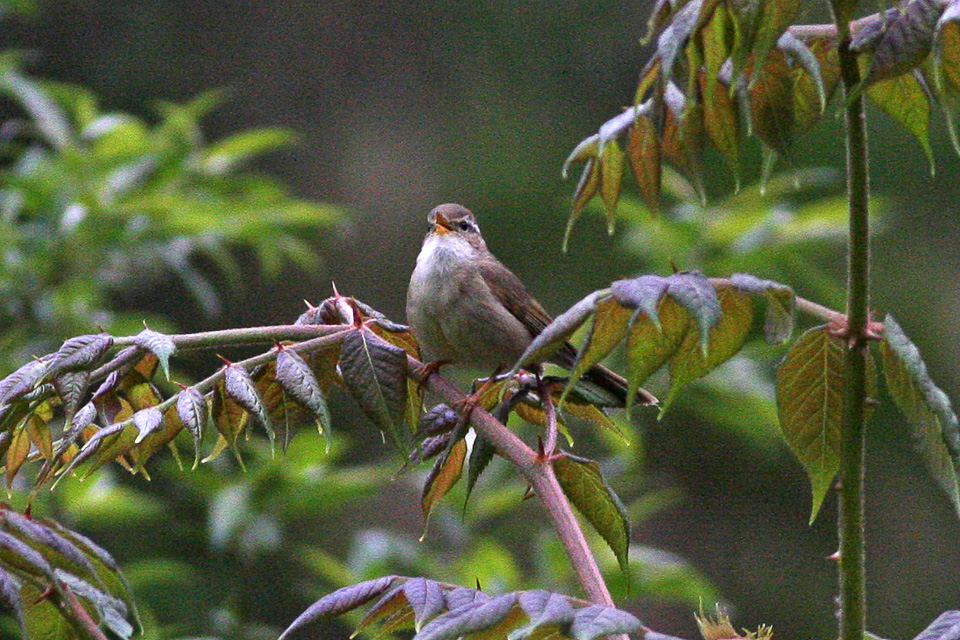
Chinese Leaf Warbler
Phylloscopus yunnanensis
Order: Passeriformes / Family: Phylloscopidae

Wikimedia Commons
About the Chinese Leaf Warbler
The Chinese Leaf Warbler (Phylloscopus yunnanensis) is a small, vibrant songbird belonging to the family Phylloscopidae. Native to the montane forests of Asia, this warbler is most commonly found across the temperate and subtropical regions of China and surrounding countries. The species plays a crucial role in the ecosystem by controlling insect populations and contributing to the complex food web of its native habitats. With a preference for deciduous and mixed forests, the Chinese Leaf Warbler exhibits a strong affinity for elevations ranging from 800 to 3,500 meters. This warbler is also noted for its adaptability, occasionally inhabiting secondary growth and scrubland areas when primary forests are unavailable.
The Chinese Leaf Warbler is especially significant as an indicator species for environmental changes, due to its sensitivity to habitat alterations. Across its range, the bird depends on specific forest structures that offer abundant insect prey and suitable nesting sites. This dependence on healthy montane ecosystems highlights the importance of conservation efforts aimed at preserving these forests. Furthermore, as climate change impacts temperature and precipitation patterns in Asia, the warbler's distribution and behavior may serve as early signals of broader ecological shifts.
During the breeding season, which typically spans from April to July, the Chinese Leaf Warbler becomes highly vocal and active. Males sing persistently to establish territories and attract mates. This seasonal behavior not only marks the onset of reproduction but also plays a role in the maintenance of local biodiversity by ensuring successful breeding cycles. The ecological role of the Chinese Leaf Warbler extends beyond insect predation; its presence contributes to seed dispersal and forest regeneration, as it occasionally consumes small fruits and inadvertently aids in plant propagation.
The Chinese Leaf Warbler belongs to the family Phylloscopidae, within the order Passeriformes. These birds typically live typically 2-4 years, with some individuals reaching up to 7 years.
How to Identify a Chinese Leaf Warbler
The Chinese Leaf Warbler can be identified by its small size, measuring approximately 9 to 11 centimeters in length. Its plumage is predominantly olive-green on the upperparts, with a subtle yellowish wash on the underparts. A prominent feature is the pale supercilium, or eyebrow stripe, which contrasts with the darker green crown and enhances the bird's alert expression. The wings and tail exhibit faint barring, adding to the bird's intricate patterning. Unlike many warblers, the Chinese Leaf Warbler shows minimal sexual dimorphism, with males and females appearing strikingly similar.
Juvenile Chinese Leaf Warblers resemble adults but may show slightly duller plumage, lacking the crispness of the yellow tones seen in mature birds. In terms of behavior, this warbler exhibits a distinctive, quick, and darting flight pattern, often accompanied by short flits from branch to branch as it forages for insects. When perched, it maintains a nearly horizontal posture, which is typical of many Phylloscopus species.
The Chinese Leaf Warbler can be confused with similar species such as the Yellow-browed Warbler (Phylloscopus inornatus) and the Hume's Leaf Warbler (Phylloscopus humei). However, it can be distinguished by its unique vocalizations and the fine differences in plumage details, such as the width and coloration of the supercilium and wing bars.
Having trouble telling birds apart? Upload a photo to our bird identification tool for an instant species match.
Chinese Leaf Warbler Habitat and Range
Preferred Habitat
The Chinese Leaf Warbler is predominantly found in montane forests, favoring both deciduous and mixed coniferous-deciduous forests. Typical habitats include areas with dense undergrowth and a rich canopy, which provide ample insect prey and nesting sites. These birds prefer elevations ranging from 800 to 3,500 meters, often inhabiting the forested slopes of the Himalayas and the highlands of Yunnan, Sichuan, and Tibet.
During the breeding season, the warbler may be observed in primary forests, where it benefits from the complex structure and biodiversity. In non-breeding seasons, it exhibits some flexibility by occupying secondary growth, scrublands, and even forest edges. Although primarily a forest species, the Chinese Leaf Warbler occasionally appears in more open landscapes during migration, but it remains less common in urban environments compared to some other warblers.
Geographic Range
The Chinese Leaf Warbler's range extends across several Asian countries, with a strong presence in central and southwestern China. Breeding populations are concentrated in the montane regions of Yunnan, Sichuan, Tibet, and parts of northeastern India. During the winter months, the species migrates to lower altitudes and more southern locations, often moving into Vietnam, Laos, and Thailand.
The warbler follows specific migration corridors, taking advantage of the rich resources available in the subtropical and tropical forests of Southeast Asia. These migratory paths ensure the species' survival during harsh winter conditions at higher elevations. Population density hotspots include the Hengduan Mountains and the Gaoligongshan range, where dense forest cover supports abundant breeding and foraging opportunities.
While the Chinese Leaf Warbler is generally considered widespread within its range, its presence can be patchy, reflecting the availability of suitable habitats and the impact of environmental changes. Conservation efforts focus on preserving these critical habitats to maintain stable population levels.
Want to know which birds visit your area? Browse our backyard birds by location guides for region-specific species lists.
What Does the Chinese Leaf Warbler Eat?
The diet of the Chinese Leaf Warbler is primarily insectivorous, with a strong preference for small arthropods such as caterpillars, aphids, and beetles. During the breeding season, the warbler intensifies its foraging efforts to meet the increased energy demands of feeding nestlings. The bird employs a gleaning technique, carefully picking insects from leaves and branches with its slender bill.
In addition to insects, the Chinese Leaf Warbler occasionally supplements its diet with small fruits and berries, particularly during the late summer and autumn months. This dietary flexibility allows the bird to adapt to seasonal variations in food availability. The size of prey typically ranges from 1 to 5 millimeters, ensuring easy handling and consumption.
The warbler's feeding schedule aligns with peak insect activity, with most foraging occurring during the early morning and late afternoon. This pattern not only optimizes energy intake but also reduces competition with other insectivorous species that may forage at different times.
Chinese Leaf Warbler Behavior and Social Structure
The Chinese Leaf Warbler exhibits a range of social behaviors, often seen foraging in small groups during migration and the non-breeding season. During the breeding season, however, these warblers are highly territorial. Males establish and defend territories through persistent singing and occasional displays of aggression towards intruders.
Courtship displays involve fluttering flights and vocalizations, with males often presenting food items to potential mates. Once paired, the warblers become more discreet, focusing on nest building and rearing young. Flocking behavior becomes more pronounced post-breeding, as family groups join larger mixed-species flocks for safety and foraging efficiency.
In response to predators, the Chinese Leaf Warbler employs a combination of alarm calls and evasive flight maneuvers. The bird's daily activity pattern includes periods of intense foraging interspersed with rest and preening. Unlike some other warblers, it remains active throughout the day, taking advantage of the insect-rich environment.
Chinese Leaf Warbler Nesting and Reproduction
The Chinese Leaf Warbler constructs a well-camouflaged, dome-shaped nest made from grasses, moss, and other plant materials. Nests are typically located close to the ground, nestled in dense undergrowth or low bushes. This strategic placement provides concealment from predators and protection from the elements.
A typical clutch consists of 4 to 6 eggs, which are incubated primarily by the female for about 12 to 14 days. During this period, the male plays a supportive role, providing food and protection. Once hatched, the altricial chicks remain in the nest for approximately 10 to 12 days, receiving constant care and feeding from both parents.
The Chinese Leaf Warbler usually raises one brood per year, although in optimal conditions, a second brood is possible. Parental roles are shared, with both male and female contributing to feeding and grooming the young until they fledge and become independent.
Chinese Leaf Warbler Sounds and Vocalizations
The Chinese Leaf Warbler is renowned for its high-pitched song, consisting of a rapid series of thin, melodic notes. The primary song features a rhythmic pattern that rises and falls in pitch, creating a distinctive auditory signature that echoes through the forests during the breeding season.
Call notes include sharp, repetitive 'chip' sounds used for communication within flocks and between mates. Alarm calls are more abrupt and harsh, serving as warnings to nearby warblers about potential threats. The warbler participates in the dawn chorus, where its song adds to the symphony of avian sounds marking the start of a new day.
Comparatively, the Chinese Leaf Warbler's song is less complex than that of some other warblers, but its clarity and persistence make it an unmistakable presence in its native habitats.
Interesting Facts About the Chinese Leaf Warbler
- 1The Chinese Leaf Warbler was first described scientifically in 1996, making it a relatively recent addition to ornithological records.
- 2Despite its small size, the Chinese Leaf Warbler can travel over 1,000 kilometers during migration, showcasing remarkable endurance.
- 3The warbler's song is so distinctive that it can be heard at distances up to 100 meters, a valuable trait for territory establishment.
- 4Chinese Leaf Warblers are known to engage in mixed-species flocks with other Phylloscopus species, enhancing foraging success.
- 5The species' intricate nest construction involves over 1,000 individual pieces of plant material, demonstrating meticulous craftsmanship.
- 6In some areas, the Chinese Leaf Warbler coexists with the Giant Panda, sharing the lush bamboo forests of Sichuan.
- 7The warbler's diet shifts seasonally, with up to 20% of its food intake consisting of fruits during late summer and autumn.
Chinese Leaf Warbler Conservation Status
The Chinese Leaf Warbler is currently listed as a species of Least Concern by the IUCN, with population trends considered stable across much of its range. However, habitat loss due to deforestation and land conversion remains a primary threat, particularly in regions where montane forests are being cleared for agriculture and development. Conservation efforts focus on protecting critical habitats and promoting sustainable land use practices. Local and international organizations work to establish protected areas that safeguard the warbler's breeding and foraging grounds. Historical population data indicate some fluctuations, but overall, the species has maintained stable numbers over recent decades. Continued monitoring and research are essential to ensure that the Chinese Leaf Warbler does not become threatened, as its presence reflects the health of the ecosystems it inhabits.