
Cinereous Mourner
Laniocera hypopyrra
Order: Passeriformes / Family: Cotingidae

Wikimedia Commons
About the Cinereous Mourner
The Cinereous Mourner, known scientifically as Laniocera hypopyrra, is a fascinating member of the Cotingidae family. This bird inhabits the tropical forests of South America, with populations spread across regions such as the Amazon Basin, including countries like Brazil, Peru, and Colombia. The Cinereous Mourner plays a vital role in its ecosystem, primarily as an insectivore. It helps control insect populations, which benefits the forest by maintaining a balance in the food web. These birds are often found in dense, humid forests where their subdued coloration provides excellent camouflage amidst the foliage. Their presence is significant as they also contribute to seed dispersal, aiding in forest regeneration. During the breeding season, which typically occurs in the wet months of the forest, the Cinereous Mourner exhibits intriguing behaviors that highlight its ecological role. The bird's ability to adapt to its environment is noteworthy, especially considering the pressures of habitat loss due to deforestation. The Cinereous Mourner's mimicry, especially during its juvenile stage, is a remarkable survival strategy. Young birds exhibit plumage that resembles toxic caterpillars, deterring predators. This unique adaptation underscores the bird's evolutionary ingenuity. As a resident species, it does not migrate, which means its survival heavily depends on the health and preservation of its native habitats. Conservation efforts are crucial to ensure the continued existence of this bird, highlighting the importance of biodiversity in tropical ecosystems. Overall, the Cinereous Mourner serves as an indicator of forest health, as its presence signifies a thriving, balanced ecosystem. Its role as both predator and prey underscores the interconnectedness of species within the tropical forests of South America.
The Cinereous Mourner belongs to the family Cotingidae, within the order Passeriformes. These birds typically live average 5-7 years, with a maximum recorded at 10 years..
How to Identify a Cinereous Mourner
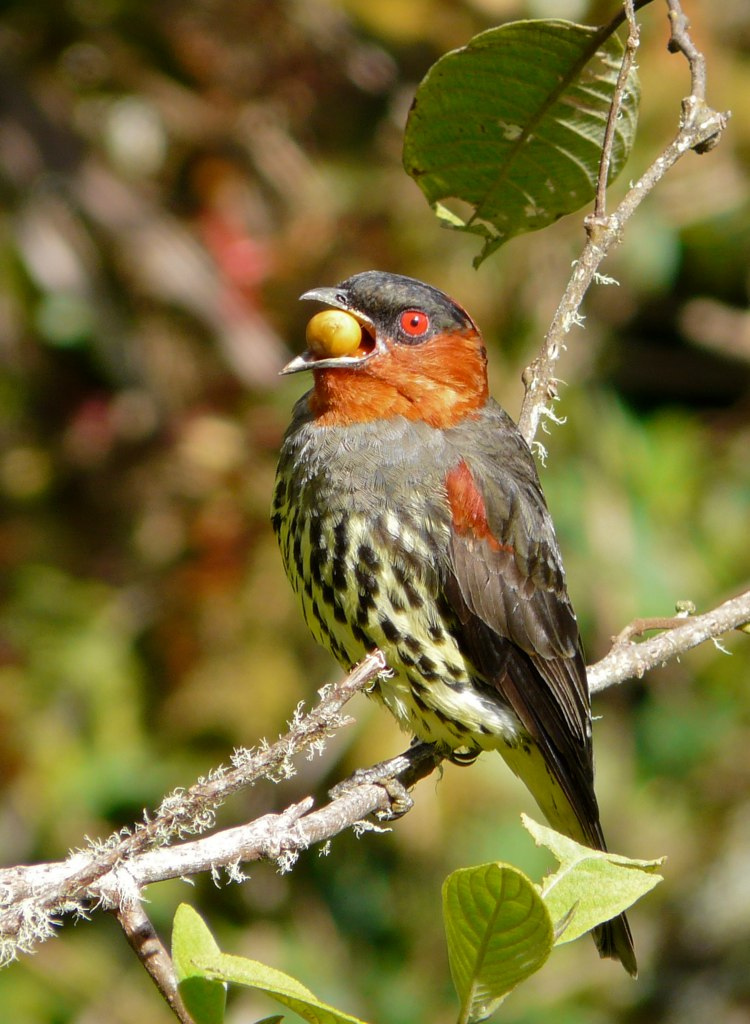
The Cinereous Mourner is a medium-sized bird with a length of about 25 cm. Adults are characterized by their grayish-brown plumage, which helps them blend seamlessly into their forest surroundings. The bird's upperparts are a muted gray, while the underparts exhibit a paler hue. Unlike many other birds in the Cotingidae family, the Cinereous Mourner does not display sexual dimorphism, meaning males and females look remarkably similar. Juveniles, however, differ significantly due to their mimicry of venomous caterpillars. This juvenile plumage includes bright orange and black colors, mimicking the appearance of toxic larvae to deter predators. In flight, the Cinereous Mourner presents a rounded silhouette with broad wings, while its perching posture is upright, often remaining motionless as it scans for prey. The bird's subtle coloration can sometimes lead to confusion with other similarly sized and colored species, such as the Plain Antvireo. However, the mourner's distinct behavioral traits and vocalizations aid in accurate identification.
Having trouble telling birds apart? Upload a photo to our bird identification tool for an instant species match.
Cinereous Mourner Habitat and Range
Preferred Habitat
The Cinereous Mourner primarily inhabits lowland tropical rainforests, thriving in areas with dense, mature vegetation. It is typically found at elevations ranging from sea level up to 1,000 meters. This bird prefers the understory and mid-canopy layers of the forest, where it can easily navigate through the dense foliage. While it is largely a forest-dwelling species, the Cinereous Mourner can occasionally be spotted in secondary growth forests and forest edges. Unlike some other neotropical birds, it does not adapt well to urban environments, largely due to its reliance on undisturbed forest habitats. Seasonal habitat shifts are minimal since it is a resident species, but changes in forest dynamics, such as fruiting cycles and insect abundance, can influence its movements within its range.
Geographic Range
The breeding range of the Cinereous Mourner encompasses a vast expanse of South America's Amazon Basin. This bird is found in countries such as Brazil, Ecuador, Peru, Colombia, and Venezuela. While it is a non-migratory species, its distribution within these areas can be patchy, with population densities higher in regions where suitable habitat is preserved. The Cinereous Mourner does not undertake long-distance migrations, remaining within its tropical forest home year-round. However, it may move locally in response to food availability or habitat changes. The bird's range is generally confined to the lowland forests, avoiding mountainous regions and overly dry areas.
Want to know which birds visit your area? Browse our backyard birds by location guides for region-specific species lists.
What Does the Cinereous Mourner Eat?
The diet of the Cinereous Mourner primarily consists of insects and other arthropods. It employs a sit-and-wait foraging strategy, where it perches quietly and surveys its surroundings for potential prey. Once it detects movement, it swiftly captures its target with precise, agile movements. The Cinereous Mourner consumes a variety of insects, including beetles, caterpillars, and spiders, which it finds in the understory and mid-canopy layers of the forest. During certain seasons, when fruit is abundant, it will also incorporate small berries and seeds into its diet. This occasional frugivory aids in seed dispersal, contributing to forest regeneration. Its feeding schedule is largely dictated by daylight, with increased activity during the cooler hours of the morning and late afternoon.
Cinereous Mourner Behavior and Social Structure
The Cinereous Mourner exhibits solitary behavior, often seen alone or in pairs. Its territorial nature becomes pronounced during the breeding season, when males establish and defend small territories through vocalizations and displays. Courtship involves subtle displays, where the male positions itself prominently and produces soft calls to attract a mate. The bird's response to predators is primarily evasive, relying on its cryptic coloration and the juveniles' mimicry to avoid detection. Daily activity patterns include periods of stillness interspersed with active foraging. The Cinereous Mourner is not known for forming flocks, maintaining its solitary lifestyle even outside the breeding season.
Cinereous Mourner Nesting and Reproduction
The nesting habits of the Cinereous Mourner are as intriguing as its other behaviors. It constructs a small, cup-shaped nest using materials such as twigs, leaves, and moss, typically situated in the fork of a tree branch. Nesting occurs in the understory, providing concealment from predators. The female usually lays a clutch of one to two eggs, which she incubates for approximately 20 days. Both parents participate in feeding the fledglings, which leave the nest about two weeks after hatching. The species generally raises one brood per year, with breeding season coinciding with the wet season, ensuring an abundance of food for the young.
Cinereous Mourner Sounds and Vocalizations
The Cinereous Mourner's primary song is a soft, mournful whistle that resonates through the forest. This rhythmic, low-pitched call serves as a territorial signal and a mating call during the breeding season. Its alarm calls are more abrupt and harsh, used to alert nearby birds of potential threats. The dawn chorus in which the Cinereous Mourner participates is less boisterous than those of more gregarious species, but its subtlety adds a unique layer to the forest's acoustic landscape.
Interesting Facts About the Cinereous Mourner
- 1The juvenile Cinereous Mourner is known for its remarkable mimicry, resembling toxic caterpillars to deter predators.
- 2Despite its somber appearance, the Cinereous Mourner plays a crucial role in controlling insect populations in its ecosystem.
- 3This bird's unique mimicry is not permanent; juveniles shed their caterpillar-like plumage as they mature.
- 4The Cinereous Mourner's presence in the Amazon Basin acts as an indicator of forest health and biodiversity.
- 5Though a resident species, its local movements in search of food demonstrate adaptability within its range.
- 6The species' vocalizations are less complex than many of its cotingid relatives, adding to its understated charm.
- 7The Cinereous Mourner's solitary nature contrasts with the more social behavior of some other tropical birds.
Cinereous Mourner Conservation Status
The Cinereous Mourner currently holds a conservation status of Least Concern according to the IUCN. However, its population trend shows a decline primarily due to habitat loss and fragmentation from deforestation. Despite being relatively widespread, the bird faces threats from expanding agriculture and logging activities. Conservation efforts focus on protecting large tracts of tropical forest and promoting sustainable land-use practices. Although historically stable, the Cinereous Mourner's future depends on effective conservation and habitat preservation.
Other Cotingidae Species



Birds Similar to the Cinereous Mourner
These species are often confused with the Cinereous Mourner due to similar appearance or overlapping range.

