
Curruca affinis
Curruca affinis
Order: Passeriformes / Family: Sylviidae

Wikimedia Commons
About the Curruca affinis
Curruca affinis, a member of the Sylviidae family, represents the intricate ecological dynamics within Asian avifauna. This small passerine bird thrives primarily across the expansive ranges of Central Asia, where its adaptability to various habitats allows it to flourish. The bird manifests an intriguing blend of adaptability and specialization, finding its niche in both natural and semi-natural environments.
Throughout the year, Curruca affinis demonstrates notable seasonal behaviors, particularly during the breeding season, which coincides with the onset of spring in temperate regions. During this time, males engage in pronounced vocal displays to establish territories and attract mates. The bird's role as both a predator and prey within its ecosystem underscores its significance. By controlling insect populations, it contributes to the health of its habitat, while simultaneously serving as a food source for larger predators.
Curruca affinis occupies a critical role in its ecosystem, balancing the food web and maintaining ecological integrity. Its presence in scrublands, open woodlands, and sometimes urban areas highlights its adaptability. The bird's ability to thrive in these varied habitats underscores its evolutionary success, making it a valuable subject for ornithological studies. The Curruca affinis not only enriches biodiversity but also serves as an indicator of environmental health across its range.
The Curruca affinis belongs to the family Sylviidae, within the order Passeriformes. These birds typically live average 3-5 years with a max recorded of 7 years.
How to Identify a Curruca affinis
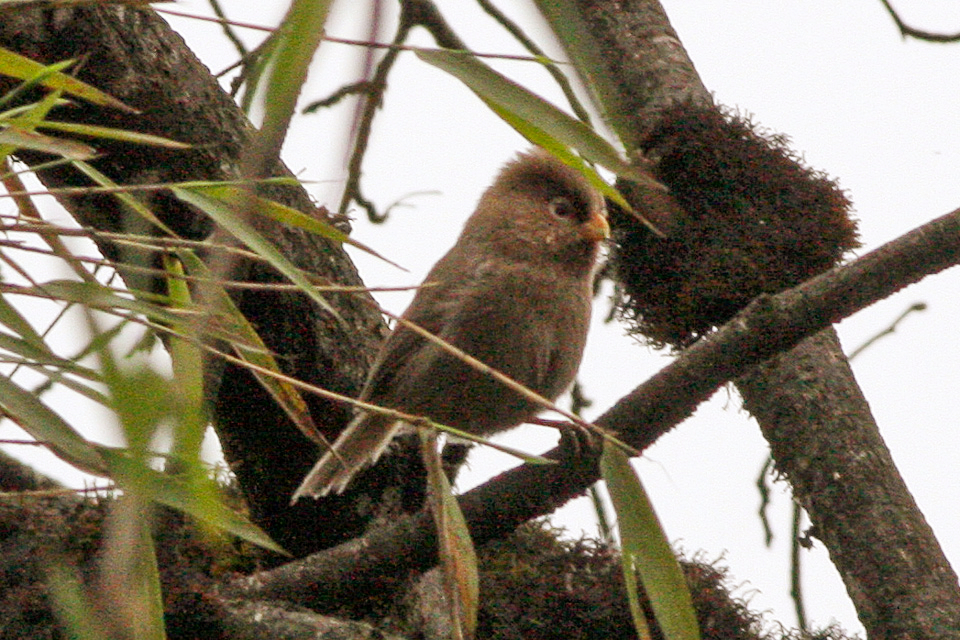
The Curruca affinis displays a subtle but distinct plumage, making field identification an engaging challenge for birders. Adult males exhibit a predominantly grayish appearance with a slightly lighter throat and underparts. Their wings and tail feathers present a darker gray, providing a subtle contrast. During the breeding season, the males may display a faint reddish-brown flush on their flanks, adding a dash of color to their otherwise subdued palette.
Identifying females and juveniles requires a keen eye as they tend to have a duller and more uniform gray coloration compared to males. Juveniles, in particular, lack the reddish hues and are often more brownish, which can lead to confusion with other Sylvia species. However, careful observation of their distinct song and behavior can aid in accurate identification.
The flight silhouette of Curruca affinis is characterized by quick, short bursts of flight interspersed with periods of rapid wing beats. When perched, the bird often holds its body horizontally, frequently flicking its tail as part of its characteristic behavior. This posture, coupled with its vocalizations, aids in distinguishing it from similar species in its range.
Having trouble telling birds apart? Upload a photo to our bird identification tool for an instant species match.
Curruca affinis Habitat and Range
Preferred Habitat
Curruca affinis occupies a variety of habitats across its range, demonstrating a preference for scrubland, open woodlands, and areas with scattered bushes. These habitats often provide an abundance of insects, which constitute the primary diet of this species. In regions like the foothills of the Himalayas and the open terrains of Central Asia, this bird can be found from lowlands to elevations of up to 2,500 meters.
Seasonal shifts in habitat preference are observed, particularly during migration when the bird may utilize more varied landscapes, including grasslands and even semi-urban environments. Though primarily a rural species, the Curruca affinis adapts to edge environments where natural habitats meet human-modified landscapes. Its ability to thrive in such diverse settings highlights its ecological flexibility, making it a fascinating subject for habitat studies.
Geographic Range
The range of Curruca affinis spans a significant portion of Asia, with breeding populations concentrated primarily in Central Asia, including countries such as Kazakhstan, Uzbekistan, and parts of northwestern China. During the winter months, the species migrates to milder climates, with many individuals traveling to the Indian subcontinent.
Migration corridors for Curruca affinis are well-documented, as the bird undertakes a significant seasonal journey. These corridors often follow traditional bird migratory paths across the Asian continent, with stopover sites providing critical rest and refueling opportunities. Specific regions such as the Thar Desert in India and the plains of Pakistan serve as vital wintering grounds, where population density can be notably higher.
The adaptability of Curruca affinis to various climates allows it to maintain stable populations across its range. While there are no significant population density hotspots indicating overabundance, the species' presence is a reliable indicator of habitat health and connectivity.
Want to know which birds visit your area? Browse our backyard birds by location guides for region-specific species lists.
What Does the Curruca affinis Eat?
Curruca affinis primarily consumes a diet rich in insects, which it adeptly forages from foliage and the ground. During the breeding season, the bird exhibits a marked preference for caterpillars and other soft-bodied insects, which provide the necessary protein for chick development. This dietary shift highlights the bird's role in regulating insect populations, thus benefiting its ecosystem.
In autumn and winter, the diet diversifies as Curruca affinis incorporates more seeds and berries, particularly in regions where insect availability declines. Foraging techniques vary; the bird often employs a methodical gleaning strategy, picking prey from leaves and branches with precision. Occasionally, it may also engage in short aerial sallies to capture flying insects.
The size of the prey typically ranges from small aphids to larger beetles. Feeding schedules align with peak insect activity, often resulting in increased foraging during early morning and late afternoon. This adaptability in diet and foraging strategy underscores the bird's ecological resilience and importance within its habitat.
Want to attract Curruca affiniss to your yard? See our recommended feeders and seed types for the best results.
Curruca affinis Behavior and Social Structure
Curruca affinis exhibits a complex social structure, predominantly territorial during the breeding season. Males establish and defend territories through vocal displays and occasional physical confrontations. These territories are essential for attracting mates and providing a safe environment for raising young.
Courtship displays involve both vocalizations and visual demonstrations, where males may perform fluttering flights and exaggerated tail movements to impress females. Once paired, Curruca affinis typically forms monogamous bonds, with both parents participating in nurturing the young.
Outside the breeding season, the bird's behavior shifts to a more gregarious nature, often seen in loose flocks during migration and in wintering grounds. This flocking behavior provides increased protection against predators. Daily activity patterns are primarily diurnal, with peak activity occurring during cooler parts of the day. The bird exhibits a keen awareness of predators, employing alarm calls and evasive maneuvers to protect itself and its brood.
Curruca affinis Nesting and Reproduction
Curruca affinis constructs a cup-shaped nest, skillfully woven from grass, twigs, and lined with softer materials such as feathers and hair. Nests are typically situated in low shrubs or small trees, providing camouflage and protection from predators.
The bird lays a clutch of 3-5 eggs, with the incubation period lasting approximately 12-14 days. Both parents share incubation duties, though the female predominates. Upon hatching, the altricial chicks require constant care and feeding, with both parents actively involved in food provision.
The fledging period lasts around 10-12 days post-hatching, during which the young gradually gain independence. Curruca affinis typically raises one to two broods per year, depending on environmental conditions and food availability. This reproductive strategy ensures the continuation of the species while adapting to ecological pressures.
Curruca affinis Sounds and Vocalizations
The primary song of Curruca affinis is a melodious series of warbling notes, delivered with a rhythmic and slightly varied pitch. This song serves both as a territorial call and a courtship display, often heard at dawn when males are most vocal.
Call notes of Curruca affinis are softer, typically short chirps used in communication between mates and alerting others to potential threats. Alarm calls are sharper and more abrupt, designed to warn chicks and other birds of immediate danger.
During the dawn chorus, the song of Curruca affinis blends seamlessly with those of other sylviids, creating a rich tapestry of sound in its habitat. Compared to the whistles of the common blackbird, its song is less piercing but equally mesmerizing in its complexity and delivery.
Interesting Facts About the Curruca affinis
- 1Curruca affinis can migrate over 2,000 kilometers between its breeding and wintering grounds.
- 2The bird's song is complex enough to contain up to 40 different note variations in a single sequence.
- 3Curruca affinis belongs to the Sylviidae family, which includes around 50 other species of warblers.
- 4Despite its small size, Curruca affinis plays a crucial role in controlling pest populations in its habitat.
- 5The species is known for its adaptability, thriving in environments from lowland scrub to mountainous regions.
- 6Its diet shifts seasonally, showcasing a remarkable ability to exploit available food resources year-round.
- 7Curruca affinis can be observed engaging in a behavior known as 'anting,' using ants to clean its feathers.
Curruca affinis Conservation Status
Curruca affinis currently holds a status of Least Concern on the IUCN Red List, reflecting a stable global population. However, the species faces ongoing threats from habitat loss due to agricultural expansion and urbanization. Conservation efforts include habitat preservation and the establishment of protected areas to safeguard critical breeding and wintering sites. Monitoring programs track population trends and assess the impact of environmental changes. Historically, Curruca affinis populations have remained relatively stable, although localized declines have occurred in heavily modified landscapes. Continued conservation efforts aim to mitigate these impacts and ensure the species' long-term survival.
Attracting Curruca affiniss to Your Feeder
The Curruca affinis is a regular visitor to backyard bird feeders across its range. At the Eye On The Fly feeding station, we observe Curruca affiniss regularly and capture footage with our feeder cameras.
Other Sylviidae Species



Birds Similar to the Curruca affinis
These species are often confused with the Curruca affinis due to similar appearance or overlapping range.
