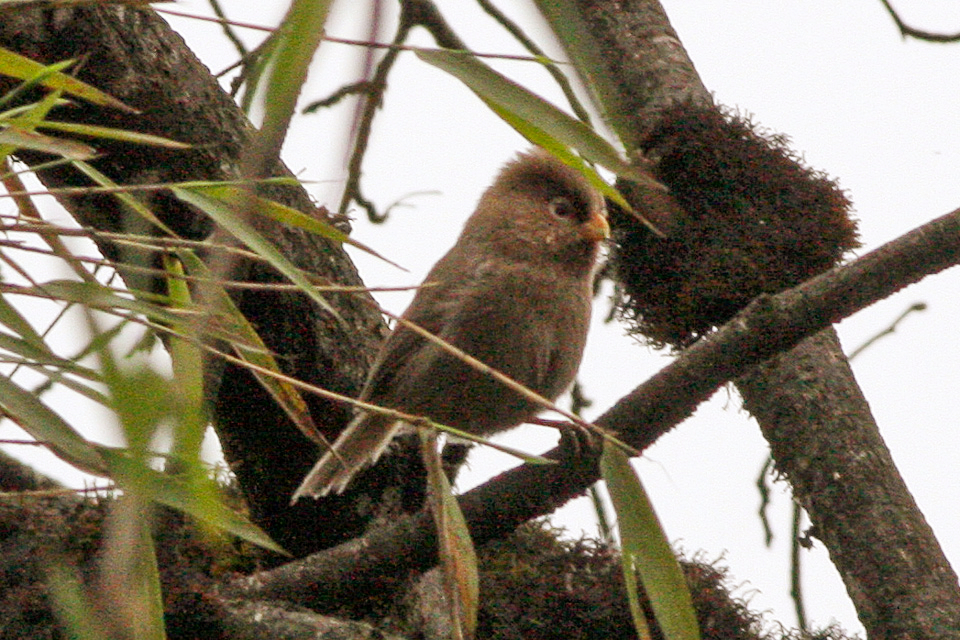
Curruca subalpina
Curruca subalpina
Order: Passeriformes / Family: Sylviidae

Wikimedia Commons
About the Curruca subalpina
Curruca subalpina, commonly known as Moltoni's Warbler, is a small passerine bird celebrated for its melodic song and unique coloration. This warbler belongs to the family Sylviidae and is often found in southern European regions, specifically the Mediterranean basin. Its presence is most notable in Italy, the Balearic Islands, and parts of southern France, where it inhabits various shrublands and open woodlands. The significance of Moltoni's Warbler lies in its intricate role in the local ecosystem, particularly in controlling insect populations through its diet.
This bird exhibits marked seasonal behavior, with breeding occurring predominantly in the spring and early summer months. During this time, Curruca subalpina is highly territorial, with males often seen singing from prominent perches to establish and defend their breeding territories. The species' ecological role extends beyond mere insect control; it also serves as a prey species for larger birds and mammals, thus contributing to the biodiversity and ecological balance of its habitat.
Curruca subalpina's migratory patterns reflect its adaptation to different climates. While it breeds in southern Europe, it migrates to sub-Saharan Africa during the winter months, showcasing a remarkable journey covering thousands of kilometers. This migration is crucial for its survival, as it allows the species to exploit resources in different geographic regions throughout the year. The bird's ability to adapt to varying climates and habitats underscores its resilience and ecological importance.
The Curruca subalpina belongs to the family Sylviidae, within the order Passeriformes. These birds typically live average 3-5 years, max recorded 8 years.
How to Identify a Curruca subalpina
Moltoni's Warbler can be identified by its distinct plumage and song. Adult males display a soft pinkish hue on their underparts, contrasting with their grayish-brown upperparts. A characteristic white eye-ring adds to their distinctive appearance. Females and juveniles are generally duller, with more subdued pink tones and less pronounced eye-rings.
The species can be confused with other members of the Curruca genus, such as the Subalpine Warbler, but Moltoni's Warbler is distinguishable by its unique song and the subtle differences in plumage coloration. In flight, this warbler demonstrates agile and swift movements, often seen flitting through shrubby habitats. Its perching posture is typically upright, with tail slightly cocked, allowing for quick and agile movements when necessary.
The Moltoni's Warbler's song is a valuable identification tool, consisting of a series of repeated melodic phrases that carry through its breeding territory. This bird's vocalizations are not just a means of communication but also an essential component of its courtship and territorial behavior.
Having trouble telling birds apart? Upload a photo to our bird identification tool for an instant species match.
Curruca subalpina Habitat and Range
Preferred Habitat
The Moltoni's Warbler occupies a range of habitats primarily characterized by dense, low shrubbery and open woodlands. It frequents Mediterranean scrublands, where it finds ample food and suitable nesting sites.
This warbler is typically found at elevations ranging from sea level to about 1500 meters. During breeding, it prefers undisturbed areas with abundant cover, avoiding dense forests or urban settings. However, during migration, it may be found in a wider range of habitats, including gardens and orchards, as it rests and refuels.
Seasonal habitat shifts are notable, with the species moving from breeding grounds in Europe to wintering areas in sub-Saharan Africa. In these wintering habitats, it often joins mixed-species flocks, utilizing woodlands and open savannas.
Geographic Range
Curruca subalpina breeds in a confined range within southern Europe, with known populations in Italy, the Balearic Islands, and southern France. These regions provide the dense shrubland and open woodland habitat necessary for its breeding success.
During migration, Moltoni's Warbler travels across the Mediterranean and Sahara, reaching wintering grounds in sub-Saharan Africa. It is particularly prevalent in countries such as Mali, Senegal, and Niger, where it finds suitable habitats during the non-breeding season.
Population densities vary, with certain areas in its breeding range, like Corsica and Sardinia, hosting significant populations. These hotspots provide critical insights into the species' conservation status and habitat preferences.
Want to know which birds visit your area? Browse our backyard birds by location guides for region-specific species lists.
What Does the Curruca subalpina Eat?
Moltoni's Warbler primarily feeds on insects and other small invertebrates, which it gleans from foliage or catches in flight. Its diet includes beetles, caterpillars, and spiders, varying with the seasonal availability of prey.
During migration and winter, its diet may broaden to include berries and fruits, providing necessary energy for long-distance travel. The warbler's foraging technique involves agile movements through shrubbery, often observed hovering briefly to pluck insects from leaves.
Feeding occurs primarily during daylight hours, with peaks in activity during the cooler parts of the day, such as early morning and late afternoon. This schedule helps avoid the intense heat of its Mediterranean breeding grounds.
Curruca subalpina Behavior and Social Structure
Socially, the Moltoni's Warbler displays solitary or paired behavior during the breeding season, with males establishing territories through song and display flights. Territorial disputes can involve aggressive displays and physical confrontations if necessary.
Courtship includes a series of displays, with males singing persistently to attract females. Once paired, the birds exhibit strong site fidelity, often returning to the same territories annually. Outside the breeding season, Moltoni's Warbler becomes more gregarious, joining mixed-species flocks during migration and winter.
When threatened by predators, this warbler employs a range of evasive behaviors, including rapid flight and utilizing dense cover. Its daily activity patterns are primarily diurnal, with increased activity during cooler periods of the day.
Curruca subalpina Nesting and Reproduction
The nesting behavior of Moltoni's Warbler involves constructing a cup-shaped nest made from grasses, leaves, and spider silk, typically placed low in dense shrubbery to conceal it from predators.
The clutch size ranges from 3 to 5 eggs, with both parents involved in incubation, which lasts approximately two weeks. After hatching, the chicks remain in the nest for another 12 to 14 days before fledging.
Parental roles are shared, with both adults feeding the chicks a diet rich in protein to ensure rapid growth. Moltoni's Warbler may raise one or two broods per year, depending on environmental conditions and food availability.
Curruca subalpina Sounds and Vocalizations
Moltoni's Warbler features a melodious song composed of a series of repeated trills and whistles, characterized by a clear, sweet quality. These vocalizations are most prominent during the breeding season, serving as a territorial and courtship tool.
Call notes are softer, consisting of single or repeated 'tuk' sounds, often used for communication between mates or to alert others to potential threats. When alarmed, the warbler emits sharper, more urgent notes, aiding in predator deterrence.
The dawn chorus sees increased singing activity, with males often taking prominent positions to broadcast their presence across their territory.
Interesting Facts About the Curruca subalpina
- 1Moltoni’s Warbler was once considered a subspecies of the Subalpine Warbler before being recognized as a distinct species in 2009.
- 2The pinkish underparts of Moltoni’s Warbler are unique among its close relatives, aiding in its identification.
- 3During migration, Moltoni's Warbler can cover distances exceeding 2000 kilometers, showcasing its endurance.
- 4Moltoni's Warbler has a preference for lowland shrub habitats, rarely venturing into dense forests.
- 5In winter, Moltoni's Warbler often joins mixed-species flocks, enhancing foraging efficiency.
- 6The species adapts its diet seasonally, incorporating more fruits and berries in the non-breeding season.
- 7Moltoni's Warbler's song is a crucial tool for establishing territories during the breeding season.
Curruca subalpina Conservation Status
Moltoni's Warbler currently holds a status of Least Concern according to the IUCN. However, the species faces threats from habitat loss due to agricultural expansion and urbanization. Conservation efforts focus on habitat preservation, with emphasis on maintaining Mediterranean shrublands and traditional agricultural practices that support biodiversity. Monitoring of population trends indicates stability in some areas, but localized declines necessitate ongoing research and conservation action. Historically, population changes have been linked to habitat alterations, emphasizing the need for adaptive management strategies to ensure the species' long-term survival.