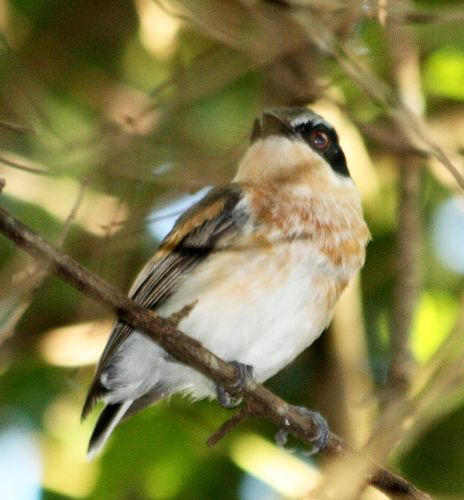
Dark Batis
Batis crypta
Order: Passeriformes / Family: Platysteiridae

Wikimedia Commons
About the Dark Batis
The Dark Batis, scientifically known as Batis crypta, is a small yet captivating bird belonging to the family Platysteiridae, order Passeriformes. This species is primarily found in the dense montane forests of Tanzania, particularly within the Eastern Arc Mountains. The Dark Batis plays a crucial role in its ecosystem as both a predator of insects and a prey item for larger birds. Its presence indicates a healthy, biodiverse forest environment. Observers often note its energetic foraging behavior, as it moves through the forest understory in search of caterpillars, beetles, and other small invertebrates.
The Dark Batis is of significant interest to ornithologists due to its restricted range and specialized habitat needs. Its existence highlights the importance of conserving the unique montane forest ecosystems of East Africa. These forests not only support the Dark Batis but also host a range of endemic species, making them a priority for conservation efforts. The Dark Batis's ecological role extends beyond its immediate interactions, as it contributes to controlling insect populations, thus maintaining the balance within its habitat.
Seasonal behaviors of the Dark Batis are subtly marked by changes in foraging patterns and social interactions. During the breeding season, which generally occurs during the wet months, males become more territorial and vocal, using their melodic calls to defend their nesting area and attract mates. Outside of the breeding season, the Dark Batis may be observed in mixed-species flocks, which can enhance foraging success and provide safety in numbers against predators. The dynamic behaviors and interactions of the Dark Batis illustrate the intricate web of life present in the montane forests of Tanzania.
The Dark Batis belongs to the family Platysteiridae, within the order Passeriformes. These birds typically live approximately 5-7 years..
How to Identify a Dark Batis
The Dark Batis is readily identified by its contrasting plumage, with the deep black color on its upperparts and head, accompanied by a stark white throat and belly. The male Dark Batis displays a bold black chest band that distinguishes it from females and juveniles. Females, while similar in overall color, have a less defined chest band and may show slight brownish tinges on their backs. Juveniles often exhibit a more muted coloration, with browner tones and less distinct markings, making them somewhat more challenging to identify at a distance.
This species is often confused with other members of the Batis genus, such as the Mozambique Batis, due to overlapping ranges and similar size. However, the Dark Batis can be distinguished by its darker coloration and specific habitat preferences. In flight, the Dark Batis reveals distinctive white wing patches that are particularly noticeable in contrast with its black plumage. Its flight silhouette is compact and agile, a common trait among small insectivorous birds. When perched, the Dark Batis displays a characteristic upright stance, often seen flicking its wings and tail as it surveys its surroundings.
Observing these field marks is essential for accurate identification, especially in dense forest settings where lighting conditions can obscure some details. The Dark Batis's behavior, such as its preference for lower forest strata and its active foraging style, can also aid in distinguishing it from similar species.
Having trouble telling birds apart? Upload a photo to our bird identification tool for an instant species match.
Dark Batis Habitat and Range
Preferred Habitat
The Dark Batis inhabits the montane forests of Tanzania, particularly favoring the Eastern Arc Mountains. These forests are characterized by dense, humid environments with a rich diversity of plant life. The Dark Batis thrives at elevations ranging from 800 to 1800 meters, where it can exploit the abundant insect life found within the forest understory. Within these forests, the Dark Batis prefers areas with thick foliage, which offer ample foraging opportunities and protection from predators.
Seasonal habitat shifts are minimal for the Dark Batis due to its non-migratory nature. However, slight movements within the forest may occur in response to changes in insect availability or breeding requirements. The Dark Batis shows a marked preference for undisturbed forest areas, where human activity is limited. It is rarely found in urban settings, as the degradation of forest habitats severely impacts its presence.
Conservation of its habitat is critical, as deforestation and habitat fragmentation pose significant threats to the species. Efforts to protect the montane forests not only benefit the Dark Batis but also support the myriad of other species that rely on these unique ecosystems.
Geographic Range
The range of the Dark Batis is remarkably narrow, primarily confined to the Eastern Arc Mountains of Tanzania. This includes regions such as the Uluguru, Udzungwa, and Usambara Mountains, where these birds find the specific habitat conditions they require. The Dark Batis is a resident species, meaning it does not engage in long-distance migrations. Instead, it remains within its established territories throughout the year.
Population density hotspots are primarily concentrated within these mountain ranges, where conservation efforts focus on preserving the montane forest habitat. The limited range of the Dark Batis makes it vulnerable to environmental changes, highlighting the importance of targeted conservation strategies.
While the Dark Batis does not undertake seasonal migrations, there may be slight altitudinal movements within its range in response to climatic conditions or food availability. These movements are generally localized, as the species remains closely tied to its preferred forest habitats. Understanding the range and distribution of the Dark Batis is essential for implementing effective conservation measures, ensuring the survival of this unique bird in its native environment.
Want to know which birds visit your area? Browse our backyard birds by location guides for region-specific species lists.
What Does the Dark Batis Eat?
The diet of the Dark Batis primarily consists of a variety of insects, including caterpillars, beetles, and small spiders. This insectivorous diet is crucial for meeting the bird's nutritional needs, particularly during the breeding season when energy demands are high. The Dark Batis employs an active foraging technique, often seen darting through the understory of the forest, gleaning insects from leaves and branches with precision.
Seasonal changes in diet are influenced by the availability of prey, with some variation in prey type and size depending on the time of year. During wetter months, when insect populations peak, the Dark Batis can exploit a wider range of prey items, while in drier periods, it may focus on more readily available species.
The size of the prey consumed by the Dark Batis is typically small to medium, matching the bird's diminutive size. Feeding occurs throughout daylight hours, with peaks in activity during the early morning and late afternoon. This schedule aligns with the activity patterns of its insect prey, maximizing foraging efficiency. The Dark Batis's diet underscores its role as an important insect predator within its ecosystem, helping to regulate insect populations and contribute to the ecological balance of its forest habitat.
Dark Batis Behavior and Social Structure
The Dark Batis exhibits a complex array of behaviors that reflect its social structure, territoriality, and interactions with other species. As a predominantly solitary bird, the Dark Batis maintains well-defined territories, particularly during the breeding season when males actively defend their nests and attract mates through vocal displays. These territories ensure access to sufficient food resources and suitable nesting sites.
Courtship displays involve a combination of vocalizations and visual signals, with the male showcasing its plumage and engaging in aerial displays to attract the female's attention. Once paired, the Dark Batis exhibits strong pair bonds, often remaining with the same mate across breeding seasons. Outside of the breeding season, the Dark Batis may join mixed-species flocks, a behavior that enhances foraging efficiency and provides protection from predators through increased vigilance.
Daily activity patterns of the Dark Batis include periods of active foraging interspersed with rest and preening. The bird is most active in the early morning and late afternoon, coinciding with peak insect activity. In terms of predator response, the Dark Batis relies on its agility and the dense forest cover to evade larger avian predators. Its alert nature and keen senses are vital for survival in the competitive and predator-rich environment it inhabits.
Dark Batis Nesting and Reproduction
The Dark Batis constructs intricate cup-shaped nests, typically placed in the forks of small trees or shrubs within its forest habitat. Nests are constructed using a combination of fine twigs, grass, and spider silk, which bind the materials together and provide structural integrity. The choice of nesting site is strategic, offering protection from predators and harsh weather conditions.
Clutch size for the Dark Batis typically ranges from two to three eggs, which are incubated by both parents. The incubation period lasts approximately 14 to 16 days, during which time the parents alternate between incubating the eggs and foraging for food. This cooperative breeding strategy ensures that the eggs are adequately protected and incubated, maximizing the chances of successful hatching.
After hatching, the young Dark Batis remain in the nest for about 12 to 14 days, during which they are fed a steady diet of insects by both parents. The fledging timeline is critical, as the young birds must develop the necessary skills for survival, including foraging and predator avoidance, before leaving the nest. The Dark Batis generally raises one brood per year, although favorable conditions may occasionally allow for a second brood. Understanding the nesting behavior of the Dark Batis provides insights into its reproductive strategies and the challenges it faces in raising its young.
Dark Batis Sounds and Vocalizations
The Dark Batis's vocal repertoire is a fascinating aspect of its behavior, with its primary song characterized by a series of melodic whistles. These whistles are rhythmic and clear, often described as a sequence of 'whee-whee' notes that carry well through the dense forest environment. The pitch of the song is moderate, with a quality that is both inviting and territorial, serving to delimit territory boundaries and attract mates.
In addition to its song, the Dark Batis produces various call notes used for communication between mates or to signal alarm in the presence of predators. These call notes are typically shorter and sharper, providing an immediate alert to nearby individuals. During the dawn chorus, the Dark Batis is particularly vocal, contributing to the symphony of sounds that define the early morning forest soundscape.
Alarm calls of the Dark Batis are distinct and urgent, often prompting nearby birds to take cover or increase vigilance. These vocalizations are a crucial component of the bird's survival strategy, facilitating communication and coordination within its social and ecological environment.
Interesting Facts About the Dark Batis
- 1The Dark Batis is endemic to Tanzania, specifically within the Eastern Arc Mountains, making it a unique representative of this biodiversity hotspot.
- 2Despite its small size, the Dark Batis plays a significant ecological role as an insect predator, helping to regulate insect populations in its forest habitat.
- 3The Dark Batis's white wing patches are a distinctive field mark, easily visible during flight and useful for identifying the species in dense foliage.
- 4Known for its melodic whistles, the Dark Batis's song is a key element of its courtship behavior and territorial defense.
- 5The Dark Batis's preference for montane forests highlights the importance of these habitats for biodiversity conservation in East Africa.
- 6With a clutch size of two to three eggs, the Dark Batis invests significant parental care in raising its young, reflecting its reproductive strategy.
- 7The Dark Batis's limited range underscores its vulnerability to habitat loss, making it a priority for conservation efforts in Tanzania.
Dark Batis Conservation Status
The Dark Batis is currently listed as Near Threatened on the IUCN Red List, with its population trend showing signs of decline. The primary threats to its survival include habitat loss and fragmentation, driven by deforestation and agricultural expansion within its limited range in the Eastern Arc Mountains of Tanzania. Conservation efforts for the Dark Batis focus on protecting and restoring its montane forest habitat, with initiatives aimed at curtailing deforestation and promoting sustainable land-use practices. These efforts are crucial for ensuring the long-term survival of the species and the broader biodiversity of the region. Historical population changes of the Dark Batis reflect the broader environmental pressures faced by montane forest ecosystems in East Africa. Continued monitoring and research are essential to understanding the species' needs and developing effective conservation strategies. The Dark Batis serves as a flagship species for forest conservation efforts, highlighting the interconnectedness of species and the ecosystems they inhabit.