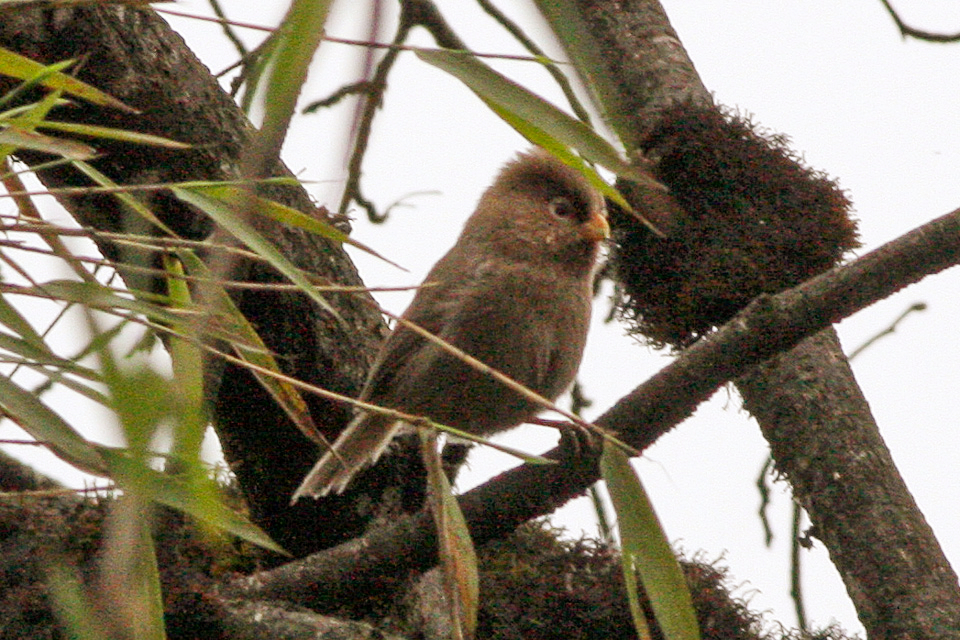
Dartford Warbler
Sylvia undata
Order: Passeriformes / Family: Sylviidae

Wikimedia Commons
About the Dartford Warbler
The Dartford Warbler, Sylvia undata, is a small passerine bird that belongs to the Sylviidae family. It is particularly notable for its rich reddish-brown plumage and its propensity to inhabit low, scrubby heathlands. This bird plays a crucial role in its ecosystem, acting as both a predator and a prey species. It primarily resides in the Mediterranean region and the western parts of Europe, with significant populations found in the Iberian Peninsula, France, and southern England. The Dartford Warbler thrives in heathland habitats where it feeds on a variety of insects and occasionally small seeds. Its presence is a strong indicator of the health of these ecosystems, as it relies on dense, gorse-covered areas for breeding and feeding. The bird exhibits notable seasonal behaviors, including a degree of sedentary behavior in its southern range, while northern populations may exhibit partial migratory patterns during colder months. This species is of particular interest to ornithologists due to its complex relationship with the environment and its sensitivity to habitat changes. The Dartford Warbler's unique song and vibrant plumage make it a favorite among birdwatchers. Despite its relatively small size, it holds significant cultural and ecological value, serving as a symbol of intact heathland ecosystems. Throughout the year, the bird maintains its presence in its preferred habitats, with breeding activities peaking in the spring and summer months. During these periods, the Dartford Warbler engages in courtship displays and territorial behaviors, highlighting its importance as an active participant in its natural habitat. Overall, Sylvia undata represents a vital component of the biodiversity in its native regions, reflecting both the challenges and triumphs of conservation efforts aimed at preserving European heathlands.
The Dartford Warbler belongs to the family Sylviidae, within the order Passeriformes. These birds typically live average 4-5 years with a maximum recorded of 8 years.
How to Identify a Dartford Warbler
The Dartford Warbler is easily recognized by its striking reddish-brown upperparts and greyish underparts. Adult male warblers exhibit a more intense coloration, with a pronounced reddish throat and brighter eyering compared to females. Juveniles are generally duller in appearance with less distinct coloration. This species, measuring around 12-13 cm in length, features a long tail which it often cocks upwards, a behavior distinctive to the species. The bird's flight silhouette is characterized by rapid wing beats and short glides. When perched, the Dartford Warbler often adopts an upright posture, frequently seen atop gorse bushes or heather. It can be confused with the similar Sardinian Warbler, but the latter lacks the distinctive reddish throat and eyering. Careful observation of these field marks will assist birders in correctly identifying this unique species in its natural habitat.
Having trouble telling birds apart? Upload a photo to our bird identification tool for an instant species match.
Dartford Warbler Habitat and Range
Preferred Habitat
The Dartford Warbler primarily inhabits lowland heathlands characterized by dense, shrubby vegetation. It shows a strong preference for landscapes dominated by gorse and heather. These areas provide critical cover and abundant food resources. The bird typically resides at elevations ranging from sea level up to 500 meters. During winter, it may remain in the same habitats, though it sometimes shifts to lower, more sheltered areas when temperatures drop. In terms of urban versus rural presence, the Dartford Warbler is decidedly a rural bird, thriving away from heavily populated human settlements. Its reliance on specific habitat types makes it particularly vulnerable to habitat loss and fragmentation.
Geographic Range
The breeding range of the Dartford Warbler spans the coastal regions of western Europe, prominently found in the Iberian Peninsula, southern France, and southern England. Its populations are densest in Portugal and Spain, where the climate and habitat conditions are most favorable. During winter, northern populations may move short distances to avoid harsh weather, but many remain within their breeding territories, exhibiting limited migratory behavior. While largely resident, some birds may disperse slightly further in search of suitable wintering conditions. Overall, the population of the Dartford Warbler remains concentrated in its native range, with isolated sightings occurring beyond these regions during periods of dispersal.
Want to know which birds visit your area? Browse our backyard birds by location guides for region-specific species lists.
What Does the Dartford Warbler Eat?
The Dartford Warbler feeds primarily on insects, including beetles, caterpillars, and spiders. Its diet shifts seasonally, with a greater reliance on insect larvae during breeding seasons. Occasionally, it may consume small seeds and berries, particularly in winter when insect availability decreases. The bird forages by gleaning insects from the foliage of heather and gorse, and it may also capture prey mid-flight. Its small bill is well-suited for picking insects from tight crevices, allowing it to exploit a variety of food sources. Typically, the Dartford Warbler feeds throughout the day, with peaks during the early morning and late afternoon when insect activity is highest.
Dartford Warbler Behavior and Social Structure
The Dartford Warbler exhibits a largely solitary lifestyle, often seen alone or in pairs. It is highly territorial, with males establishing territories that they defend vigorously through song and physical displays. During breeding season, males engage in elaborate courtship displays, including wing flicking and tail fanning to attract mates. This bird is generally non-flocking, maintaining its territorial boundaries throughout the year. When faced with predators, the Dartford Warbler relies on its agility and dense habitat for cover, often diving into thick bushes to evade capture. Its daily activity patterns are largely diurnal, with most vocalizations and feeding occurring in the early morning and late afternoon.
Dartford Warbler Nesting and Reproduction
The Dartford Warbler constructs its nest low in dense vegetation, often within gorse or heather bushes. The nest typically consists of grass, twigs, and feathers, creating a well-camouflaged structure. The female lays a clutch of 3 to 5 eggs, which she incubates for about 12 to 14 days. Both parents participate in feeding the chicks, which fledge approximately 12 days after hatching. The species may raise two broods per year, depending on food availability and climatic conditions. Parental roles are shared, with both male and female contributing to nesting duties and chick rearing.
Dartford Warbler Sounds and Vocalizations
The Dartford Warbler's song is a distinctive, scratchy warble that carries across its heathland habitat. The rhythm is rapid, with a mix of high-pitched notes and trills. Its call notes include sharp 'tch' sounds, often used as alarm calls when predators are near. During the dawn chorus, the bird's song becomes more frequent and intense. This vocalization is a key factor in territory establishment and mate attraction. The Dartford Warbler's song is often compared to that of the Common Whitethroat, although it is generally faster and more complex.
Interesting Facts About the Dartford Warbler
- 1The Dartford Warbler was first recorded in Britain on Bexley Heath in 1773, lending its name to the species.
- 2Unlike many warblers, the Dartford Warbler is largely sedentary, remaining in its habitat year-round.
- 3During the harsh winter of 1962-63, the British Dartford Warbler population was nearly wiped out, showing its vulnerability to severe weather.
- 4The Dartford Warbler's song can be heard up to 100 meters away, making it a prominent vocal presence in its habitat.
- 5In optimal conditions, the Dartford Warbler can produce two successful broods per breeding season, contributing to its resilience.
- 6The Dartford Warbler has one of the smallest ranges of any European warbler, confined largely to the western Mediterranean and select parts of Western Europe.
Dartford Warbler Conservation Status
The Dartford Warbler is currently listed as Near Threatened by the IUCN. Its population trend is stable in some areas, but declining in others due to habitat loss and degradation. Heathland destruction, primarily through agricultural expansion and urban development, poses significant threats to its survival. Conservation efforts focus on habitat restoration and management, with initiatives aimed at preserving existing heathland areas. Historically, the species faced severe declines during harsh winters, but recent conservation measures have helped stabilize populations in key regions.