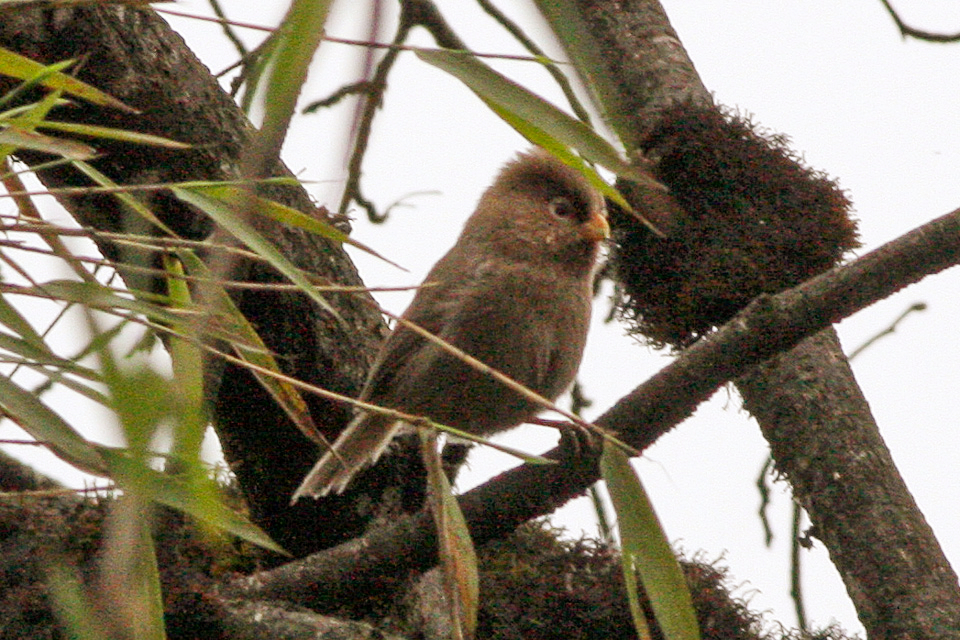
Drymoica chloris
Drymoica chloris
Order: Passeriformes / Family: Sylviidae
About the Drymoica chloris
The Drymoica chloris, commonly known as the African Yellow Warbler, is a small passerine bird belonging to the family Sylviidae. This species is widely distributed across Sub-Saharan Africa, from Senegal and Gambia in the west to Ethiopia and Kenya in the east, and further south to South Africa. Its presence in diverse habitats, primarily grasslands and savannas, makes it a vital component of these ecosystems. The African Yellow Warbler plays a significant role in controlling insect populations, thus contributing to the ecological balance. Seasonally, this bird is known for its varied behaviors in response to environmental changes, such as its energetic singing during the breeding season which adds a melodic backdrop to its habitat. The Drymoica chloris is not just a staple in terms of its ecological role but also an indicator species, reflecting the health of its habitat. Its adaptability to various environments, including wetlands and dense thickets, further underscores its ecological significance. Observers often note the bird's active foraging style, which involves flitting through foliage to capture insects, a behavior that highlights its role as an insectivore. The African Yellow Warbler is a fascinating subject of study, with its life cycle and behavioral patterns offering insights into the complex interactions within its natural habitat. The bird's seasonal movements, although not migratory in the traditional sense, involve local dispersal and altitudinal shifts, particularly in response to rain patterns and food availability. This adaptability ensures its survival across a wide range of environments, from lowland savannas to montane grasslands, where it continues to thrive.
The Drymoica chloris belongs to the family Sylviidae, within the order Passeriformes. These birds typically live average 3-5 years, max recorded 7 years.
How to Identify a Drymoica chloris
Identifying the Drymoica chloris, or African Yellow Warbler, involves noting its distinct greenish-yellow plumage, which sets it apart from other warblers. The adult plumage is characterized by a bright olive-green back, contrasting with a yellow belly and underparts. The bird's wings and tail are similarly olive, with darker edging that provides subtle contrast. Juveniles display a slightly duller coloration but maintain the olive and yellow theme. Male and female African Yellow Warblers show little sexual dimorphism, making them difficult to distinguish in the field based solely on plumage. However, slight size differences might be noted, with males being marginally larger in some populations. In flight, the warbler's small, rounded wings and fan-shaped tail create a distinctive silhouette that experienced birders recognize. Perched, it often adopts an upright posture, flicking its tail in characteristic fashion. Confusion may arise with the closely related species like the Yellow-breasted Apalis, but the latter lacks the uniform olive back of the Drymoica chloris. A careful examination of the bird's field marks, such as its slender bill and unmarked face, aids in proper identification.
Having trouble telling birds apart? Upload a photo to our bird identification tool for an instant species match.
Drymoica chloris Habitat and Range
Preferred Habitat
The African Yellow Warbler thrives in a variety of grassland habitats, ranging from moist savannas to montane grasslands across much of Sub-Saharan Africa. It prefers areas with dense grass cover interspersed with shrubs or small trees, where it can forage and nest. This species is also found in wetlands, taking advantage of the abundant insect life in such environments. Elevationally, it occupies regions from sea level up to 3,000 meters, particularly in areas where vegetation provides ample cover. Seasonal habitat shifts occur primarily in response to rainfall, with the warbler moving to more humid areas during dry seasons. While predominantly a rural species, the African Yellow Warbler occasionally ventures into urban fringes where suitable vegetation exists, though it is less common in densely built-up areas.
Geographic Range
The Drymoica chloris has a wide breeding range across Sub-Saharan Africa, including countries such as Nigeria, Cameroon, Uganda, and South Africa. It occupies a range of habitats, from the coastlines of West Africa to the highlands of East Africa. During the breeding season, the bird becomes more territorial, with denser populations found in areas where food resources are plentiful. While the African Yellow Warbler does not undertake long-distance migrations, it exhibits local movements driven by seasonal changes in food availability and habitat conditions. Some populations may move altitudinally in response to climatic variations. Population density hotspots include the Okavango Delta in Botswana and the Rift Valley regions, where the bird's melodic song is a common sound.
Want to know which birds visit your area? Browse our backyard birds by location guides for region-specific species lists.
What Does the Drymoica chloris Eat?
The African Yellow Warbler primarily feeds on insects, which it skillfully captures from leaves and branches. Its diet includes a variety of invertebrates such as beetles, caterpillars, and spiders. During the wet season, the abundance of insect prey allows the warbler to thrive and rear its young. In drier months, it may broaden its diet to include seeds and small fruits, although these are secondary food sources. The warbler employs a gleaning technique, meticulously picking prey from foliage while perched or flitting about. It typically feeds throughout the day, with peaks in activity during the cooler morning and late afternoon hours, aligning with the availability of prey.
Drymoica chloris Behavior and Social Structure
The African Yellow Warbler exhibits a range of intriguing behaviors, particularly during the breeding season. It is generally a solitary bird, but during the breeding period, males become highly territorial, often engaging in vigorous displays to ward off rivals. These displays include singing from prominent perches and fluttering flights. Courtship involves the male presenting food to the female, accompanied by soft calls. Outside the breeding season, the warbler is more tolerant of conspecifics, occasionally forming loose flocks with other insectivorous birds. When a predator is nearby, the African Yellow Warbler employs alarm calls to alert other birds and may engage in mobbing behavior. Its daily activity pattern includes periods of intensive foraging interspersed with resting during the hottest parts of the day.
Drymoica chloris Nesting and Reproduction
Nesting for the African Yellow Warbler involves constructing a small cup-like nest, intricately woven from grass and plant fibers, and lined with softer materials. The nest is strategically placed in dense grass or low shrubs, providing concealment from predators. A typical clutch comprises 2-4 eggs, which are pale with darker speckles. The female primarily incubates the eggs over a period of about 12-14 days, while the male defends the territory and provides food. After hatching, both parents engage in feeding the chicks, which fledge approximately 14 days post-hatching. The species often raises two broods per year, capitalizing on favorable conditions.
Drymoica chloris Sounds and Vocalizations
The primary song of the African Yellow Warbler consists of a series of melodious notes delivered in quick succession. The rhythm is lively, with a mix of clear whistles and trills that can be heard over long distances. Call notes are softer, often used for communication between mates or to signal alarm. In response to threats, the warbler emits harsher, more repetitive calls. During the dawn chorus, its song stands out, providing a cheerful start to the day. Birders often compare its song to that of the Willow Warbler, though the African Yellow Warbler's rendition is more rapid and varied.
Interesting Facts About the Drymoica chloris
- 1The African Yellow Warbler's song frequency increases during the breeding season, enhancing its chances of attracting a mate.
- 2This species is known for its remarkable adaptability, thriving in both lowland savannas and mountainous regions up to 3,000 meters.
- 3The African Yellow Warbler can consume up to 50% of its body weight in insects daily, highlighting its role as a pest controller.
- 4Unlike many warblers, the African Yellow Warbler shows little fear of humans, often nesting close to rural human dwellings.
- 5Its vibrant yellow and green plumage provides excellent camouflage among the grass and foliage, aiding in predator evasion.
- 6The species' territorial song can be heard up to 100 meters away, serving as an effective deterrent to rival males.
- 7The African Yellow Warbler's breeding success is closely tied to rainfall patterns, with wetter seasons yielding larger broods.
Drymoica chloris Conservation Status
The African Yellow Warbler currently holds a status of Least Concern on the IUCN Red List, with stable population trends across its vast range. However, habitat destruction poses a significant threat, particularly the conversion of grasslands to agriculture. Conservation efforts focus on habitat preservation and the establishment of protected areas. Historical data suggest that the population has remained relatively stable over the decades, adapting to changing environmental conditions. Continued monitoring and habitat management are essential to ensure the species does not face future declines.