
Slender-billed Cisticola
Drymoica procerula
Order: Passeriformes / Family: Sylviidae
About the Slender-billed Cisticola
The Slender-billed Cisticola (Drymoica procerula), a member of the Sylviidae family, is a small passerine bird that thrives in open grassland habitats throughout sub-Saharan Africa. This species plays a significant role in its ecosystem by controlling insect populations and serving as prey for larger predators. With a preference for tall grasses and reedbeds, the Slender-billed Cisticola is often observed in regions such as the Okavango Delta in Botswana and the savannas of Tanzania.
This cisticola is an integral part of the African avifaunal community, contributing to the intricate food webs within its habitat. It is particularly active during the breeding season, which coincides with the rainy season from November to March. During this time, its high-pitched, repetitive song becomes a common sound across its range, as males establish territories and attract mates.
In the broader ecological context, the Slender-billed Cisticola helps maintain the health of grassland ecosystems. By feeding on insects, it aids in controlling pest populations that could otherwise damage vegetation. Additionally, its nesting habits contribute to the recycling of organic materials, as it often uses grass stems and other plant matter to construct its nests. The species' presence is a positive indicator of healthy grassland environments, highlighting the importance of conserving these habitats amidst increasing agricultural expansion.
The Slender-billed Cisticola belongs to the family Sylviidae, within the order Passeriformes. These birds typically live average 3-5 years with a maximum recorded of 8 years..
How to Identify a Slender-billed Cisticola
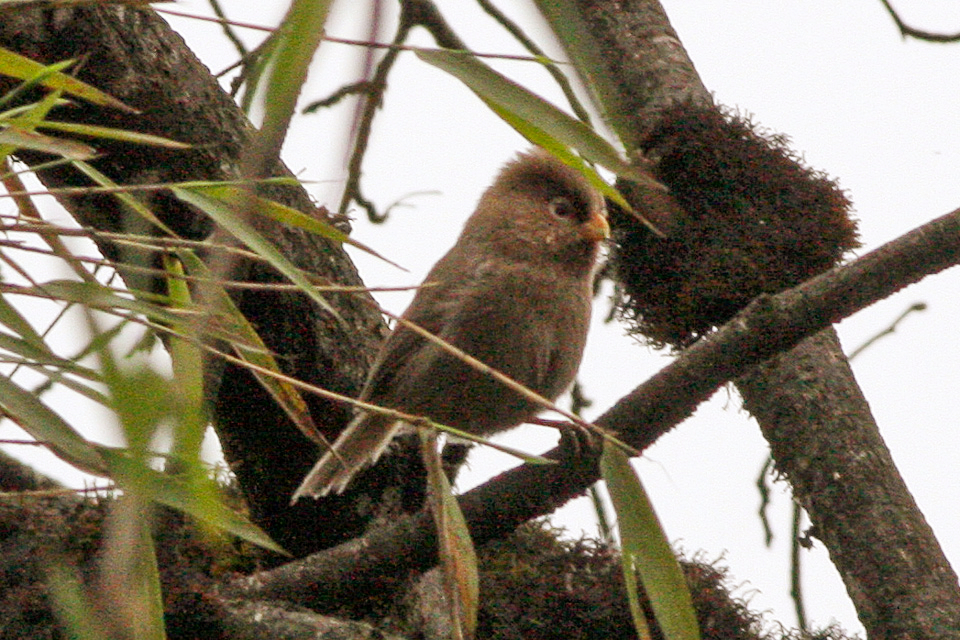
The Slender-billed Cisticola is a small, unobtrusive bird, approximately 13 cm in length. It is best identified by its thin, slightly curved bill that sets it apart from other cisticolas. The bird's plumage is predominantly brown with subtle streaking on the upperparts, providing effective camouflage against the grassy backdrop of its habitat. Its underparts are paler, often presenting a buff or whitish appearance. Males and females are similar in appearance, although males may exhibit slightly brighter plumage during the breeding season.
Juveniles resemble adults but generally display more muted colors and lack the fully developed streaking of mature birds. In flight, the Slender-billed Cisticola demonstrates a fluttering pattern, often accompanied by short, undulating glides. When perched, it frequently adopts an upright stance, using long grass stems as vantage points.
Confusion may arise with similar species such as the Rattling Cisticola (Cisticola chiniana), but the Slender-billed Cisticola's finer bill is a distinguishing feature. Additionally, the subtle differences in song and habitat preference can aid in accurate identification.
Having trouble telling birds apart? Upload a photo to our bird identification tool for an instant species match.
Slender-billed Cisticola Habitat and Range
Preferred Habitat
The Slender-billed Cisticola predominantly inhabits tall grasslands and reedbeds across sub-Saharan Africa. It favors areas with abundant grass cover, such as floodplains, savannas, and open plains, where it can effectively forage and breed. The species is found at elevations ranging from sea level to around 2,000 meters, adapting well to various grassland types.
While primarily a resident of rural landscapes, the Slender-billed Cisticola can occasionally be observed on the fringes of agricultural lands, particularly where natural grasslands intersect with cultivated areas. It shows a preference for wetter grassland regions during the breeding season, often moving to drier areas when not breeding.
The bird's adaptability to different grassland environments allows it to maintain stable populations across a wide range of habitats, although it is less common in heavily urbanized regions. Its presence is often an indicator of healthy grassland ecosystems, underscoring the importance of preserving these habitats.
Geographic Range
The Slender-billed Cisticola's range extends across sub-Saharan Africa, with its presence recorded in countries such as Kenya, Tanzania, Zambia, Botswana, and South Africa. It occupies a broad range, from the savannas of East Africa to the floodplains of the Okavango Delta and the grasslands of South Africa's highveld.
This species is largely resident, with localized movements driven by seasonal changes in habitat conditions. During the breeding season, the Slender-billed Cisticola may concentrate in areas with lush, tall grasses, taking advantage of increased insect availability. It does not engage in long-distance migrations, although some populations may exhibit altitudinal movements in response to climatic variations.
Within its range, population densities can vary significantly, with higher densities often observed in areas of optimal habitat, such as regions with well-established grasslands and minimal human disturbance. The bird's adaptability to different grassland conditions contributes to its widespread presence across the continent.
Want to know which birds visit your area? Browse our backyard birds by location guides for region-specific species lists.
What Does the Slender-billed Cisticola Eat?
The Slender-billed Cisticola primarily feeds on a diet of insects, which forms the bulk of its nutritional intake. It demonstrates a diverse palate, consuming a variety of arthropods, including beetles, grasshoppers, and caterpillars. The bird employs a foraging technique that involves hopping through grasses and low vegetation, using its slender bill to deftly pick insects from leaves and stems.
During the breeding season, the Slender-billed Cisticola's diet may shift slightly to accommodate the increased energy requirements of raising young, focusing on protein-rich prey such as caterpillars and other larvae. It also supplements its diet with small seeds, particularly during periods when insect abundance decreases.
The bird is most active in its foraging efforts during the cooler early morning and late afternoon hours, avoiding the heat of midday. Its role as an insectivore makes it a valuable asset in controlling pest populations within its habitat, contributing to the ecological balance of grassland ecosystems.
Slender-billed Cisticola Behavior and Social Structure
The Slender-billed Cisticola exhibits a range of fascinating behaviors, particularly during the breeding season. It is a territorial species, with males establishing and defending small territories through song and display flights. The bird's courtship displays are characterized by rapid wing flicking and short aerial chases, often accompanied by its distinctive song.
Socially, the Slender-billed Cisticola is generally solitary or found in pairs, although small family groups may form post-breeding. It tends to be inconspicuous, blending well into its grassy environment, which provides both food and cover from predators. This cisticola responds to threats with a combination of alarm calls and evasive flights into dense vegetation.
Daily activity patterns are closely tied to the availability of food resources, with heightened activity during dawn and dusk. The bird's ability to adapt its behavior to seasonal changes, such as adjusting foraging strategies during dry periods, underscores its resilience in fluctuating environments.
Slender-billed Cisticola Nesting and Reproduction
The Slender-billed Cisticola constructs a delicate, cup-shaped nest using a variety of materials, primarily grass stems and leaves, which it weaves together with spider silk. Nests are typically situated close to the ground, well concealed within tall grasses or reeds, providing protection from predators and environmental elements.
A typical clutch comprises two to four eggs, which both parents incubate over a period of approximately 11 to 13 days. After hatching, the chicks remain in the nest for about 11 to 14 days before fledging. Both male and female cisticolas participate in feeding the young, demonstrating a strong parental bond.
The species may produce two or more broods per year, particularly in favorable conditions where food resources are abundant. The choice of nesting sites and materials reflects the bird's adaptability to diverse grassland environments, underscoring its success across a wide geographic range.
Slender-billed Cisticola Sounds and Vocalizations
The Slender-billed Cisticola's primary song is a high-pitched, repetitive series of notes, often described as a 'tsee-tsee-tsee,' delivered in rapid succession. This song is used primarily during the breeding season for territory establishment and mate attraction.
In addition to its song, the bird produces various call notes, including a sharp 'chip' and a softer, more muted 'tik,' which serve as contact calls between individuals. Alarm calls are more urgent, intended to alert others to potential danger.
During the dawn chorus, the Slender-billed Cisticola's song contributes to the rich tapestry of sounds within its habitat, adding to the dynamic avian symphony characteristic of African grasslands.
Interesting Facts About the Slender-billed Cisticola
- 1The Slender-billed Cisticola can be difficult to spot, as its brown plumage provides excellent camouflage in grassy habitats.
- 2Known for its distinctive song, the Slender-billed Cisticola can repeat its high-pitched call over 200 times in an hour.
- 3The bird's name 'cisticola' is derived from the Greek words 'kistos' (a shrub) and 'kolos' (dweller), reflecting its habitat.
- 4Despite being a small bird, the Slender-billed Cisticola is highly territorial, often defending its area against larger birds.
- 5The Slender-billed Cisticola's nest construction involves the use of spider silk, which adds strength and flexibility to the structure.
- 6In dry seasons, the Slender-billed Cisticola may shift its diet to include more seeds, showcasing its adaptability.
- 7The species' predilection for tall grasses makes it an important indicator of grassland health and biodiversity.
Slender-billed Cisticola Conservation Status
The Slender-billed Cisticola is currently listed as Least Concern by the IUCN, with stable population trends across most of its range. The primary threats to the species include habitat loss due to agricultural expansion and degradation of grassland environments. Conservation efforts focus on preserving and restoring grassland habitats, which are vital not only for the cisticola but for many other species as well. Protected areas such as national parks and reserves play a crucial role in safeguarding these habitats. Historically, population changes for the Slender-billed Cisticola have been minimal, largely due to its adaptability and wide distribution. Continued monitoring and habitat protection efforts are essential to ensure its persistence in the face of ongoing environmental challenges.
Other Sylviidae Species



Birds Similar to the Slender-billed Cisticola
These species are often confused with the Slender-billed Cisticola due to similar appearance or overlapping range.