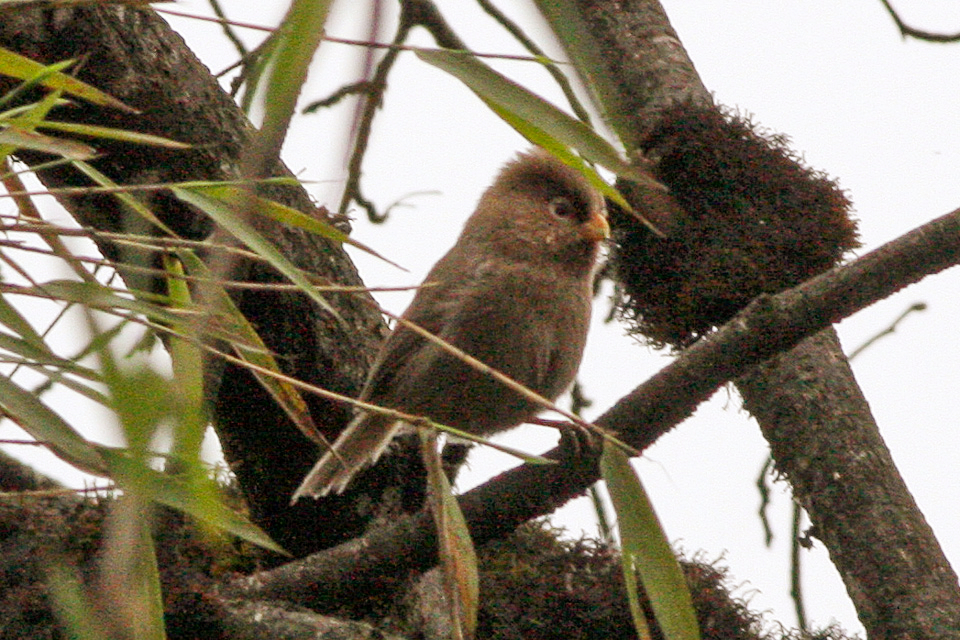
Eastern Orphean Warbler
Sylvia crassirostris
Order: Passeriformes / Family: Sylviidae

Wikimedia Commons
About the Eastern Orphean Warbler
The Eastern Orphean Warbler, scientifically named Sylvia crassirostris, is a charismatic member of the Sylviidae family, known for its melodious song and adaptability across diverse habitats. This species is primarily found in southeastern Europe, extending into western Asia, with a preference for warm, temperate climates. Its presence is significant in the Mediterranean basin, where it plays a crucial ecological role as both a predator of insects and a seed disperser.
This warbler thrives in a variety of environments, from open woodlands to scrublands, often occupying areas with dense underbrush and scattered trees. The Eastern Orphean Warbler is known for its migratory behavior; it spends its breeding season in Europe and western Asia and winters in sub-Saharan Africa. During migration, it forms transient flocks, often with other Sylvia species, which can be seen crossing the Mediterranean and traversing the Sahara Desert, showing remarkable endurance and navigational ability.
Ecologically, the Eastern Orphean Warbler contributes to pest control by consuming large quantities of insects, particularly during the breeding season when protein demand is high. Its diet shifts seasonally, incorporating more fruits and seeds in autumn. The warbler also influences plant communities by dispersing seeds of various fruit-bearing shrubs and trees, aiding in vegetation propagation. Its presence in a habitat often indicates a healthy ecosystem, making it a focal species for conservationists monitoring environmental changes in its range.
The Eastern Orphean Warbler belongs to the family Sylviidae, within the order Passeriformes. These birds typically live average lifespan is 5-7 years, with some living up to 10 years..
How to Identify a Eastern Orphean Warbler
The Eastern Orphean Warbler measures about 15 to 16 centimeters in length, with a wingspan ranging from 22 to 26 centimeters. Its plumage displays a distinctive contrast between a pale gray head, a white throat, and a darker mantle and wings. The underparts are generally lighter, with a creamy or pale buff coloration. Adult males and females exhibit similar coloration, though males often have a slightly darker and more defined head pattern. Juveniles can be confused with other Sylvia species due to their duller plumage and less pronounced facial markings.
When observing in the field, note the warbler's robust build and relatively thick bill, which is adapted for its varied diet. Its flight is direct and somewhat undulating, allowing for agile maneuvering through trees and shrubs. In flight, the white outer tail feathers are particularly noticeable. When perched, it often assumes a slightly upright posture, enabling it to scan for insects and predators.
The Eastern Orphean Warbler can be mistaken for the Western Orphean Warbler, but it typically displays a darker ear coverts and lacks the latter's more extensive white throat. Its song, a rich sequence of melodious notes, also helps in distinguishing it from similar species.
Having trouble telling birds apart? Upload a photo to our bird identification tool for an instant species match.
Eastern Orphean Warbler Habitat and Range
Preferred Habitat
The Eastern Orphean Warbler inhabits a wide range of habitats, demonstrating a preference for open deciduous and mixed woodlands, as well as maquis and garrigue shrublands. It thrives in regions with dense undergrowth and scattered trees, often favoring areas with abundant insect life and fruit-bearing shrubs.
In terms of elevation, this warbler can be found from sea level up to approximately 1,500 meters, though it tends to avoid high mountainous areas. During the breeding season, it selects habitats that provide ample cover and nesting sites, such as the fringes of forests and thickets.
While primarily a rural species, the Eastern Orphean Warbler occasionally ventures into urban parks and gardens, especially during migration. However, it is less common in heavily urbanized areas compared to its woodland and scrubland habitats. Seasonal habitat shifts occur as the warbler migrates to Africa for winter, where it occupies savannas and woodland edges.
Geographic Range
The Eastern Orphean Warbler's breeding range encompasses southeastern Europe and extends into western Asia, covering countries such as Greece, Turkey, and Bulgaria. It breeds in regions with a temperate climate, favoring areas that provide both cover and food resources.
During the winter months, this warbler migrates to sub-Saharan Africa, occupying countries like Nigeria, Cameroon, and Ghana. It traverses the Mediterranean, often via the eastern corridor through the Middle East, making use of stopover sites in regions such as Israel and Egypt.
Migration corridors are characterized by a mix of open landscapes and vegetative cover, essential for rest and refueling. Population density tends to be higher in regions with optimal breeding conditions, such as the coastal and lowland regions of southern Europe. The warbler's presence is patchier in more northern areas of its range, where it is less common.
Want to know which birds visit your area? Browse our backyard birds by location guides for region-specific species lists.
What Does the Eastern Orphean Warbler Eat?
The Eastern Orphean Warbler primarily feeds on insects and other invertebrates, making it an essential predator of pests during the breeding season. It consumes a wide variety of insects, including caterpillars, beetles, and spiders, which it gleans from foliage and bark. This diet provides the necessary protein to support its energetic demands during nesting and raising young.
In late summer and autumn, the warbler's diet shifts to include more fruits and berries. It forages on elderberries, blackberries, and figs, contributing to seed dispersal as a secondary ecological role. The warbler employs a technique of hopping between branches to snatch insects and peck at fruits, displaying agility and precision in its movements.
Prey size varies, with the warbler targeting insects small enough to be efficiently handled with its bill. Feeding usually occurs during daylight hours, with peak activity in the early morning and late afternoon when insects are most active.
Eastern Orphean Warbler Behavior and Social Structure
The Eastern Orphean Warbler displays a range of behaviors that reflect its adaptability and ecological role. It is primarily solitary during the breeding season, establishing territories through song and displays. Males sing from prominent perches to attract mates and ward off rivals. Territorial disputes involve aerial chases and vocal confrontations.
Courtship involves a series of displays, including wing fluttering and tail fanning, accompanied by soft calls. Once paired, the warbler becomes more secretive, focusing on nest building and raising young. Outside the breeding season, it becomes more social, forming loose flocks with other Sylvia species during migration.
In response to predators, such as hawks and cats, the warbler employs alarm calls and evasive flight maneuvers. It remains vigilant, often perching in dense foliage to avoid detection. The warbler is diurnal, with most of its activities occurring during daylight hours, aligning with its insectivorous diet.
Eastern Orphean Warbler Nesting and Reproduction
The Eastern Orphean Warbler constructs its nest in dense shrubs or low trees, often selecting sites that provide concealment from predators. The nest is a cup-shaped structure made from grasses, twigs, and spider webs, lined with finer materials for insulation and comfort.
Clutch size ranges from 3 to 5 eggs, with both parents sharing incubation duties over a period of 11 to 13 days. The eggs are pale with reddish spots, providing some camouflage against potential predators. After hatching, the chicks are altricial, requiring significant parental care. Both parents participate in feeding and protecting the young, delivering a diet rich in insects to support rapid growth.
Fledging occurs approximately 10 to 12 days after hatching, with young warblers remaining in the vicinity of the nest as they develop flight skills. The species typically raises one to two broods per year, depending on food availability and environmental conditions.
Eastern Orphean Warbler Sounds and Vocalizations
The Eastern Orphean Warbler is celebrated for its rich and melodious song, which consists of a series of varied, liquid notes delivered in a rhythmic sequence. The song is somewhat reminiscent of a blackbird's but more continuous and complex, serving both to attract mates and establish territory.
Its call notes include a harsh 'tchack' sound, used primarily as an alarm when predators are near. The warbler also emits softer contact calls to communicate with its mate and offspring. During the dawn chorus, its song is particularly prominent, competing with other early risers in the woodland soundscape.
The warbler's vocalizations play a crucial role in its social structure and territorial behavior, making it an essential aspect of its ecological interactions.
Interesting Facts About the Eastern Orphean Warbler
- 1The Eastern Orphean Warbler can travel over 6,000 kilometers during its annual migration from Europe to Africa.
- 2Despite its small size, the warbler can consume up to 30% of its body weight in insects each day during the breeding season.
- 3The species' name, 'Orphean,' refers to the mythical Orpheus, known for his musical prowess, reflecting the warbler's melodious song.
- 4Eastern Orphean Warblers often join mixed-species foraging flocks during migration, benefiting from shared vigilance against predators.
- 5The warbler's ability to adapt its diet seasonally allows it to thrive in a variety of habitats, from temperate woodlands to African savannas.
- 6In some cultures, hearing the song of the Eastern Orphean Warbler is considered a sign of good fortune and prosperity.
- 7Despite being primarily insectivorous, the warbler can digest a wide range of fruits, aiding in seed dispersal for various plant species.
Eastern Orphean Warbler Conservation Status
The Eastern Orphean Warbler is currently classified as Least Concern by the IUCN. Its population is considered stable, although localized declines have been noted in areas with significant habitat loss. Primary threats include urbanization, agricultural expansion, and climate change, which affect its breeding and wintering habitats. Conservation efforts focus on habitat preservation, particularly in breeding areas where land use changes are most impactful. Monitoring programs track population trends and habitat quality, ensuring early intervention if declines are detected. Historically, the warbler's range has shifted slightly due to climate fluctuations, but it remains widespread across its traditional territory.