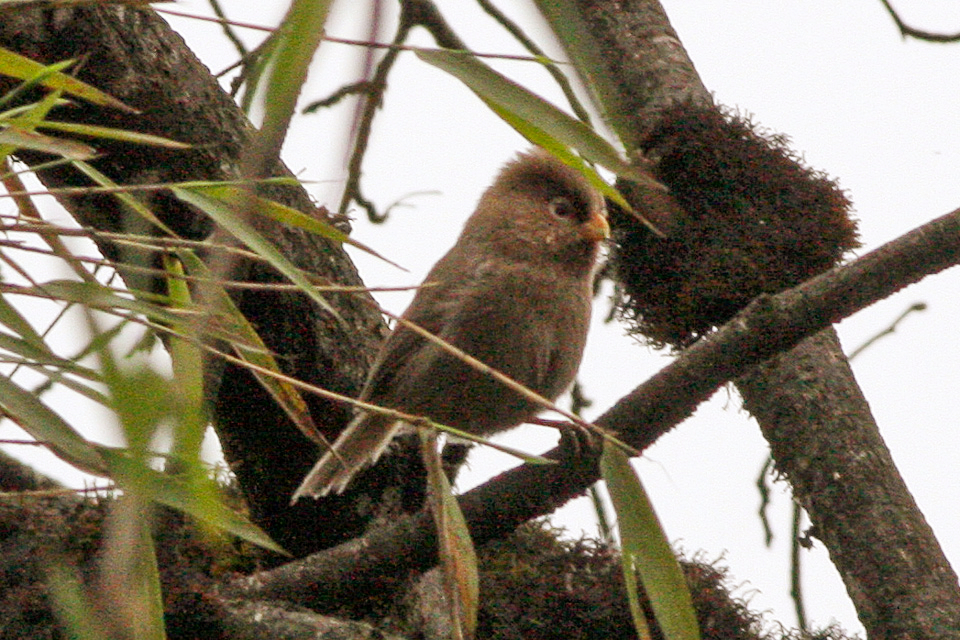
Eurasian Blackcap
Sylvia atricapilla
Order: Passeriformes / Family: Sylviidae

Wikimedia Commons
About the Eurasian Blackcap
The Eurasian Blackcap, scientifically known as Sylvia atricapilla, is a small passerine bird in the family Sylviidae, commonly found across Europe and parts of Asia. This bird is notable for its adaptability to a range of habitats, which has allowed it to thrive in both rural and urban environments. The male Blackcap is easily distinguished by its striking black cap, while females display a reddish-brown version of this characteristic. Both sexes exhibit a similar body coloration of grey and olive tones, though the contrast of the cap is a key feature for identification.
The Eurasian Blackcap plays a significant role in its ecosystem, primarily through seed dispersal. By consuming various fruits and berries, it contributes to the propagation of plant species across its habitat. The bird's population dynamics have also been a subject of study, particularly in the context of climate change. As winters become milder in parts of Europe, some Blackcaps have altered their migratory patterns, choosing to winter in the UK rather than migrating to the traditional southern European or North African wintering grounds. This shift not only affects the bird itself but also the ecosystems it interacts with, as it introduces new competition and predation dynamics.
In terms of ecological roles, the Eurasian Blackcap is a key insectivore during the breeding season, helping control insect populations. It forages actively, gleaning insects from leaves and branches. Its presence in a habitat can indicate a healthy environment with abundant resources. The bird's adaptability has also made it a subject of interest for studies on urban wildlife, as it has successfully managed to establish itself in city parks and gardens, often frequenting bird feeders during the winter months. The Eurasian Blackcap is a valuable subject for avian studies, providing insights into the impacts of environmental change on migratory and non-migratory populations.
The Eurasian Blackcap belongs to the family Sylviidae, within the order Passeriformes. These birds typically live average lifespan is around 2-5 years, with some individuals reaching up to 10 years..
How to Identify a Eurasian Blackcap
The Eurasian Blackcap is a medium-sized warbler, with a length of approximately 13 cm and a wingspan ranging from 20 to 23 cm. Adult males are easily recognized by their jet-black cap, which contrasts sharply with their grey plumage. Females and juveniles, on the other hand, feature a reddish-brown cap, making them distinguishable from the males. The rest of the body is primarily grey with olive-brown tinges along the back and wings. The underparts are paler, often with a hint of white on the belly.
In terms of similar species, the Garden Warbler (Sylvia borin) often causes confusion due to its similar size and shape, but it lacks the distinctive cap. The Blackcap's song is another helpful identification tool, characterized by a melodious and fluty quality, often mistaken for the Common Blackbird's song by inexperienced listeners. When in flight, the Eurasian Blackcap shows a steady, direct path, with rapid wing beats that are characteristic of warblers.
Perched, the Eurasian Blackcap often adopts a slightly upright posture, frequently flicking its tail. This behavior, combined with its bold cap, makes it relatively easy to spot in its habitat. Observers should note the bird's active foraging behavior, as it frequently moves through shrubbery and foliage in search of insects and berries, often hanging upside down to reach its food.
Having trouble telling birds apart? Upload a photo to our bird identification tool for an instant species match.
Eurasian Blackcap Habitat and Range
Preferred Habitat
The Eurasian Blackcap inhabits a variety of environments, showing a preference for deciduous woodlands with dense undergrowth. It can also be found in mixed forests, hedgerows, scrublands, and urban gardens. It thrives from sea level up to elevations of around 2,000 meters, especially in mountainous regions where woodlands are prevalent.
During the breeding season, Blackcaps favor areas with ample shrub cover, which provides both nesting sites and a rich foraging ground. In winter, their habitat preferences shift slightly as they often venture into gardens and parks, especially in urban areas, where they can find supplemental feeding from bird feeders. This adaptability to both rural and urban settings makes the Eurasian Blackcap a common sight across its range, even in heavily populated areas.
Despite their adaptability, Blackcaps are less commonly found in open grasslands or wetlands, as these environments do not provide the necessary cover and food resources they require. Their presence in a given habitat can be influenced by factors such as the availability of fruiting plants and the density of insect populations.
Geographic Range
The Eurasian Blackcap's breeding range extends across most of Europe, stretching from the United Kingdom and Scandinavia in the north to the Mediterranean in the south, and eastwards into parts of western and central Asia. Within this range, population densities can vary, with the highest concentrations often found in regions with abundant woodland and shrub cover.
In winter, the Blackcap migrates to southern Europe, North Africa, and parts of the Middle East. However, recent changes in migratory patterns have been observed, with some populations wintering as far north as the British Isles. This trend is particularly noted among populations from Germany and central Europe.
Migration corridors for the Eurasian Blackcap often include routes over the Mediterranean Sea and through the Iberian Peninsula, where significant numbers can be observed during spring and autumn migrations. These migratory movements are influenced by weather conditions and food availability, making the Blackcap a species of interest for studies on climate impacts on bird migration.
Want to know which birds visit your area? Browse our backyard birds by location guides for region-specific species lists.
What Does the Eurasian Blackcap Eat?
The Eurasian Blackcap's diet is diverse, shifting with the seasons. During the breeding season, it primarily feeds on insects, including caterpillars, beetles, and spiders, which provide the necessary protein for raising young. It hunts these prey by gleaning from foliage and occasionally catching flying insects on the wing.
As the season progresses into autumn and winter, the Blackcap's diet transitions to include a higher proportion of fruits and berries. It shows a particular preference for elderberries, blackberries, and figs. This change not only aligns with the availability of these food sources but also aids in the energy requirements for migration.
In urban areas, especially during winter, Eurasian Blackcaps are known to frequent bird feeders, consuming seeds and suet. Their adaptability in diet allows them to exploit a wide range of food resources, which is a key factor in their ability to thrive across diverse habitats. Regular foraging activity occurs throughout the day, with peaks in early morning and late afternoon when temperatures are cooler.
Eurasian Blackcap Behavior and Social Structure
Eurasian Blackcaps exhibit a range of behaviors that reflect their adaptability and social structure. Outside of the breeding season, they are often solitary or found in loose associations with other small birds, especially during migration.
During the breeding season, males become highly territorial, singing vigorously from concealed perches to establish their territory and attract a mate. The male's song is a rich, melodious warble that plays a crucial role in courtship. Once paired, the birds engage in mutual preening and other bonding activities to strengthen their pair bond.
Eurasian Blackcaps are diurnal, with most activity concentrated in the early morning and late afternoon. They exhibit strong site fidelity, often returning to the same breeding and wintering sites each year. In response to predators, Blackcaps rely on dense cover for concealment and may give sharp alarm calls to alert other birds of danger. When threatened, they often freeze or flee into thick vegetation.
Eurasian Blackcap Nesting and Reproduction
The nesting habits of the Eurasian Blackcap reflect its preference for dense, shrubby environments. Nests are typically placed low in bushes or small trees, usually between 1 and 3 meters above ground, well-hidden among foliage.
The nest itself is a neat, cup-shaped structure, constructed by both sexes. Materials include grass, twigs, and roots, with the interior lined with finer materials such as hair and feathers. The female lays 4 to 6 eggs per clutch, which she incubates for about 11 to 13 days.
Both parents participate in feeding the chicks, which fledge after approximately 10 to 14 days. The fledglings remain dependent on the parents for several weeks as they learn to forage independently. Typically, Blackcaps can produce one or two broods per year, depending on environmental conditions and food availability.
Eurasian Blackcap Sounds and Vocalizations
The Eurasian Blackcap's song is a sweet, melodious warble that can be heard throughout its range, particularly during the spring and early summer. The song consists of a series of fluty notes, often compared to those of the Common Blackbird but delivered with a quicker tempo and more varied pitch.
In addition to its song, the Blackcap produces a range of call notes, including a sharp 'tak' used as an alarm call when predators are near. During the dawn chorus, the Blackcap's song is one of the first to be heard, joining other early singers in a symphony of avian sound that marks the beginning of the day.
The bird's vocalizations play a crucial role in territory establishment and mate attraction, making the Eurasian Blackcap an important component of the acoustic landscape in its habitats.
Interesting Facts About the Eurasian Blackcap
- 1Eurasian Blackcaps have been observed to change their migratory routes, with some now wintering in the UK instead of southern Europe.
- 2Male Eurasian Blackcaps are known for their distinctive black caps, while females have a contrasting reddish-brown cap.
- 3During migration, Blackcaps can travel up to 100 km per day, showcasing their endurance and adaptability.
- 4In recent years, Eurasian Blackcaps have increasingly frequented urban areas, adapting to garden and park environments.
- 5The Eurasian Blackcap's song is often mistaken for the Common Blackbird, though it is more varied and faster-paced.
- 6Eurasian Blackcaps play a crucial role in seed dispersal, aiding the propagation of fruiting plants across their range.
- 7Some Eurasian Blackcaps have developed a partial migration strategy, remaining in northern Europe during milder winters.
Eurasian Blackcap Conservation Status
The Eurasian Blackcap currently holds a status of Least Concern on the IUCN Red List, with stable population trends across its range. Despite facing challenges such as habitat loss and climate change, the Blackcap's adaptability has allowed it to maintain healthy population levels. Primary threats include habitat fragmentation and changes in land use that reduce suitable breeding and foraging areas. However, conservation efforts aimed at preserving woodland habitats and promoting biodiversity in urban parks have been beneficial for this species. Historically, Blackcaps were heavily hunted in parts of southern Europe, but legal protections have reduced this threat significantly. Ongoing monitoring and habitat management remain crucial to ensure the continued prosperity of the Eurasian Blackcap and its role in European ecosystems.