
Fiery-capped Manakin
Machaeropterus pyrocephalus
Order: Passeriformes / Family: Pipridae

Wikimedia Commons
About the Fiery-capped Manakin
The Fiery-capped Manakin, known scientifically as Machaeropterus pyrocephalus, inhabits the tropical and subtropical lowland forests of eastern South America, particularly thriving in areas such as the Amazon Basin. This bird is a member of the Pipridae family, celebrated for its vivid plumage and elaborate courtship displays. The Fiery-capped Manakin plays an essential role in the ecosystem by aiding in seed dispersal and pollination, as it flits through its habitat in search of fruit and insects.
This manakin species is most frequently observed in the dense, humid forests of Brazil, Venezuela, and Colombia. Within these lush environments, the Fiery-capped Manakin contributes to the vitality of the forest by consuming a variety of fruits, thus facilitating the spread of seeds. During the breeding season, these birds become particularly animated, with males performing intricate displays to attract females. These displays are not only a spectacle for bird watchers but also play a crucial role in the species' reproduction and genetic diversity.
The Fiery-capped Manakin shows seasonal variations in behavior, often becoming more conspicuous during the breeding season when males exhibit their striking plumage and engage in complex dance routines. Outside the breeding season, these birds are more reclusive, tending to blend into the verdant forest. Their ecological role cannot be overstated, as they influence the structure and composition of the plant community, ensuring the persistence of a diverse and healthy ecosystem.
The Fiery-capped Manakin belongs to the family Pipridae, within the order Passeriformes. These birds typically live 5-7 years, with a maximum recorded lifespan of 10 years..
How to Identify a Fiery-capped Manakin
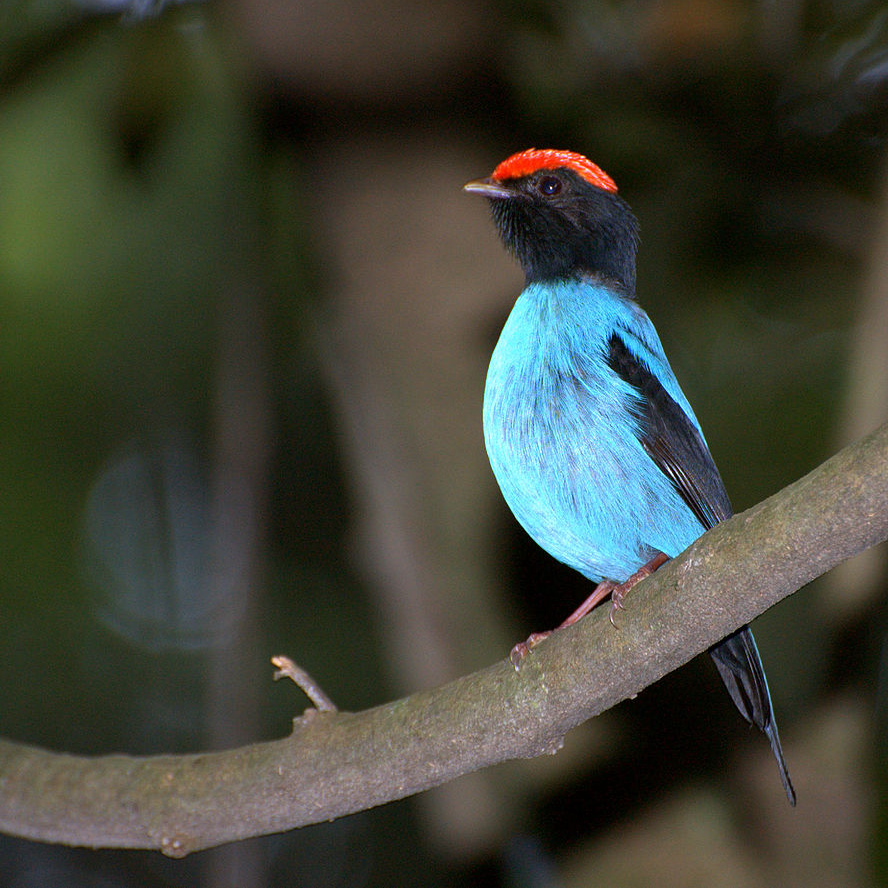
The Fiery-capped Manakin is a small, striking bird, with males displaying a fiery red crown that contrasts sharply with their generally olive-green plumage. The red crown is the most distinctive feature, easily setting this species apart from its relatives. Males also have a black face mask and a white throat, creating a bold contrast that enhances their vibrant cap.
Females and juveniles, in contrast, take on a more muted appearance, with predominantly olive-green plumage that provides camouflage in the dense foliage. They lack the striking red crown found in males, making them more challenging to identify without careful observation. Juvenile males may exhibit some transitional plumage, with hints of red appearing on the crown as they mature.
The Fiery-capped Manakin can occasionally be confused with other manakin species, like the Band-tailed Manakin, but the distinctive red crown and lack of wing bands help in proper identification. In flight, the Fiery-capped Manakin exhibits a quick, direct flight pattern, with rapid wing beats, typical of many small forest birds.
Having trouble telling birds apart? Upload a photo to our bird identification tool for an instant species match.
Fiery-capped Manakin Habitat and Range
Preferred Habitat
The Fiery-capped Manakin thrives in humid, lowland tropical forests, particularly within the Amazon Basin. These birds prefer the understory and midstory strata of the forest, where dense foliage provides ample coverage and food resources. Elevation ranges typically from sea level to about 1,200 meters, although they are most common in lower elevations.
During different seasons, the Fiery-capped Manakin may shift slightly within its forest home, especially during breeding times when males seek out lekking sites that offer visibility and acoustics suitable for their displays. Urban areas are not conducive to their lifestyle, as they require the dense, unfragmented forest for both feeding and breeding activities.
Geographic Range
The Fiery-capped Manakin's range is concentrated in the northeastern part of South America, with prominent populations in Brazil, Venezuela, and Colombia. These birds do not engage in long-distance migrations, instead maintaining a relatively stable presence within their range year-round.
The species is particularly abundant in the Amazon Basin, where its preferred habitat, the lowland rainforest, is most extensive. While they are not migratory, the Fiery-capped Manakin may engage in local movements within the forest to exploit different food resources or breeding sites, particularly during the rainy season when resources are abundant.
Want to know which birds visit your area? Browse our backyard birds by location guides for region-specific species lists.
What Does the Fiery-capped Manakin Eat?
The Fiery-capped Manakin primarily feeds on fruits, which makes up the bulk of its diet. It plays a crucial role in the ecosystem as a seed disperser. The manakin supplements its diet with insects, especially during the breeding season when protein demand increases.
These birds forage by making quick, acrobatic flights to pluck fruits and insects from foliage. Preferred fruits are typically small and easily swallowed, including those of the Rubiaceae and Melastomataceae families. Their feeding occurs mainly during the early morning and late afternoon, taking advantage of cooler temperatures and increased prey activity.
Fiery-capped Manakin Behavior and Social Structure
Fiery-capped Manakins are known for their solitary nature outside the breeding season. However, during the breeding season, males become highly territorial, performing elaborate courtship displays at leks. These displays involve a series of jumps and whistles designed to attract females.
The social structure is polygynous, with males competing vigorously for female attention. In the presence of predators, Fiery-capped Manakins rely on their agility and the dense forest canopy for protection. They exhibit diurnal activity patterns, being most active during daylight hours, with peaks in the early morning and late afternoon.
Fiery-capped Manakin Nesting and Reproduction
The Fiery-capped Manakin's nest is a small, cup-shaped structure, typically constructed of fine plant fibers and spider silk. These nests are usually located in forked branches, several meters above the ground, providing protection from ground predators.
A typical clutch consists of two eggs, with incubation lasting about 16 to 19 days. The female alone is responsible for incubating the eggs and feeding the young. After hatching, the chicks fledge in approximately 15 to 20 days. The species generally raises one brood per year, although favorable conditions might allow for a second.
Fiery-capped Manakin Sounds and Vocalizations
The primary song of the Fiery-capped Manakin is a series of sharp, metallic notes delivered in rapid succession. These notes are often described as a 'tzit-tzit-tzit' sound, clear and penetrating.
Their call notes are typically softer, used to maintain contact with other individuals. Alarm calls are more abrupt and harsher, serving to alert others to potential threats. During the dawn chorus, males increase their vocal activity, using their songs as part of the courtship display.
Interesting Facts About the Fiery-capped Manakin
- 1The Fiery-capped Manakin's lekking behavior involves intricate dances and vocalizations to attract mates.
- 2Despite their small size, Fiery-capped Manakins play a big role in seed dispersal in their forest habitats.
- 3Males can often be found showcasing their vibrant red caps to females during the breeding season.
- 4The Fiery-capped Manakin makes use of spider silk to construct its nest, providing flexibility and strength.
- 5This species' rapid wing beats during flight can make it difficult to observe in the dense forest canopy.
- 6Fiery-capped Manakins are part of the diverse Pipridae family, known for their charismatic behaviors.
- 7These manakins are adapted to the humid environments of the Amazon, relying on its biodiversity for survival.
Fiery-capped Manakin Conservation Status
The Fiery-capped Manakin currently holds a status of Least Concern according to the IUCN. While the population is stable, habitat destruction poses a significant threat, particularly deforestation in the Amazon Basin. Conservation efforts focus on habitat preservation, with several protected areas established within its range. Historically, the population has remained relatively stable, although ongoing deforestation requires continuous monitoring and conservation action.
Other Pipridae Species


Birds Similar to the Fiery-capped Manakin
These species are often confused with the Fiery-capped Manakin due to similar appearance or overlapping range.

