Flores Leaf Warbler
Phylloscopus floresianus
Order: Passeriformes / Family: Phylloscopidae
Wikimedia Commons
About the Flores Leaf Warbler
The Flores Leaf Warbler, scientifically known as Phylloscopus floresianus, is an intriguing member of the Phylloscopidae family. This bird is native to the Indonesian island of Flores, a region known for its rich biodiversity. As a vital part of the ecosystem, the Flores Leaf Warbler plays a significant role in insect population control, contributing to the ecological balance of its habitat. It resides primarily in montane and sub-montane forests, often found at elevations between 800 and 1,800 meters. Unlike many other warblers, this species does not migrate, making it a permanent resident of the island. Its presence in Flores' forests is not just a testament to its adaptability but also highlights the island's unique avian diversity. During the breeding season, which typically spans from March to August, the Flores Leaf Warbler becomes more vocal, using its song to establish territory and attract mates. Apart from breeding behaviors, the warbler spends much of its time foraging for insects among the foliage. The Flores Leaf Warbler is an insectivorous bird, feeding primarily on small insects and larvae. Its foraging technique involves gleaning insects from leaves and branches, often seen flitting energetically between tree canopies. This behavior not only helps control insect populations but also aids in the pollination of certain plants, thanks to its inadvertent transfer of pollen while feeding. While the warbler is not currently considered endangered, habitat destruction poses a potential threat to its population. Conservation efforts focus on preserving the montane and sub-montane forests of Flores to ensure the survival of this and other endemic species.
The Flores Leaf Warbler belongs to the family Phylloscopidae, within the order Passeriformes. These birds typically live average around 4 years, with limited data on maximum lifespan..
How to Identify a Flores Leaf Warbler
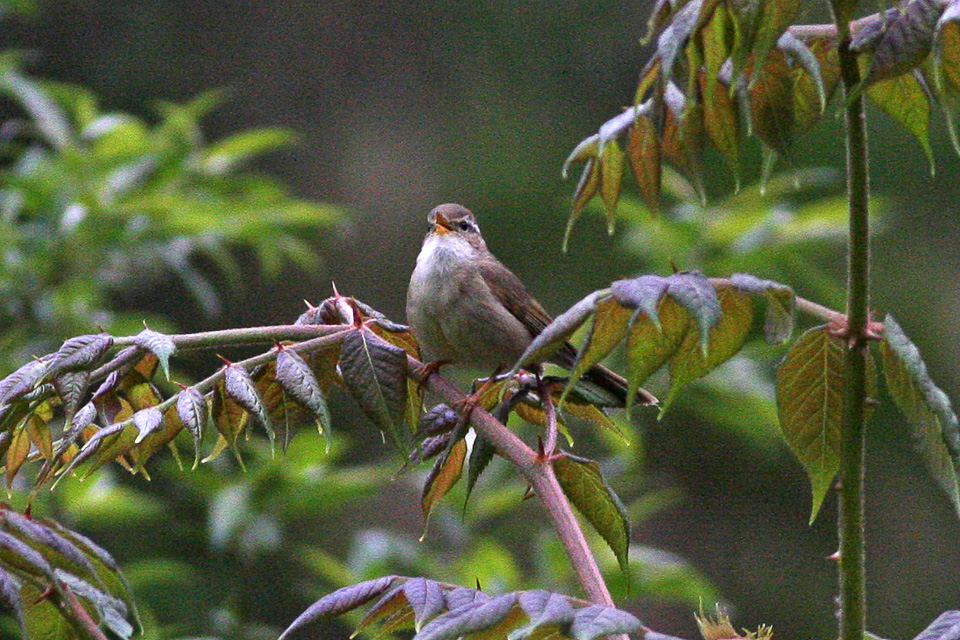
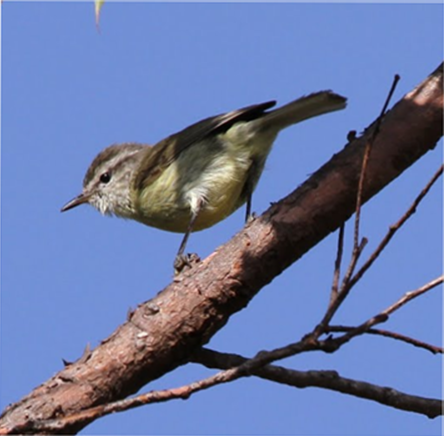
The Flores Leaf Warbler is a small songbird, measuring approximately 11 centimeters in length. It displays a predominantly olive-green plumage, which provides excellent camouflage among the dense foliage of its forest habitat. The underparts are lighter, with a yellowish hue that becomes more pronounced during the breeding season. Adults exhibit a subtle grayish wash across the chest, distinguishing them from juveniles. Juveniles tend to have a more uniformly green appearance, lacking the distinct gray wash. Males and females share similar plumage, making them difficult to differentiate in the field. One of the key identification features of the Flores Leaf Warbler is its thin, slightly curved bill, perfectly adapted for insect foraging. The bird's wings are relatively short and rounded, suited for agile maneuvering through trees. Its flight silhouette is characterized by rapid, direct movements with frequent wing beats. When perched, the warbler often flicks its wings and tail, a behavior that can aid birdwatchers in spotting it among the leaves. Although similar in appearance to other Phylloscopus species, the Flores Leaf Warbler's unique combination of size, coloration, and habitat preference helps differentiate it from its relatives.
Having trouble telling birds apart? Upload a photo to our bird identification tool for an instant species match.
Flores Leaf Warbler Habitat and Range
Preferred Habitat
The Flores Leaf Warbler inhabits the montane and sub-montane forests of Flores Island. These forests provide the dense canopy cover and abundant insect life essential for the warbler's survival. Typically found at elevations ranging from 800 to 1,800 meters, the bird prefers areas with a rich understory and diverse plant species. Although it primarily resides in forested regions, the Flores Leaf Warbler occasionally ventures into adjacent open areas, such as forest edges and clearings, particularly during foraging. The warbler is less commonly observed in lowland regions, where different ecological conditions prevail. It does not exhibit significant seasonal habitat shifts, remaining in its preferred montane forest environment year-round. The warbler's choice of habitat underscores its reliance on intact forest ecosystems, highlighting the need for conservation efforts to protect these vital areas.
Geographic Range
The Flores Leaf Warbler is endemic to the island of Flores in Indonesia, indicating that its entire natural range is confined to this single geographic location. It occupies the montane and sub-montane regions of the island, where it is a permanent resident. Unlike many other warbler species, it does not undertake long-distance migrations, instead remaining within its established range throughout the year. The warbler's population density is generally higher in areas with well-preserved forests, such as the Ruteng Nature Reserve, which serves as a crucial habitat for many of Flores' endemic species. Despite its limited range, the Flores Leaf Warbler is an important component of the island's avifauna, contributing to the rich tapestry of life that defines Flores. Its presence in these regions underscores the unique biodiversity of the island and the importance of maintaining these habitats for future generations.
Want to know which birds visit your area? Browse our backyard birds by location guides for region-specific species lists.
What Does the Flores Leaf Warbler Eat?
The diet of the Flores Leaf Warbler consists predominantly of insects and their larvae, making it an important insectivore within its habitat. The warbler's foraging strategy involves gleaning insects from leaves, branches, and bark, a behavior that showcases its agility and adaptability. It primarily targets small insects, such as caterpillars, beetles, and spiders, which are abundant in the dense forest environment. During the breeding season, the warbler's dietary needs increase, prompting it to forage more intensively to support its offspring. In addition to insects, the warbler may occasionally consume small quantities of plant material, such as fruit or seeds, although these are not a significant part of its diet. The warbler's feeding schedule is largely diurnal, with peak activity occurring in the early morning and late afternoon when insect activity is highest. Its foraging habits play a critical role in controlling insect populations, contributing to the ecological balance of its forest habitat.
Flores Leaf Warbler Behavior and Social Structure
The Flores Leaf Warbler exhibits a range of behaviors that reflect its adaptability and social nature. It is generally a solitary bird outside of the breeding season, although it can often be observed in loose associations with other small insectivorous birds while foraging. During the breeding season, the warbler becomes more territorial, with males singing to establish and defend their territory from rivals. The courtship display involves males performing a series of aerial maneuvers and vocalizations to attract females. Once paired, the warbler exhibits strong pair bonds, with both males and females participating in nest building and chick rearing. Although not particularly aggressive, the warbler will defend its territory and nest vigorously against potential threats, including other birds and predators. Its daily activity pattern is primarily diurnal, with peak periods of activity during the early morning and late afternoon. The warbler's response to predators involves a combination of alarm calls and evasive maneuvers, often retreating to dense foliage for cover. This behavior underscores its reliance on the forest environment for protection and sustenance.
Flores Leaf Warbler Nesting and Reproduction
The Flores Leaf Warbler constructs a cup-shaped nest, typically located in the lower branches of trees or shrubs within its montane forest habitat. The nest is composed of a variety of materials, including grass, leaves, and small twigs, often lined with softer materials such as feathers or moss for insulation and comfort. The female primarily undertakes the construction of the nest, although the male may assist by gathering materials. The typical clutch size for the Flores Leaf Warbler ranges from two to four eggs, which the female incubates for a period of approximately 12 to 14 days. During this time, the male plays a supportive role by providing food for the incubating female. Once hatched, the chicks are altricial, requiring intensive care and feeding from both parents. The fledging period lasts around 14 to 16 days, after which the young warblers gradually begin to forage independently. The Flores Leaf Warbler typically raises one to two broods per year, depending on environmental conditions and food availability.
Flores Leaf Warbler Sounds and Vocalizations
The primary song of the Flores Leaf Warbler is a series of high-pitched, melodic trills and whistles, characterized by a rapid tempo and clear, ringing quality. This song serves both as a territorial marker and a courtship display, becoming most prominent during the breeding season. In addition to its song, the warbler produces a variety of call notes, including short, sharp 'chip' sounds used for communication between individuals. Alarm calls are more urgent and repeated rapidly, alerting other birds to potential danger. The warbler typically joins the dawn chorus, contributing its distinctive voice to the early morning symphony of the forest. Its song can be compared to the gentle tinkling of a bell, offering a familiar and soothing soundscape to those familiar with its forested home.
Interesting Facts About the Flores Leaf Warbler
- 1The Flores Leaf Warbler was only recognized as a distinct species in 1999, highlighting the ongoing discoveries within avian biodiversity.
- 2Despite its small size, the Flores Leaf Warbler can consume up to 50% of its body weight in insects each day.
- 3The warbler's vibrant olive-green plumage allows it to blend seamlessly into the dense foliage of its montane forest habitat.
- 4The song of the Flores Leaf Warbler is often one of the first sounds heard during the dawn chorus in Flores' forests.
- 5The species' limited range and unique ecological role make it a flagship species for conservation efforts in Flores.
- 6Flores Leaf Warblers are known to participate in mixed-species foraging flocks, enhancing their feeding efficiency.
- 7The warbler's reliance on intact forest ecosystems underscores the importance of habitat conservation for its survival.
Flores Leaf Warbler Conservation Status
The Flores Leaf Warbler is currently listed as Near Threatened on the IUCN Red List, with its population trend showing signs of decline. The primary threat to this species is habitat destruction, driven by deforestation and land conversion for agriculture and development. Conservation efforts are focused on protecting and preserving the montane forest habitats that are crucial for the warbler's survival. Organizations and local governments are working to establish protected areas and implement sustainable land-use practices to mitigate the impact of habitat loss. Historical records indicate that the warbler's population was once more robust, but ongoing habitat degradation poses a significant challenge to its future stability. Continued conservation action and awareness-raising efforts are essential to safeguard the Flores Leaf Warbler and the unique biodiversity of Flores Island.