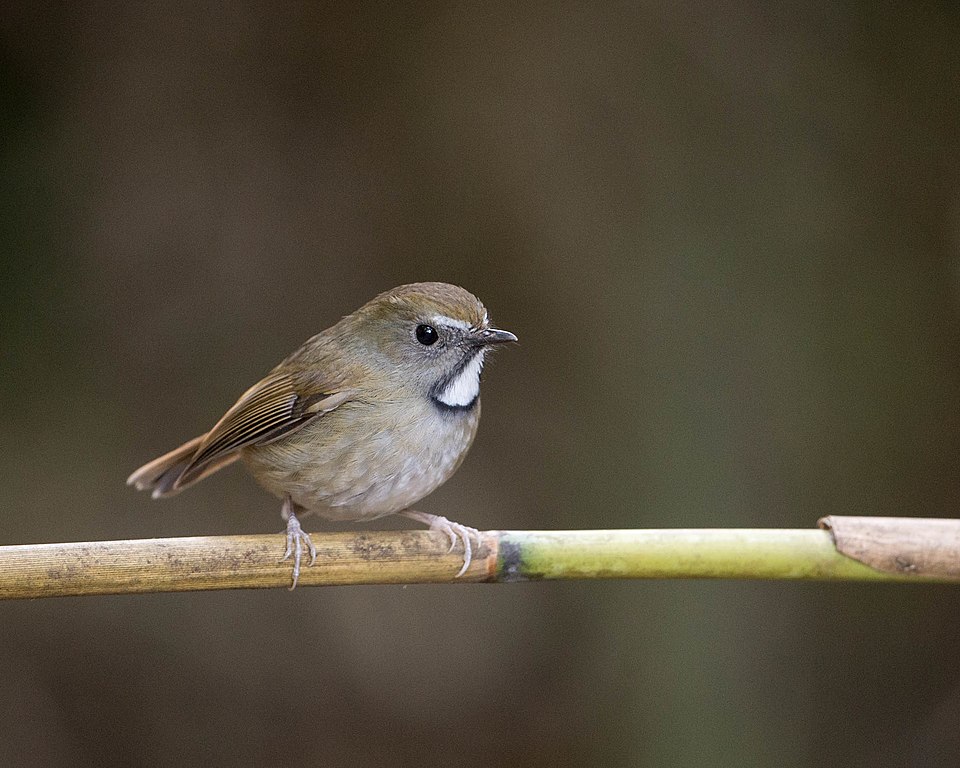
Flores Shortwing
Brachypteryx floris
Order: Passeriformes / Family: Muscicapidae

Wikimedia Commons
About the Flores Shortwing
The Flores Shortwing, scientifically named Brachypteryx floris, is an enigmatic bird species endemic to the island of Flores in Indonesia. This bird belongs to the Muscicapidae family, a group known for their adept vocal abilities and diverse feeding strategies. The Flores Shortwing is a small, ground-dwelling songbird that thrives in the island's montane forests, often inhabiting elevations ranging from 1,200 to 2,000 meters. These montane forests provide a unique habitat characterized by dense undergrowth and a subtropical climate, creating an ideal environment for the Flores Shortwing to forage and nest. The species plays a crucial ecological role as both a predator and prey within its ecosystem. By feeding on insects and other invertebrates, the Flores Shortwing helps to control insect populations, maintaining a balanced food web. Additionally, as a ground-nesting bird, it is susceptible to predation by local mammalian and avian predators, thus contributing to the ecological dynamics of Flores' montane forests. The significance of the Flores Shortwing extends beyond its ecological role. As an indicator species, its presence or absence can provide valuable insights into the health of its montane forest habitat. Conservationists and ornithologists closely monitor the population trends of the Flores Shortwing to assess the impact of environmental changes and human activity on its habitat. Seasonal behaviors of the Flores Shortwing reveal its adaptability to the changing conditions of its habitat. During the breeding season, which typically occurs during the wetter months, the bird becomes more vocal and territorial. Males sing elaborate songs to attract females and defend their territories from rivals. Outside of the breeding season, the Flores Shortwing becomes less conspicuous, often relying on its cryptic plumage to blend into the forest floor, thus avoiding predators. The conservation status of the Flores Shortwing is of particular concern due to its restricted range and the ongoing threats to its habitat. Deforestation and habitat degradation pose significant challenges to the survival of this species. Efforts to protect and restore the montane forests of Flores are vital to ensuring the future of the Flores Shortwing and the myriad of other species that depend on this unique ecosystem.
The Flores Shortwing belongs to the family Muscicapidae, within the order Passeriformes. These birds typically live expected to live around 4-5 years in the wild..
How to Identify a Flores Shortwing
The Flores Shortwing is a small bird, measuring approximately 12 to 14 centimeters in length. Its plumage is predominantly dark, with a rich brown coloration on the upperparts and a slightly lighter, more rufous tone on the underparts. The wings are short and rounded, a characteristic typical of the Brachypteryx genus, allowing for agile movement through dense vegetation. The tail is short, often appearing cocked when the bird is agitated or alert. Both male and female Flores Shortwings exhibit similar plumage, making sex differentiation challenging in the field. Juveniles are distinguishable by their more mottled appearance, with streaks of buff and brown providing camouflage against the forest floor. Unlike many other bird species, the Flores Shortwing does not display significant seasonal plumage variation, maintaining a consistent appearance year-round. Confusion with similar species is unlikely due to the Flores Shortwing's distinctive habitat preferences and its restricted range. However, birders should note the bird's ground-dwelling behavior and its tendency to remain within the forest undergrowth, which can make visual identification challenging. In flight, the Flores Shortwing exhibits a low, fluttering flight pattern, staying close to the ground and often seeking cover quickly. When perched, the bird adopts a horizontal posture, blending seamlessly with the surrounding vegetation.
Having trouble telling birds apart? Upload a photo to our bird identification tool for an instant species match.
Flores Shortwing Habitat and Range
Preferred Habitat
The Flores Shortwing inhabits the montane forests of Flores, thriving at elevations between 1,200 and 2,000 meters. These forests are characterized by dense undergrowth and a variety of ferns, mosses, and epiphytes that provide both food and cover. The subtropical climate of Flores supports a rich biodiversity, offering ample food resources for the Flores Shortwing. The bird shows a strong preference for undisturbed forest areas, avoiding regions with significant human activity or habitat alteration. Seasonal habitat shifts are minimal for the Flores Shortwing, as it remains within its preferred montane forest environment throughout the year. Unlike some other species, the Flores Shortwing does not exhibit a marked urban presence, as it is less adaptable to human-modified landscapes. Conservation efforts focus on preserving these critical forest habitats, ensuring that the ecological integrity of the montane ecosystems is maintained for the Flores Shortwing and other forest-dependent species.
Geographic Range
The Flores Shortwing is endemic to the island of Flores in Indonesia, occupying a restricted range within the island's montane forests. Its breeding range aligns closely with its habitat preference, as the bird does not migrate but remains year-round in the same general area. The highest population densities occur in regions with well-preserved forests, such as the Ruteng Nature Recreation Park and other protected areas. The isolation of Flores, combined with the bird's non-migratory behavior, limits its range to this specific locale. Unlike some other species in the Muscicapidae family, the Flores Shortwing does not engage in long-distance migration or exhibit significant seasonal range shifts. The bird's sedentary nature makes it particularly vulnerable to habitat loss and environmental changes within its limited range. Conservationists prioritize efforts to maintain and restore the montane forests of Flores to secure a stable future for the Flores Shortwing and its unique ecological niche.
Want to know which birds visit your area? Browse our backyard birds by location guides for region-specific species lists.
What Does the Flores Shortwing Eat?
The diet of the Flores Shortwing primarily consists of insects and other small invertebrates, which it skillfully hunts on the forest floor. The bird employs a 'hop-and-search' foraging technique, moving through the undergrowth in search of prey concealed in leaf litter or under rocks and fallen branches. During the wetter months, when insect activity peaks, the Flores Shortwing takes advantage of the abundance of food, often supplementing its diet with small fruits and seeds. Prey size typically ranges from small beetles and ants to larger caterpillars and spiders, demonstrating the bird's opportunistic feeding strategy. The Flores Shortwing follows a diurnal feeding schedule, with peak foraging activity occurring in the early morning and late afternoon, coinciding with the heightened activity of its prey. The bird's reliance on a diverse array of invertebrates underscores its role as an important insectivore within its ecosystem, contributing to the control of insect populations and supporting forest health.
Flores Shortwing Behavior and Social Structure
The Flores Shortwing exhibits a solitary or paired social structure, with individuals or pairs maintaining distinct territories within their preferred montane forest habitat. Territorial behavior intensifies during the breeding season, when males engage in vocal displays to assert dominance and secure mating opportunities. The bird's courtship displays include a combination of vocalizations and subtle physical gestures, such as wing flicking and tail fanning, designed to attract a mate and deter rival males. Flocking behavior is uncommon in the Flores Shortwing, as it primarily operates independently or within established pairs, particularly outside the breeding season. The bird's response to predators involves a combination of cryptic behavior and rapid escape tactics, utilizing its short wings and agile flight to navigate the dense forest understory. Daily activity patterns of the Flores Shortwing are influenced by environmental conditions, with peak activity occurring during cooler parts of the day, such as early morning and late afternoon. During periods of inclement weather, the bird seeks shelter within the dense vegetation, reducing its visibility and exposure to potential threats.
Flores Shortwing Nesting and Reproduction
The Flores Shortwing constructs its nest close to the ground, often hidden within dense vegetation or under natural cover such as rocks and fallen logs. The nest consists of a shallow cup made from twigs, leaves, and moss, expertly camouflaged to blend with the surrounding forest floor. The bird prefers secluded locations with ample cover to protect its nest from predators and environmental elements. Clutch size typically ranges from two to four eggs, which the female incubates for a period of approximately 14 to 16 days. Both parents play active roles in feeding and caring for the chicks, with the male often responsible for provisioning the female and young during the early stages of development. Fledging occurs around 14 to 18 days after hatching, with young birds remaining under parental supervision until they achieve full independence. The Flores Shortwing typically raises one brood per year, although favorable conditions may allow for a second brood in some instances.
Flores Shortwing Sounds and Vocalizations
The primary song of the Flores Shortwing is a melodious series of whistles and trills, characterized by a clear, ascending pitch and a rhythmic cadence. This song serves as both a territorial call and a courtship display, particularly during the breeding season. In addition to its song, the Flores Shortwing produces a variety of call notes, including short, sharp 'chip' sounds used for communication between mates and signaling alarm. The bird's alarm calls are distinctively harsh and rapid, serving as an effective warning to potential threats. During the dawn chorus, the Flores Shortwing's song contributes to the vibrant soundscape of the montane forest, often overlapping with the calls of other forest-dwelling species. The bird's vocal repertoire, while not as extensive as some other songbirds, remains a defining characteristic of its presence within its habitat.
Interesting Facts About the Flores Shortwing
- 1The Flores Shortwing's short wings are an adaptation for maneuvering through dense forest undergrowth, rather than long-distance flight.
- 2Despite its elusive nature, the Flores Shortwing is known for its loud and melodious song, often heard before the bird is seen.
- 3The species' preference for undisturbed forest highlights its sensitivity to habitat changes, making it an important indicator of ecosystem health.
- 4The Flores Shortwing is monotypic, meaning it is the only species within its genus found on Flores, underscoring its unique evolutionary history.
- 5Compared to other shortwing species, the Flores Shortwing has a particularly restricted range, confined exclusively to the island of Flores.
- 6The Flores Shortwing's ground-dwelling habits make it particularly vulnerable to introduced predators, such as rats and domestic cats.
- 7Conservation of the Flores Shortwing contributes to the overall health of Flores' montane ecosystems, benefiting a wide range of flora and fauna.
Flores Shortwing Conservation Status
The Flores Shortwing is currently listed as Near Threatened by the IUCN, with its population experiencing a gradual decline primarily due to habitat loss and degradation. The primary threats to the species include deforestation for agriculture and infrastructure development, which fragment its montane forest habitat. Conservation efforts focus on protecting and restoring these critical habitats, with initiatives aimed at promoting sustainable land use practices and establishing protected areas. Historical population changes indicate a contraction in range and numbers, correlating with increased human activity on the island of Flores. While the species remains relatively stable within certain protected areas, continued vigilance and proactive conservation measures are essential to prevent further decline. Collaborative efforts between local communities, conservation organizations, and government agencies are crucial in safeguarding the future of the Flores Shortwing and its unique ecosystem.