
White-gorgeted Flycatcher
Anthipes monileger
Order: Passeriformes / Family: Muscicapidae
Wikimedia Commons
About the White-gorgeted Flycatcher
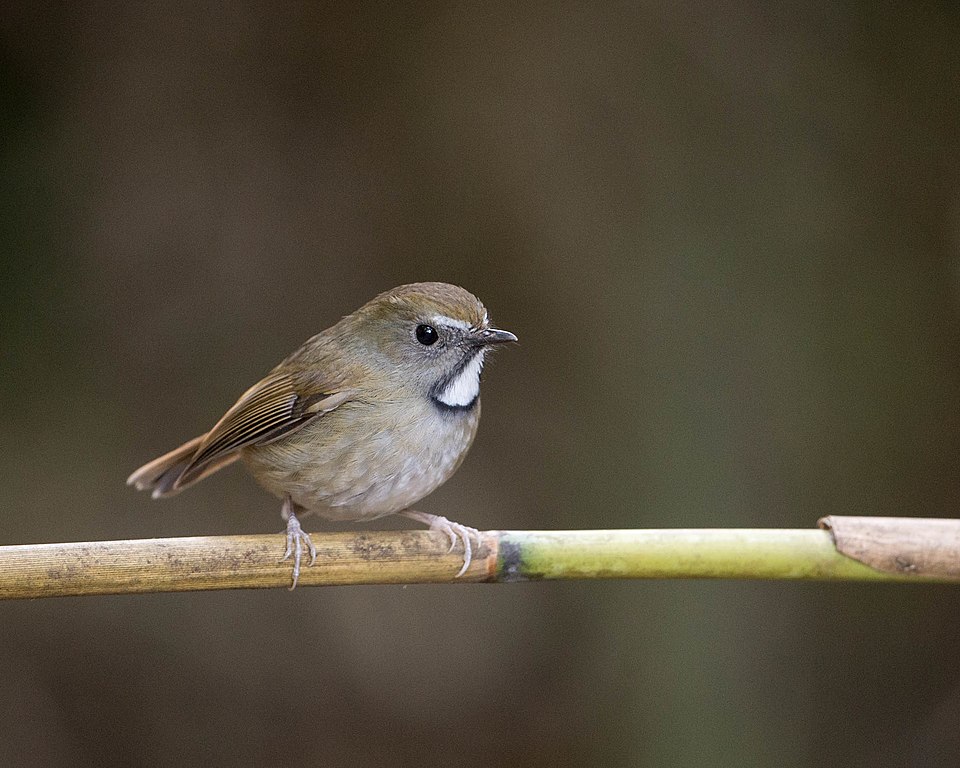
The White-gorgeted Flycatcher, with the scientific name Anthipes monileger, is a small passerine bird belonging to the Muscicapidae family. This captivating bird primarily inhabits the dense, humid forests of Southeast Asia. It is notable for its striking white throat patch set against a more muted plumage, which makes it particularly distinctive among its peers. The bird thrives in the subtropical and tropical moist lowland forests, as well as montane forests, where it plays a crucial role in the ecosystem as both a predator of insects and a prey species for larger animals. Found primarily in countries such as Myanmar, Thailand, Vietnam, Laos, and parts of southern China, the White-gorgeted Flycatcher is adapted to a range of elevations, from lowland areas up to 1,500 meters. Its presence in these regions contributes to the biodiversity and health of the forest ecosystems. This flycatcher exhibits fascinating seasonal behavior, remaining largely resident in its habitat, though slight altitudinal migrations may occur in response to seasonal changes. These birds are often solitary or found in pairs and are known for their elusive nature, preferring to stay within the forest understory. Their ecological significance is tied to their role in controlling insect populations, which they do through their insectivorous diet. They contribute to maintaining the balance within their habitat, showcasing the interconnectedness of forest ecosystems. The White-gorgeted Flycatcher also holds cultural significance in some rural communities, where its presence signals the health of the local environment. Observing these birds in the wild offers birdwatchers a glimpse into the complex interactions within forest ecosystems, highlighting the importance of conservation efforts for their habitats.
The White-gorgeted Flycatcher belongs to the family Muscicapidae, within the order Passeriformes. These birds typically live average 3-4 years, with max recorded up to 6 years..
How to Identify a White-gorgeted Flycatcher
The White-gorgeted Flycatcher exhibits a compact body with a length of about 13-14 cm. Adult birds are primarily brownish-gray above, with a distinctive white throat patch that gives them their name. This white patch contrasts sharply with their darker breast and flanks. The underparts are generally lighter, with a subtle buff hue. Males and females share similar plumage, making gender differentiation challenging in the field. Juveniles resemble adults but have more muted colors and lack the crispness of the white throat patch seen in mature birds. When perched, this flycatcher maintains an upright posture, often flicking its wings and tail, which is a behavior typical of many flycatchers. Its flight is agile and direct, with rapid wingbeats. Confusion with similar species like the Rufous-gorgeted Flycatcher is possible, but the latter has a noticeable rufous patch that is absent in the White-gorgeted Flycatcher. Observers can distinguish the White-gorgeted Flycatcher by its smaller size and the absence of vibrant color patches, relying instead on its more subdued, yet distinctive, field marks.
Having trouble telling birds apart? Upload a photo to our bird identification tool for an instant species match.
White-gorgeted Flycatcher Habitat and Range
Preferred Habitat
The White-gorgeted Flycatcher thrives in dense, humid forests of Southeast Asia, specifically in subtropical and tropical moist lowland and montane forests. These birds are commonly found at elevations ranging from sea level to about 1,500 meters, although they prefer forest interiors with dense understory vegetation. Inhabiting countries such as Myanmar, Thailand, Vietnam, Laos, and parts of southern China, they adapt to both primary and secondary forests, provided there is ample cover. While they are largely forest dwellers, they occasionally venture into well-vegetated gardens and parks, but they are rarely found in urban settings. Seasonal habitat shifts are minimal, though they might move slightly in elevation during changes in climate or availability of food resources.
Geographic Range
The White-gorgeted Flycatcher has a breeding range that spans several Southeast Asian countries, including Myanmar, Thailand, Vietnam, Laos, and southern China. It is considered a resident species in these regions, with minimal migratory behavior. However, some populations might exhibit slight altitudinal movements in response to seasonal food availability and climatic changes. Within its range, population density hotspots include the lush montane forests of northern Thailand and Vietnam, where thick foliage and abundant insect life provide ideal conditions. Despite its relatively limited range compared to some migratory birds, the White-gorgeted Flycatcher remains a crucial component of the forest avifauna in these regions.
Want to know which birds visit your area? Browse our backyard birds by location guides for region-specific species lists.
What Does the White-gorgeted Flycatcher Eat?
The White-gorgeted Flycatcher's diet primarily consists of insects and other small arthropods, making it a crucial insectivore within its ecosystem. It employs a sallying flight technique to catch prey mid-air, a common behavior among flycatchers. Its diet varies slightly with the seasons, with an increase in the diversity of prey during the wet season when insect populations peak. Prey size typically ranges from small flies and beetles to larger moths, which the bird adeptly snatches from foliage or in flight. Feeding occurs mainly during the early morning and late afternoon when insect activity is highest, although they may also forage sporadically throughout the day.
White-gorgeted Flycatcher Behavior and Social Structure
The White-gorgeted Flycatcher is primarily a solitary bird, although it can be found in pairs during the breeding season. Its territorial behavior is evident, with individuals often defending their chosen patch of forest with vigor. Courtship displays are subtle, involving soft vocalizations and slight wing movements. Unlike some other flycatchers, this species does not typically form flocks, preferring the cover of dense foliage for both feeding and breeding. In response to predators, these birds employ a freeze-and-hide strategy, relying on their drab plumage to blend into the forest understory. Their daily activity patterns revolve around peak insect activity, with increased foraging during dawn and dusk.
White-gorgeted Flycatcher Nesting and Reproduction
White-gorgeted Flycatchers build cup-shaped nests using materials like moss, leaves, and fine roots. These nests are typically located low to the ground, nestled in small bushes or among tree roots, providing concealment from predators. The clutch size usually ranges from two to three eggs, which are incubated primarily by the female for about 12-14 days. Both parents participate in feeding the hatchlings, which fledge approximately 12-16 days after hatching. The species typically raises one brood per year, although favorable conditions might result in a second brood.
White-gorgeted Flycatcher Sounds and Vocalizations
The primary song of the White-gorgeted Flycatcher is a series of soft, melodious whistles that vary in pitch and tempo. These vocalizations are often delivered from a concealed perch within the forest understory. Call notes are soft and less melodic, serving primarily as communication between mates or to signal alarm. The alarm call is a sharp, metallic 'chip,' employed when predators are nearby. During the dawn chorus, their song blends subtly with the forest soundscape, providing a gentle backdrop but often overshadowed by louder species.
Interesting Facts About the White-gorgeted Flycatcher
- 1The White-gorgeted Flycatcher is one of the few flycatchers that remain largely resident, exhibiting minimal migratory behavior.
- 2Despite its small size, the White-gorgeted Flycatcher plays a significant role in controlling insect populations in its habitat.
- 3The bird's name is derived from the Latin words 'anthipes,' meaning 'flower-foot,' and 'monileger,' referring to its necklace-like throat patch.
- 4White-gorgeted Flycatchers often build their nests near streams, where moisture helps in maintaining the structure of their nests.
- 5This species is known for its elusive nature, often heard before seen, as it prefers staying hidden in dense foliage.
- 6In its native range, the presence of the White-gorgeted Flycatcher is often used as a bioindicator of forest health.
- 7Despite being a forest bird, the White-gorgeted Flycatcher occasionally ventures into well-vegetated gardens, especially in rural areas.
White-gorgeted Flycatcher Conservation Status
Currently, the White-gorgeted Flycatcher is listed as Least Concern on the IUCN Red List. Its population appears stable, although habitat loss due to deforestation poses a potential threat. Conservation efforts focus on protecting forest habitats and mitigating the impact of human activities. Historically, the bird's population has faced challenges from logging and agricultural expansion, but recent conservation measures and protected areas have helped stabilize numbers in some regions.


