
Fulvous Chatterer
Turdoides fulva
Order: Passeriformes / Family: Leiothrichidae

Wikimedia Commons
About the Fulvous Chatterer
The Fulvous Chatterer, scientifically known as Turdoides fulva, belongs to the family Leiothrichidae, a group renowned for their gregarious behavior and complex vocalizations. This bird is native to the arid and semi-arid regions of sub-Saharan Africa, where it plays a crucial ecological role in seed dispersal and insect population control. The Fulvous Chatterer occupies a variety of dry habitats, including savannas, scrublands, and thorny bushes, particularly in countries such as Ethiopia, Kenya, and Tanzania. Its adaptability to different landscapes allows it to thrive where other species might struggle.
This species is significant not only for its ecological contributions but also for its cultural presence. In many indigenous communities, the Fulvous Chatterer's vocal prowess is celebrated in folklore and local traditions. Its ability to mimic sounds and engage in complex social interactions makes it a subject of interest for researchers studying avian communication. The bird's adaptability to human-altered environments marks it as a resilient species, capable of surviving amid changes that threaten less flexible birds.
Ecologically, the Fulvous Chatterer serves as an important player in the food web. By consuming insects and seeds, it helps maintain a balance in its ecosystem, promoting plant growth and controlling pest populations. During the breeding season, which aligns with the rainy months, these birds become more vocal and territorial, marking their presence and establishing breeding sites. Their propensity for teamwork is evident in cooperative breeding practices, where group members help raise young collectively. Such behaviors underscore the species' complex social structure and highlight its role as a model species for understanding avian social dynamics.
The Fulvous Chatterer belongs to the family Leiothrichidae, within the order Passeriformes. These birds typically live average 4-6 years, up to 9 years recorded..
How to Identify a Fulvous Chatterer
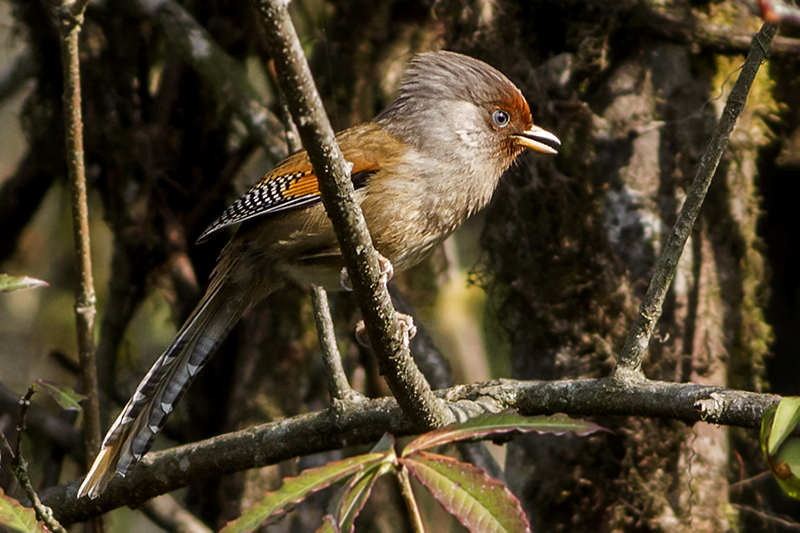
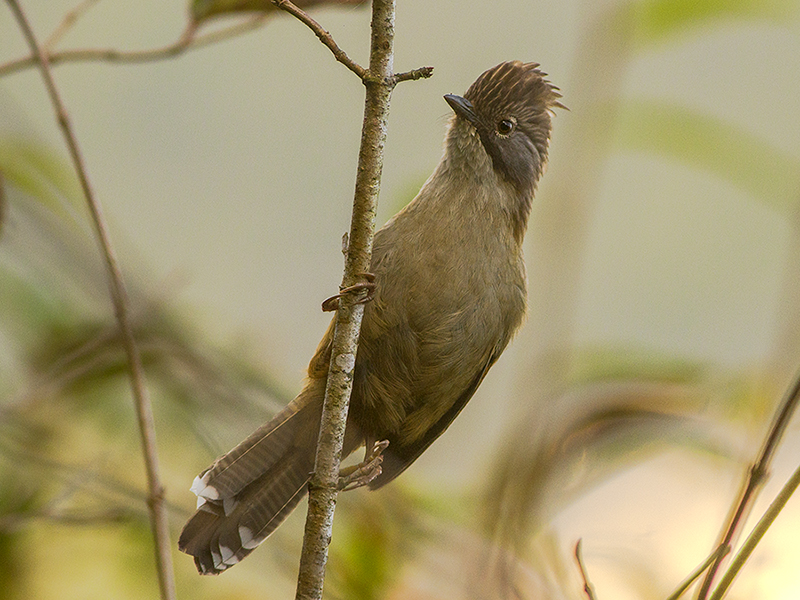
The Fulvous Chatterer is a medium-sized bird, roughly 25 cm in length, with a warm brown plumage that blends seamlessly into its arid surroundings. The upperparts are uniformly brown, while the underparts are a lighter, fulvous hue, lending the bird its common name. Both sexes appear similar, though females may exhibit slightly paler plumage. Juveniles resemble adults but tend to have a more mottled appearance with subtle streaks on the breast, which they lose as they mature.
In the field, the Fulvous Chatterer can be distinguished by its stout bill and rounded wings. When perched, it often exhibits a slightly hunched posture, with its tail held below the level of its body. In flight, the chatterer displays a direct, purposeful flight pattern with steady wingbeats. Its silhouette is compact, with short wings and a relatively long tail that can aid in identification from a distance.
Potential confusion may arise with similar-looking species such as the Arrow-marked Babbler. However, the Fulvous Chatterer lacks the distinctive markings of the babbler and can be differentiated by its simpler plumage and more cacophonous calls. Birders should also note its preference for drier habitats compared to some of its relatives.
Having trouble telling birds apart? Upload a photo to our bird identification tool for an instant species match.
Fulvous Chatterer Habitat and Range
Preferred Habitat
The Fulvous Chatterer predominantly inhabits dry and semi-arid regions, including savannas, scrublands, and thorny acacia thickets. It can be found at elevations ranging from sea level to about 2000 meters, with a preference for areas that offer ample cover and foraging opportunities. These birds are adept at navigating their arid environments, often seen in open plains and along the edges of woodlands.
During the dry season, the Fulvous Chatterer may shift towards areas with more permanent water sources, though it generally remains within its familiar range. Unlike some of its close relatives, it is less commonly found in dense forests or heavily urbanized areas, favoring instead the transitional zones between open grasslands and wooded regions.
While it can occur near human settlements, this species does not typically thrive in highly urbanized environments, preferring rural landscapes where natural vegetation persists. Its presence is often most pronounced in regions where agricultural practices allow for the maintenance of native flora and fauna.
Geographic Range
The Fulvous Chatterer's range extends across much of sub-Saharan Africa, from the Sahel region in the north to the southern reaches of the continent. Its breeding range includes parts of Ethiopia, Kenya, and Tanzania, where it finds suitable nesting sites and abundant food resources. In West Africa, the species is less common but can still be observed in countries such as Mali and Niger.
This species does not undergo long-distance migrations, but it may exhibit local movements in response to seasonal changes in food availability and habitat conditions. During the rainy season, Fulvous Chatterers become more widespread, taking advantage of the increased insect activity and vegetation growth. As the dry season progresses, they may concentrate in areas with reliable water sources and dense cover.
Population density is highest in regions where open savannas transition into bushlands, particularly in eastern Africa, where conditions are optimal for their survival. In such areas, groups of Fulvous Chatterers can be a common sight, their noisy calls echoing across the landscape.
Want to know which birds visit your area? Browse our backyard birds by location guides for region-specific species lists.
What Does the Fulvous Chatterer Eat?
The diet of the Fulvous Chatterer is primarily insectivorous, with a strong preference for ants, beetles, and grasshoppers. These birds spend much of their day foraging on the ground, where they deftly turn over leaf litter and probe the soil for hidden invertebrates. In addition to insects, they consume seeds and berries, particularly during the dry season when insect prey becomes less abundant.
This opportunistic feeding strategy allows the chatterer to make the most of the available resources throughout the year. During times of plenty, such as the rainy season, they focus on high-protein insect prey to support breeding and chick-rearing activities. As food availability shifts, their diet becomes more varied, incorporating more plant material.
Fulvous Chatterers employ a cooperative foraging technique, often seen in groups as they work together to flush out prey. This social feeding behavior not only increases their hunting success but also strengthens group bonds. Their feeding schedule is most active during the cooler parts of the day, such as early morning and late afternoon, avoiding the midday heat typical of their dry habitats.
Fulvous Chatterer Behavior and Social Structure
The Fulvous Chatterer exhibits a highly social and cooperative lifestyle, often found in groups ranging from 6 to 12 individuals. These groups are typically composed of family members, and their social structure revolves around cooperative breeding. In this system, non-breeding group members assist in raising the chicks, a strategy that enhances the survival rate of the young.
Territorial behavior is pronounced, with group members vocally defending their area against intrusions by other birds. Their calls, a series of harsh, scolding notes, serve as both a deterrent to outsiders and a means of communication within the group. During the breeding season, these calls become more frequent and are often accompanied by displays that include wing-flapping and tail-fanning.
Courtship displays are characterized by mutual preening and food offerings, strengthening pair bonds. As dusk approaches, Fulvous Chatterers gather in roosting sites, where they engage in communal roosting to conserve warmth and enhance security from nocturnal predators. Their alertness and group coordination provide an effective defense against potential threats, such as raptors and snakes.
Fulvous Chatterer Nesting and Reproduction
Fulvous Chatterers typically nest in dense shrubs or low trees, selecting sites that offer protection from predators and harsh environmental conditions. The nest itself is a cup-shaped structure, constructed primarily from twigs, leaves, and grass, lined with softer materials like feathers and plant down to ensure comfort for the eggs and chicks.
The clutch size generally ranges from 3 to 5 eggs, with both parents sharing incubation duties. Incubation lasts for about 14 to 16 days, during which time the parents remain vigilant, defending the nest from potential threats. After hatching, the chicks are altricial, requiring extensive care and feeding from both parents and other group members.
The fledging period is approximately 18 to 22 days, during which the young birds gradually develop flight feathers and coordination necessary for independence. However, even after fledging, juvenile Fulvous Chatterers often remain with the family group, participating in cooperative activities and learning essential survival skills. The species typically raises one to two broods per year, depending on environmental conditions and food availability.
Fulvous Chatterer Sounds and Vocalizations
The Fulvous Chatterer's vocal repertoire is both diverse and distinctive, characterized by loud, harsh chatterings and a variety of scolding notes. Their primary song consists of rapid, repetitive calls that vary in pitch and intensity, often described as a series of 'churr' and 'chack' notes. These vocalizations serve multiple functions, including territory defense and group cohesion.
Call notes are typically shorter and less complex than their songs, used for maintaining contact between group members as they forage. Alarm calls are sharp and urgent, designed to alert others of potential dangers such as predators. These calls often prompt an immediate group response, with individuals taking cover or mobbing the threat.
During the dawn chorus, Fulvous Chatterers become particularly vocal, their calls resonating through the early morning air. This behavior not only reinforces social bonds within the group but also establishes their presence to other birds in the area.
Interesting Facts About the Fulvous Chatterer
- 1Unlike many birds, Fulvous Chatterers engage in cooperative breeding, with group members assisting in raising the young.
- 2Fulvous Chatterers are known for their vocal mimicry abilities, sometimes imitating the calls of other bird species.
- 3These birds are highly adaptable, thriving in some of Africa's most arid environments thanks to their opportunistic diet.
- 4A group of Fulvous Chatterers can produce a cacophony of sounds, with up to 12 individuals calling simultaneously.
- 5The species' name 'chatterer' comes from their distinctive, noisy vocalizations that can be heard over long distances.
- 6Fulvous Chatterers often forage in mixed-species flocks, benefiting from the vigilance of other bird species.
- 7They play a crucial ecological role in seed dispersal, aiding in the regeneration of their dry habitat ecosystems.
Fulvous Chatterer Conservation Status
The Fulvous Chatterer currently holds a status of Least Concern according to the IUCN Red List, with populations considered stable across much of its range. However, habitat degradation due to agricultural expansion and urban development poses a potential threat. Conservation efforts are focused on preserving natural habitats and promoting sustainable land use practices. Historically, the Fulvous Chatterer has demonstrated resilience in the face of environmental changes, maintaining stable population numbers. Despite this, continued monitoring is necessary to ensure that any emerging threats are promptly addressed. Conservationists advocate for the protection of key habitats, particularly in areas where the species is most concentrated. Public education and engagement initiatives aim to increase awareness about the species and its ecological importance, fostering community support for conservation measures.
Other Leiothrichidae Species


Birds Similar to the Fulvous Chatterer
These species are often confused with the Fulvous Chatterer due to similar appearance or overlapping range.

