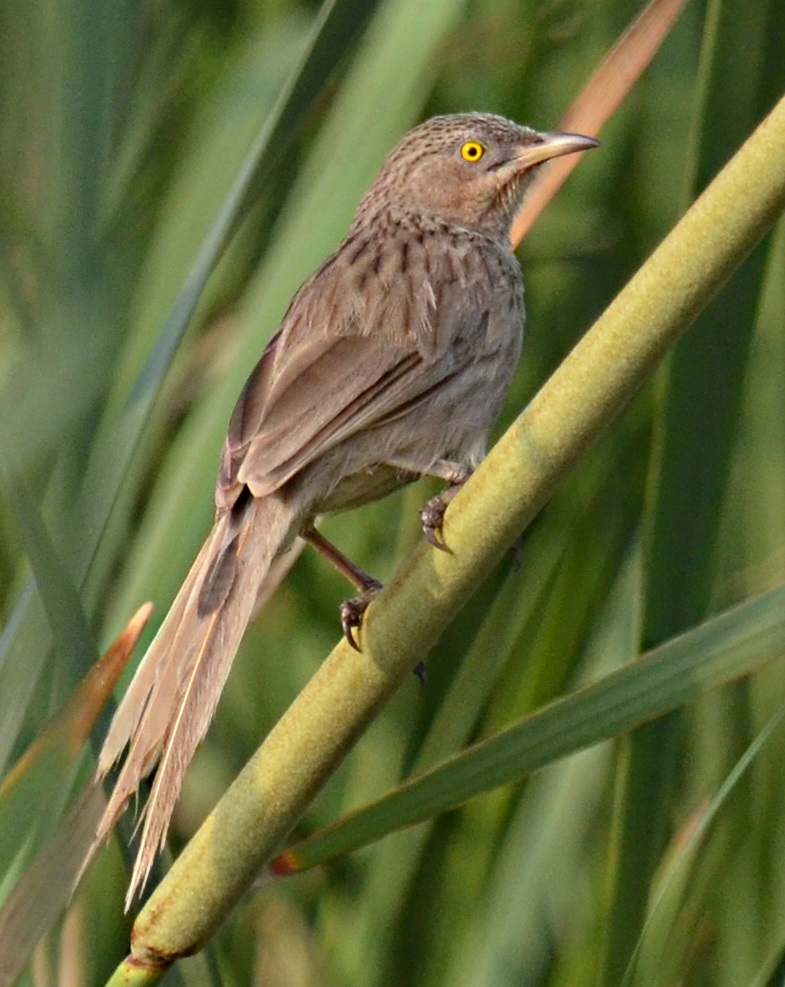
Common Babbler
Turdoides caudata
Order: Passeriformes / Family: Leiothrichidae

Wikimedia Commons
About the Common Babbler
The Common Babbler, scientifically known as Turdoides caudata, is a small passerine bird that belongs to the family Leiothrichidae. This species is predominantly found in the Indian subcontinent, particularly in India and Pakistan, with some populations extending into Nepal and Bangladesh. The Common Babbler thrives in semi-arid environments, often seen in scrublands, thorn jungles, and dry open fields. These birds are highly social, typically moving in flocks of six to ten individuals, a behavior that offers them protection from predators and aids in efficient foraging. The Common Babbler plays a significant ecological role in controlling insect populations, as they feed primarily on insects and other small invertebrates. During the breeding season, which usually spans from February to September, with a peak from March to June, they become more territorial. Male Common Babblers perform complex displays to court females, often involving fluttering flights and distinctive vocalizations. Their presence is a testament to the ecological richness of the regions they inhabit, contributing to both pest control and the vibrancy of their ecosystems.
The Common Babbler belongs to the family Leiothrichidae, within the order Passeriformes. These birds typically live average 5 years, up to 8 years recorded..
How to Identify a Common Babbler
The Common Babbler is a slender bird, about 23 centimeters in length, with a distinctive long tail that often appears cocked. Its plumage is primarily sandy-brown, providing excellent camouflage among the dry grasses and thorny shrubs of its habitat. The bird's underparts are paler, with a whitish throat and chest. Adult Common Babblers exhibit a slight distinction between sexes, with males sometimes showing marginally darker plumage, though this is not always a reliable field mark. Juveniles resemble adults but tend to have a softer, fluffier appearance. When perched, the Common Babbler often holds its tail in a raised position, a characteristic posture that can aid in identification. In flight, its silhouette is notable for the long tail and somewhat rounded wings, giving it a distinctive outline compared to other species. Confusion may arise with the Jungle Babbler, but the Common Babbler is slimmer and prefers drier habitats.
Having trouble telling birds apart? Upload a photo to our bird identification tool for an instant species match.
Common Babbler Habitat and Range
Preferred Habitat
Common Babblers are typically found in dry, open habitats such as scrublands and thorn jungles, often in regions with sparse vegetation. They are adaptable and can be seen in agricultural fields and barren lands where they forage for insects. These birds occupy regions at low to moderate elevations, generally below 1500 meters. Despite their preference for rural environments, Common Babblers can also thrive on the outskirts of urban areas, provided there is adequate shrub cover. They do not exhibit significant seasonal habitat shifts, remaining in similar environments year-round. Their ability to adapt to degraded landscapes makes them common in human-altered environments.
Geographic Range
The Common Babbler's range primarily covers the Indian subcontinent, with a strong presence in India and Pakistan. They are residents of the plains and lower hills, avoiding the higher altitudes of the Himalayas. Their distribution extends eastward into Nepal and Bangladesh, though they are less common in these areas. Unlike many migratory species, the Common Babbler is largely sedentary, with populations remaining in their territories throughout the year. In India, they are especially prevalent in the states of Rajasthan, Gujarat, and Haryana, where their preferred arid habitats are widespread.
Want to know which birds visit your area? Browse our backyard birds by location guides for region-specific species lists.
What Does the Common Babbler Eat?
The diet of the Common Babbler consists mainly of insects and small invertebrates, making them vital for pest control in their habitats. They forage on the ground, often in groups, moving through grass and leaf litter to uncover hidden prey. Their diet includes beetles, ants, caterpillars, and occasionally small seeds and fruits when invertebrate prey is scarce. Seasonal changes can influence their diet slightly, with a higher intake of plant material during the dry months when insects are less abundant. Their foraging technique is systematic, involving short hops and quick pecks as they search for food throughout the day, particularly active during the cooler morning and late afternoon hours.
Common Babbler Behavior and Social Structure
Common Babblers are highly social birds, often seen in groups, which aids in locating food and warding off predators. They exhibit cooperative breeding behavior, with non-breeding individuals helping to feed chicks. Territorial during the breeding season, they aggressively defend their nesting grounds from intruders. Their courtship involves elaborate displays where males puff up their plumage and perform fluttering flights. In terms of daily activity, these birds are diurnal, spending the morning and late afternoon actively foraging. When faced with predators, they rely on group vigilance, with one bird often acting as a sentinel while others feed.
Common Babbler Nesting and Reproduction
The Common Babbler builds cup-shaped nests using grass stems, twigs, and other plant materials. These nests are typically positioned in thorny bushes or low trees, offering some protection from predators. A typical clutch consists of 3 to 5 eggs, which are incubated by the female for about 13 to 15 days. Both parents participate in feeding the chicks, and the young fledge approximately 14 to 17 days after hatching. The species may have two broods per year, especially in regions with favorable conditions. The communal lifestyle of the Common Babbler often means that helper birds assist in raising the young, enhancing the survival rates of the offspring.
Common Babbler Sounds and Vocalizations
The Common Babbler's vocal repertoire includes a variety of calls and songs that are essential for communication within their flocks. Their primary song is a series of harsh, chattering notes delivered in rapid succession, often described as a mechanical 'chak-chak-chak' sound. These vocalizations serve multiple purposes, from territory defense to maintaining group cohesion. Alarm calls are sharp and piercing, intended to alert the group of potential threats. During the breeding season, dawn choruses become more pronounced, with males particularly vocal as they establish territories and attract mates.
Interesting Facts About the Common Babbler
- 1The Common Babbler's long tail, which constitutes nearly half of its body length, plays a crucial role in its balance and agility.
- 2Unlike many birds, the Common Babbler is a cooperative breeder, where non-breeding individuals help raise the offspring.
- 3Common Babblers often engage in allopreening, a social behavior that strengthens group bonds and helps with parasite control.
- 4The species is known for its lively, chattering calls, which can be heard throughout its habitat, especially during the early morning.
- 5Their strong territorial instincts during breeding season often lead to loud and aggressive confrontations with intruding birds.
- 6Despite their drab appearance, Common Babblers are highly vocal and can mimic the calls of other bird species in their environment.
- 7The Common Babbler has a remarkable ability to adapt to various disturbed environments, including agricultural and semi-urban areas.
Common Babbler Conservation Status
Currently listed as Least Concern by the IUCN, the Common Babbler enjoys a stable population trend across much of its range. Its adaptability to various habitats, including human-altered landscapes, contributes to its widespread occurrence. Nonetheless, habitat destruction and fragmentation pose potential threats in certain regions. Conservation efforts focus on preserving natural habitats and mitigating the impacts of agricultural expansion. Historically, the population of the Common Babbler has remained relatively stable, benefiting from its generalist nature and ability to thrive in diverse environments.
Other Leiothrichidae Species

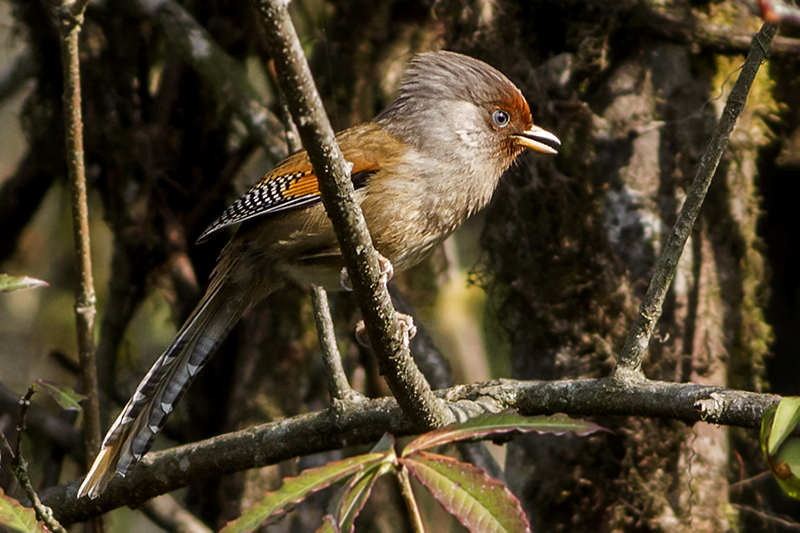

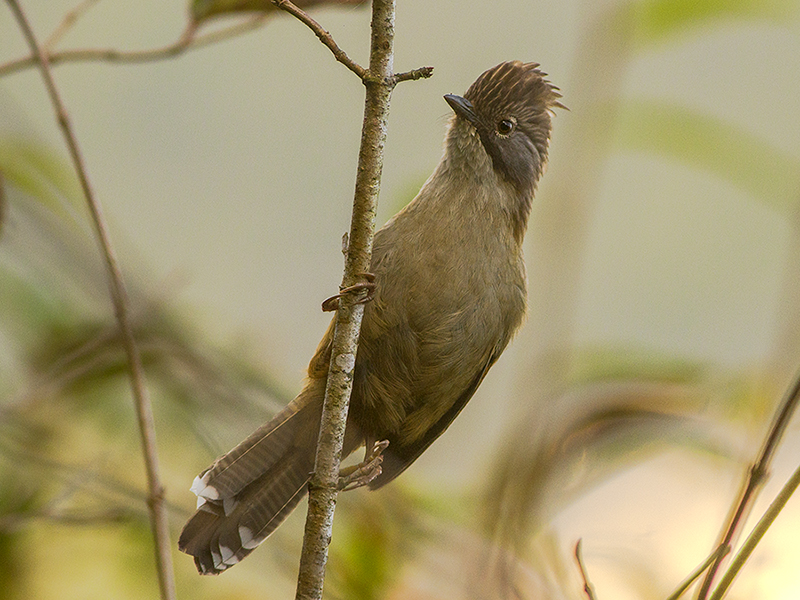
Birds Similar to the Common Babbler
These species are often confused with the Common Babbler due to similar appearance or overlapping range.