
Fulvous Parrotbill
Suthora fulvifrons
Order: Passeriformes / Family: Sylviidae

Wikimedia Commons
About the Fulvous Parrotbill
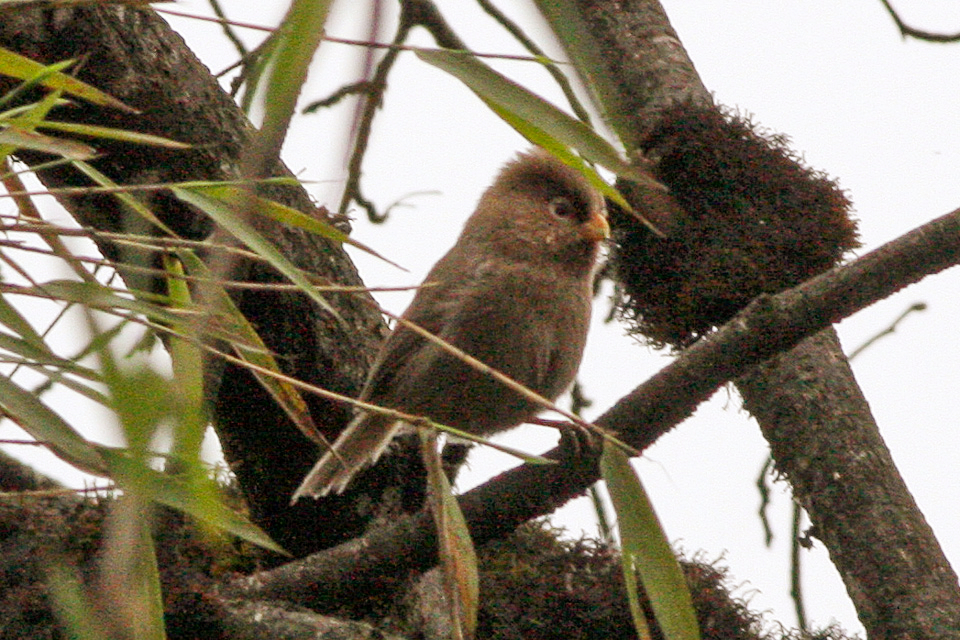
The Fulvous Parrotbill (Suthora fulvifrons) is a distinctive passerine bird belonging to the family Sylviidae. This species is notable for its vibrant fulvous, or orange-brown, plumage and uniquely shaped bill, which it employs adeptly in its bamboo-dominated habitats. Found primarily in the montane regions of the Himalayas, this bird inhabits areas that span from northeastern India through Bhutan, southern China, and into northern Myanmar. The Fulvous Parrotbill thrives in subtropical and tropical moist montane forests, particularly those rich in bamboo undergrowth. As an integral component of its ecosystem, this parrotbill plays a vital role in seed dispersal and may assist in regulating insect populations through its diet. The bird's ecological role is particularly significant during the breeding season when its insect consumption peaks. Its seasonal behaviors are characterized by altitudinal migrations, often descending to lower elevations during harsh winters. This altitudinal movement aligns with its need for food availability, as it seeks out areas where bamboo seeds and insects are abundant. The Fulvous Parrotbill’s presence in these regions underscores the importance of maintaining bamboo forests, which face threats from logging and agricultural expansion. Conservation efforts for this bird not only benefit the species but also the vast array of biodiversity supported by these unique ecosystems.
The Fulvous Parrotbill belongs to the family Sylviidae, within the order Passeriformes. These birds typically live average 3-6 years; max recorded 9 years..
How to Identify a Fulvous Parrotbill
Identifying the Fulvous Parrotbill involves noting its compact size, typically measuring around 14 centimeters in length. The adult plumage is predominantly fulvous with a striking contrast provided by its black lores and whitish throat. Its stout, conical bill is a key feature, well suited to its feeding habits. Juveniles resemble adults but often display slightly duller plumage. Males and females appear similar, making sexing in the field challenging. Confusion might arise with other parrotbills, particularly the Black-throated Parrotbill, but the Fulvous can be distinguished by its uniform body color and lack of a black throat patch. In flight, it exhibits a short, rounded wing silhouette and a quick, bounding flight pattern. When perched, the Fulvous Parrotbill maintains an upright posture, often clinging to bamboo stalks as it forages.
Having trouble telling birds apart? Upload a photo to our bird identification tool for an instant species match.
Fulvous Parrotbill Habitat and Range
Preferred Habitat
The Fulvous Parrotbill predominantly inhabits subtropical and tropical moist montane forests. It shows a marked preference for areas with dense bamboo thickets, which provide both food and shelter. These birds are typically found at elevations ranging from 1,500 to 3,500 meters, though they may descend to lower altitudes during winter months in search of food. While primarily a denizen of forested areas, they occasionally venture into adjacent shrubby clearings. The parrotbill's presence is mostly limited to rural and wild settings as it avoids urban environments, which lack the dense vegetation it requires.
Geographic Range
The Fulvous Parrotbill’s range extends across the eastern Himalayas, including northeastern India, Bhutan, and parts of southern and central China, such as Yunnan and Sichuan provinces. Its distribution also reaches northern Myanmar. The species does not undertake long-distance migrations but instead exhibits altitudinal movements within its range. During the breeding season, it occupies higher elevations, while in winter, it descends to lower levels to escape harsh conditions. Population densities are notably higher in regions with extensive bamboo growth, where the bird's specialized feeding habits can be readily supported.
Want to know which birds visit your area? Browse our backyard birds by location guides for region-specific species lists.
What Does the Fulvous Parrotbill Eat?
The diet of the Fulvous Parrotbill primarily consists of bamboo seeds, complemented by a variety of insects, especially during the breeding season. This dietary switch ensures the nutritional needs of growing chicks are met. The parrotbill employs a foraging technique that involves clinging to bamboo stems, using its stout bill to pry open seed heads and probe for insects hidden within foliage. The bird feeds throughout the day, with peak activity occurring in the early morning and late afternoon. Prey size varies but generally includes small to medium insects and their larvae, which are abundant in its montane forest habitat.
Fulvous Parrotbill Behavior and Social Structure
Fulvous Parrotbills are social birds, often observed in small, loose flocks that can number up to 20 individuals. These flocks facilitate cooperative foraging and provide some protection against predators. The species exhibits some territorial behavior, particularly during the breeding season when pairs may defend nesting sites. Courtship displays are subtle, involving mutual preening and soft vocalizations. The parrotbill’s response to predators includes alarm calls and rapidly seeking cover in dense bamboo thickets. Daily activity patterns involve active foraging sessions interspersed with periods of rest during the hottest parts of the day.
Fulvous Parrotbill Nesting and Reproduction
The Fulvous Parrotbill constructs cup-shaped nests using bamboo leaves, grass, and other fine plant materials. Nests are typically located low in dense bamboo thickets or shrubs, providing concealment from predators. A clutch usually comprises 3 to 5 eggs, which are incubated by both parents for about 12 to 14 days. After hatching, chicks remain in the nest for approximately 10 to 12 days. Parental care involves both feeding and protection until fledging. The species generally raises one or two broods per year, depending on food availability and environmental conditions.
Fulvous Parrotbill Sounds and Vocalizations
The primary song of the Fulvous Parrotbill is a series of high-pitched, melodious whistles that vary in rhythm and pitch. Call notes consist of short, sharp 'chit' or 'cheet' sounds used for communication within flocks. Alarm calls are more rapid and harsh, serving to alert other members of the presence of threats. The Fulvous Parrotbill participates in a dawn chorus, during which its voice contributes to the vibrant soundscape of its forest environment. Its calls are reminiscent of other sylviid warblers, though with a unique tonal quality.
Interesting Facts About the Fulvous Parrotbill
- 1The Fulvous Parrotbill can be found at elevations exceeding 3,500 meters, showcasing its adaptability to high-altitude environments.
- 2Despite its name, the Fulvous Parrotbill is more closely related to Old World warblers than to true parrots.
- 3Its diet shifts seasonally from predominantly seeds to insects, reflecting its flexible feeding strategy.
- 4The parrotbill’s stout bill is specially adapted to feeding on bamboo seeds, a key feature distinguishing it from similar species.
- 5Fulvous Parrotbills form mixed-species flocks outside the breeding season, enhancing foraging efficiency and predator vigilance.
- 6The species exhibits altitudinal migration, moving to lower elevations during winter months to avoid harsh weather conditions.
- 7In some cultures, the Fulvous Parrotbill is seen as a symbol of adaptability due to its ability to thrive in diverse environments.
Fulvous Parrotbill Conservation Status
The Fulvous Parrotbill is currently classified as Least Concern by the IUCN. While its population is considered stable, habitat destruction due to deforestation and agricultural expansion poses significant threats. Conservation efforts focus on preserving bamboo forests, which are critical to the parrotbill’s survival. In regions where deforestation has occurred, population declines have been observed, underscoring the need for habitat protection and restoration initiatives to ensure long-term viability.
Other Sylviidae Species



Birds Similar to the Fulvous Parrotbill
These species are often confused with the Fulvous Parrotbill due to similar appearance or overlapping range.

