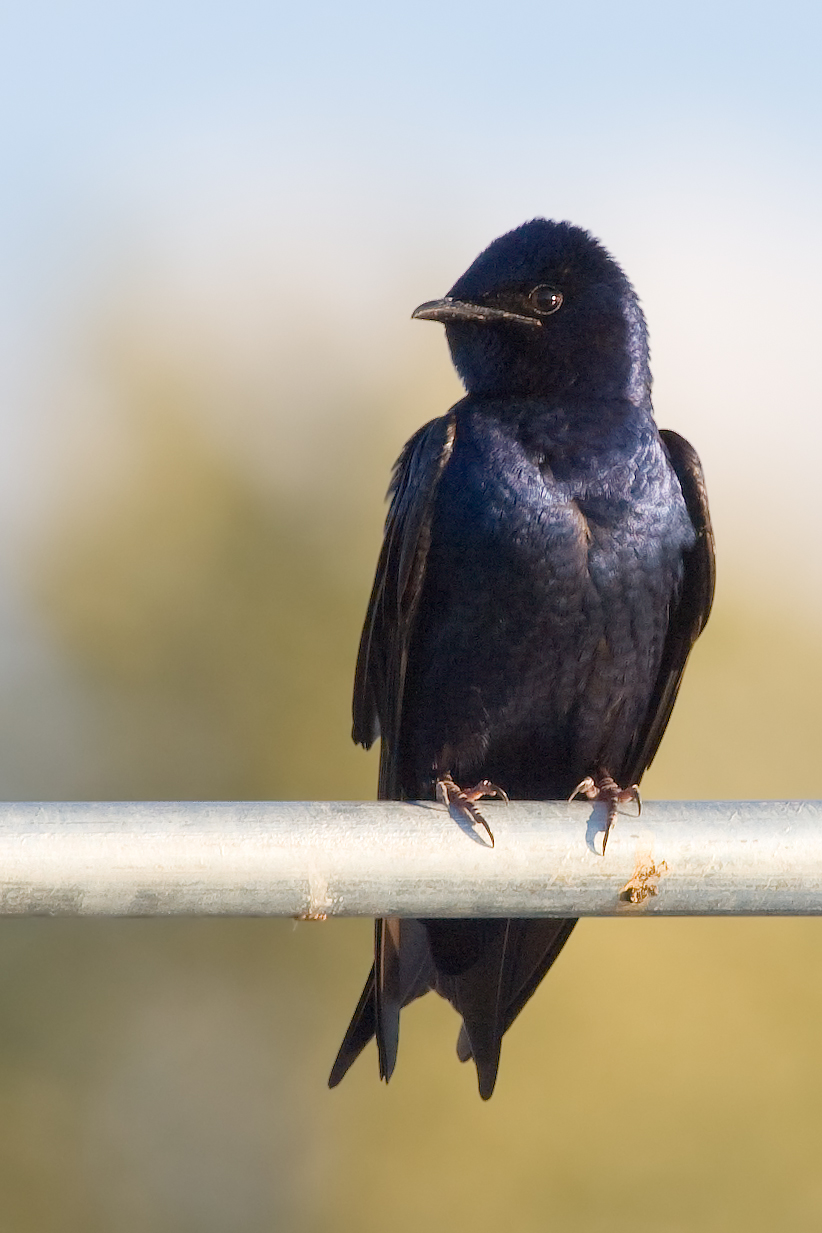
Galapagos Martin
Progne modesta
Order: Passeriformes / Family: Hirundinidae

Wikimedia Commons
About the Galapagos Martin
The Galapagos Martin, Progne modesta, is a unique bird species endemic to the Galapagos Islands, an archipelago renowned for its unparalleled biodiversity. This bird is a member of the Hirundinidae family and is distinguished by its small size and dark, glossy plumage. While it shares its lineage with other martins, the Galapagos Martin stands out due to its limited geographical distribution and specific adaptations to the island environments. This species plays a significant role in the local ecosystem as an insectivore, helping to control insect populations. Its presence underscores the ecological complexity of the Galapagos Islands, which host a variety of endemic species. Typically found across several islands, including Isabela, Santa Cruz, and San Cristobal, the Galapagos Martin is particularly active during the breeding season, which aligns with the rainy months of the archipelago. This timing ensures an abundance of food resources to support its reproductive success. The species exhibits behavioral adaptations to the unique environment of the Galapagos, such as altering its foraging habits based on seasonal availability of insects. The Galapagos Martin also highlights the conservation challenges faced by island ecosystems. Due to its limited distribution, the species is susceptible to habitat changes and invasive species, making its conservation status a subject of concern. Efforts to preserve the natural habitat of the Galapagos Islands are crucial to ensuring the survival of this and other native species. Overall, the Galapagos Martin offers a fascinating glimpse into the dynamics of island ecosystems, where species often evolve distinct traits and behaviors to thrive in isolated conditions.
The Galapagos Martin belongs to the family Hirundinidae, within the order Passeriformes. These birds typically live average 4-6 years, with a maximum recorded of 8 years..
How to Identify a Galapagos Martin
The Galapagos Martin is a small bird, measuring around 13 to 14 cm in length. Its most striking feature is its glossy blue-black plumage, which reflects sunlight to create an iridescent sheen. Adult males and females are similar in appearance, although males may exhibit slightly more vibrant coloration. Juveniles, on the other hand, have a more muted appearance with duller, brownish plumage. This difference makes young birds distinguishable from adults during field observations. When observing the Galapagos Martin in flight, note its narrow wings and forked tail, which contribute to its agile flight pattern. Unlike some other martin species, the Galapagos Martin does not display stark sexual dimorphism, making it challenging to differentiate genders visually. In terms of posture, this martin usually perches on exposed branches or wires, often in a slightly hunched position. It can be confused with other swallow species, but its unique combination of size, coloration, and restricted range helps to set it apart. Birdwatchers should pay close attention to its flight style and plumage sheen to accurately identify the Galapagos Martin.
Having trouble telling birds apart? Upload a photo to our bird identification tool for an instant species match.
Galapagos Martin Habitat and Range
Preferred Habitat
The Galapagos Martin is predominantly found in coastal and scrubland habitats on the Galapagos Islands. It prefers open areas that offer ample foraging opportunities, such as fields and clearings near water bodies. Its elevation range extends from sea level to low mountainous areas, though it is most commonly seen at lower elevations. The species shows some plasticity in habitat use, occasionally venturing into more urbanized areas, especially where human structures provide convenient perching spots. During different seasons, the bird may shift slightly in habitat preference, moving towards areas with higher insect activity, which aligns with the rainy season when insect populations peak. Despite these shifts, the Galapagos Martin remains primarily associated with the natural landscapes of the islands, avoiding dense forests and heavily urbanized regions.
Geographic Range
The Galapagos Martin is strictly endemic to the Galapagos Islands, with no known populations outside this archipelago. Its distribution is patchy across the islands, with notable presence on Isabela, Santa Cruz, San Cristobal, and a few other islands. During the breeding season, the martins congregate in areas that offer optimal nesting conditions and abundant food supply, such as near coastal cliffs or isolated buildings. The species does not engage in long-distance migration, remaining within the Galapagos throughout the year. However, it may undertake short-distance movements between islands or within an island in response to environmental conditions and food availability. Population density varies by island, with certain areas hosting higher concentrations of Galapagos Martins, especially during favorable weather conditions.
Want to know which birds visit your area? Browse our backyard birds by location guides for region-specific species lists.
What Does the Galapagos Martin Eat?
The diet of the Galapagos Martin primarily consists of flying insects, which it captures on the wing using agile flight maneuvers. It feeds on a variety of insects, including flies, beetles, and moths. The bird's diet shifts slightly with the seasons, becoming more diverse during the rainy season when insect abundance increases. During this time, the Galapagos Martin may also consume small amounts of spiders and other arthropods. This species employs aerial foraging techniques, often seen skimming the surface of water or swooping through open fields to catch prey. The martin's foraging activity peaks during early morning and late afternoon, coinciding with periods of high insect activity. Its ability to adapt its foraging strategy to the availability of prey is a testament to its ecological flexibility.
Galapagos Martin Behavior and Social Structure
The Galapagos Martin exhibits a variety of interesting behaviors that reflect its adaptation to island life. It tends to be solitary or found in small groups, particularly outside the breeding season. During the breeding season, however, it becomes more social, occasionally forming loose colonies. Territorial behavior is evident, especially during courtship when males perform aerial displays to attract females. These displays involve intricate flight patterns and vocalizations. Once paired, Galapagos Martins show a strong pair bond, with both partners participating in nest building and chick rearing. When confronted with potential predators, the martins engage in mobbing behavior, where multiple individuals work together to deter the threat. Daily activity patterns show a preference for foraging during the cooler parts of the day, with periods of rest during the heat of midday.
Galapagos Martin Nesting and Reproduction
The nesting habits of the Galapagos Martin are quite specialized, reflecting its adaptation to the unique island environment. Nests are typically constructed in natural cavities or crevices within cliffs, although the birds may also use man-made structures such as abandoned buildings. The nest is built primarily by the female, using materials like grass, feathers, and mud to create a sturdy cup. Clutch size ranges from 2 to 4 eggs, which are incubated by the female for approximately 14 to 16 days. After hatching, both parents contribute to feeding the chicks, which fledge about 21 to 24 days later. The Galapagos Martin generally raises one brood per year, although in particularly favorable conditions, a second brood may be attempted.
Galapagos Martin Sounds and Vocalizations
The primary song of the Galapagos Martin is a series of high-pitched, twittering notes that serve as a means of communication between males and females during the breeding season. The song has a rapid, rhythmic quality, often delivered in flight. In addition to its song, the martin produces a variety of call notes, including sharp 'chek' sounds used in social interactions and territorial disputes. Alarm calls are more urgent and harsher, designed to warn others of potential threats. During the dawn chorus, the Galapagos Martin's song contributes to the island's vibrant soundscape, mingling with the calls of other endemic birds.
Interesting Facts About the Galapagos Martin
- 1The Galapagos Martin is one of the few swallow species endemic to an island group, highlighting its unique evolutionary path.
- 2Despite its small size, the Galapagos Martin plays a crucial role in controlling insect populations on the islands.
- 3This species' glossy blue-black plumage is not just for show; it helps in camouflage against predators.
- 4The Galapagos Islands' isolation has led to the martin developing distinct vocalizations compared to mainland relatives.
- 5Galapagos Martins have been observed using both natural and artificial structures for nesting, showing adaptability.
- 6The martins' aerial acrobatics are not just for catching prey; they are also a part of their courtship displays.
- 7The Galapagos Martin's breeding season coincides with the rainy season, ensuring ample food supply for raising chicks.
Galapagos Martin Conservation Status
The IUCN lists the Galapagos Martin as Near Threatened, reflecting concerns about its small population size and limited range. Population trends suggest a decline, attributed to habitat degradation, invasive species, and climate change. Conservation efforts in the Galapagos focus on habitat protection and invasive species control, aiming to preserve the delicate island ecosystems. Historically, the species has faced challenges from introduced predators and competition for nesting sites. Continued monitoring and protective measures are essential to safeguard the future of the Galapagos Martin.
Other Hirundinidae Species


Birds Similar to the Galapagos Martin
These species are often confused with the Galapagos Martin due to similar appearance or overlapping range.