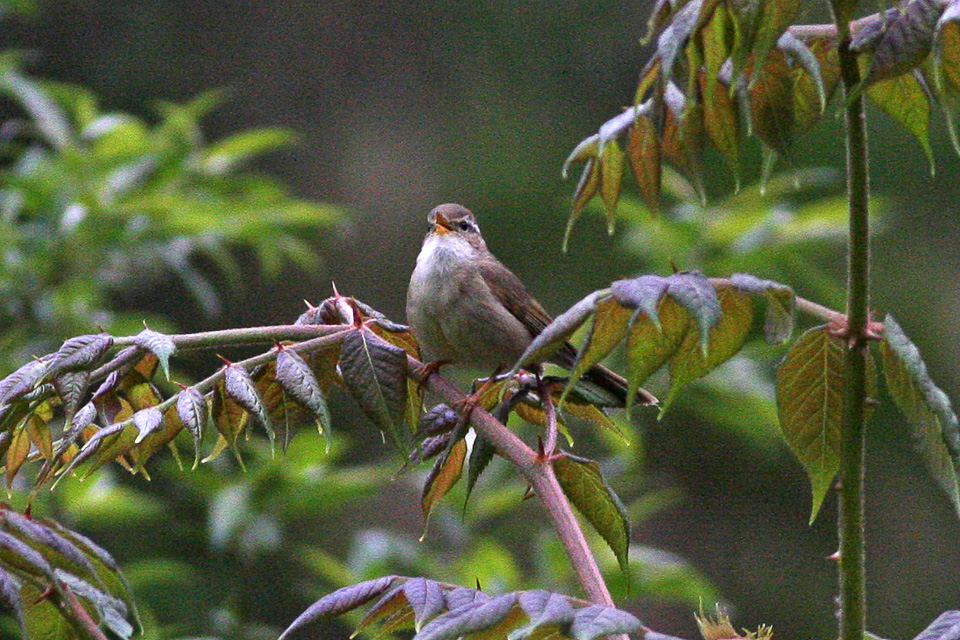
Gansu Leaf Warbler
Phylloscopus kansuensis
Order: Passeriformes / Family: Phylloscopidae

Wikimedia Commons
About the Gansu Leaf Warbler
The Gansu Leaf Warbler, scientifically known as Phylloscopus kansuensis, is a small passerine bird revered for its vibrant green plumage and melodious song. This species belongs to the family Phylloscopidae, a group known for their agile movements and intricate vocalizations. The Gansu Leaf Warbler predominantly inhabits the montane regions of central China, particularly in Gansu and Sichuan provinces, where it thrives in mixed coniferous and deciduous forests. These environments provide ample cover and food resources, essential for their breeding and foraging activities.
The ecological role of the Gansu Leaf Warbler is significant, as it contributes to the control of insect populations, mainly through its diet of caterpillars and small arthropods. By maintaining a balance in the ecosystem, this warbler indirectly supports forest health and productivity. During the breeding season, which spans from late April to July, these warblers become particularly active, engaging in vocal displays and intricate territorial behaviors to attract mates and defend their nesting areas.
Seasonal behavior of the Gansu Leaf Warbler reflects its adaptability to different environmental conditions. In winter, when insect availability declines, the warbler may shift its diet slightly to include more plant material, although this is secondary to its primary insect-based diet. The species is partially migratory, with some populations moving downslope to lower elevations during colder months, ensuring survival through harsh winters. This adaptability underscores the Gansu Leaf Warbler's resilience and ecological importance in its native habitats.
The Gansu Leaf Warbler belongs to the family Phylloscopidae, within the order Passeriformes. These birds typically live average 4-6 years, with some recorded up to 8 years..
How to Identify a Gansu Leaf Warbler
The Gansu Leaf Warbler is a small bird, measuring approximately 10 to 11 centimeters in length, with a wingspan of 16 to 18 centimeters. Adults exhibit a striking green plumage on the upperparts, which provides excellent camouflage among the foliage. The underparts are a paler yellowish-white, offering a subtle contrast that aids in identification. A distinct white supercilium, or eyebrow stripe, enhances its facial pattern, making it easier to distinguish from similar species.
Juvenile Gansu Leaf Warblers tend to have duller plumage compared to adults, with less pronounced supercilium and more muted green tones. Males and females appear similar, though males may exhibit slightly brighter plumage during the breeding season, a trait common among many passerine birds.
While similar species like the Yellow-browed Warbler and the Greenish Warbler inhabit overlapping regions, the Gansu Leaf Warbler can be distinguished by its slightly larger size and more pronounced green coloration. In flight, this bird showcases a rapid, agile movement pattern, often flitting between branches in search of food, a behavior that further aids in its identification.
Having trouble telling birds apart? Upload a photo to our bird identification tool for an instant species match.
Gansu Leaf Warbler Habitat and Range
Preferred Habitat
The Gansu Leaf Warbler primarily inhabits montane forests, favoring altitudes between 1,800 and 3,400 meters. These forests, often consisting of a mix of coniferous and deciduous trees, provide the dense canopy cover and rich insect life necessary for the warbler's survival. During the breeding season, they are commonly found in the understorey and mid-canopy layers, where they build their nests and forage.
In terms of seasonal habitat shifts, some populations of the Gansu Leaf Warbler descend to lower elevations during the winter months, where they inhabit more open, scrubby areas or mixed woodlands. This movement is largely driven by food availability and climatic conditions.
While primarily a forest-dwelling species, the Gansu Leaf Warbler occasionally ventures into more urbanized areas, particularly where green spaces or wooded parks provide suitable foraging opportunities. However, urban presence is infrequent, as they predominantly rely on natural forest environments for sustenance and reproduction.
Geographic Range
The Gansu Leaf Warbler breeds in the high-altitude regions of central China, particularly within the provinces of Gansu, Sichuan, and parts of Qinghai. These areas offer the necessary montane forest habitats that support their breeding and foraging needs. During the summer months, these birds are a common sight within these regions, though their population density may vary depending on specific habitat conditions and food availability.
As winter approaches, some populations migrate to lower elevations, potentially reaching areas in southern China, where milder climates prevail. This altitudinal migration allows them to access more abundant food resources during the colder months.
The migration corridors of the Gansu Leaf Warbler are primarily confined within China, although there may be occasional sightings in neighboring countries, such as northern Vietnam and Myanmar. However, these occurrences are rare and usually involve individuals dispersing from their primary range.
Want to know which birds visit your area? Browse our backyard birds by location guides for region-specific species lists.
What Does the Gansu Leaf Warbler Eat?
The diet of the Gansu Leaf Warbler is predominantly insectivorous, with a strong preference for caterpillars, beetles, and other small arthropods. During the breeding season, their feeding intensity increases, as they require additional energy to sustain themselves and their young.
Foraging typically occurs within the mid to upper canopy levels, where they employ a gleaning technique to pick off insects from leaves and branches. The warbler's quick, agile movements allow it to efficiently search for prey, often hopping from branch to branch or hovering briefly to reach insects on the undersides of leaves.
Seasonally, the diet of the Gansu Leaf Warbler may include a small proportion of plant material, such as berries or seeds, particularly during winter when insect abundance decreases. This dietary flexibility helps the warbler to survive in varying environmental conditions, though insects remain its primary food source.
Gansu Leaf Warbler Behavior and Social Structure
The Gansu Leaf Warbler exhibits a range of behaviors that reflect its adaptability and resourcefulness. Socially, these birds are generally solitary or found in pairs, particularly during the breeding season when territorial instincts are most pronounced. Males establish territories through song, using their melodious and complex vocalizations to ward off rivals and attract mates.
Courtship displays involve a combination of vocalization and visual cues, with males often fluttering their wings and displaying their plumage to entice females. The Gansu Leaf Warbler's territorial and courtship behaviors are critical for successful breeding, ensuring that each pair has access to sufficient resources and suitable nesting sites.
In terms of daily activity patterns, this warbler is most active during the early morning and late afternoon, when it forages extensively. Throughout the day, it engages in preening and resting, often within the safety of dense foliage. While generally shy and elusive, the Gansu Leaf Warbler becomes more conspicuous during the dawn chorus, when its song can be heard resonating through the forest.
When faced with potential threats, these warblers employ a range of defensive behaviors, including rapid, erratic flight patterns and seeking cover within dense vegetation. They may also emit alarm calls to alert other birds of nearby predators, showcasing their collaborative defense strategies.
Gansu Leaf Warbler Nesting and Reproduction
The Gansu Leaf Warbler constructs its nests within dense shrubbery or low branches, preferring sites that offer ample cover and protection from predators. Nests are typically cup-shaped and built using a variety of natural materials, including grass, moss, and feathers, which provide insulation and camouflage.
A typical clutch consists of 3 to 5 eggs, with incubation primarily undertaken by the female over a period of approximately 12 to 14 days. During this time, the male assists by defending the territory and occasionally providing food to the incubating female.
Once hatched, the chicks are altricial, requiring significant parental care. Both parents participate in feeding the young, bringing a steady supply of insects to the nest. The fledgling period lasts about 12 to 15 days, after which the young birds leave the nest but remain under parental supervision until they can forage independently.
The Gansu Leaf Warbler typically raises one brood per year, though in optimal conditions, a second brood may be attempted. This reproductive strategy ensures that the warbler can maximize its breeding success within the constraints of its environment.
Gansu Leaf Warbler Sounds and Vocalizations
The primary song of the Gansu Leaf Warbler is a series of melodious notes, characterized by a rhythmic and musical quality that is both pleasing and distinctive. The song features a mix of trills and whistles, often described as a cascading sequence that rises and falls in pitch.
Call notes are short and sharp, serving as contact calls between individuals, particularly in dense foliage where visual contact is limited. Alarm calls are more abrupt and harsh, designed to alert other birds to the presence of potential predators in the vicinity.
During the dawn chorus, the Gansu Leaf Warbler's song is particularly prominent, contributing to the rich tapestry of sounds that characterize its habitat. This vocal behavior not only serves to establish territory and attract mates but also plays a role in the social dynamics of the forest bird community.
Interesting Facts About the Gansu Leaf Warbler
- 1The Gansu Leaf Warbler's scientific name, Phylloscopus kansuensis, highlights its primary range in Gansu province, China.
- 2Despite its small size, the Gansu Leaf Warbler can travel significant distances during seasonal migrations, showcasing remarkable endurance.
- 3The Gansu Leaf Warbler's song is so complex that it has been studied for insights into avian vocal learning and communication.
- 4This species is often a target for birdwatchers due to its elusive nature and the challenging terrain of its montane forest habitat.
- 5The Gansu Leaf Warbler employs a unique hovering technique when foraging, allowing it to access insects on the undersides of leaves.
- 6During the breeding season, males can sing for hours, establishing territories and attracting mates with their persistent vocal displays.
- 7Gansu Leaf Warblers are part of a larger group of warblers that play a crucial role in controlling insect populations in forest ecosystems.
Gansu Leaf Warbler Conservation Status
The IUCN currently lists the Gansu Leaf Warbler as a species of Least Concern, reflecting a stable population trend. However, habitat loss due to logging and land conversion poses a potential threat to its long-term survival. Conservation efforts focus on protecting critical habitats within its breeding range, particularly in central China, where human activities are most pronounced. Historically, the population of the Gansu Leaf Warbler has remained relatively stable, but continued monitoring is essential to ensure that emerging threats do not lead to future declines. Protected areas and national parks within its range play a crucial role in safeguarding suitable habitats, though ongoing conservation measures must address the broader landscape to maintain ecological connectivity. Public awareness and education initiatives are also important, as they help foster a deeper understanding of the warbler's ecological role and the importance of preserving its natural environment.