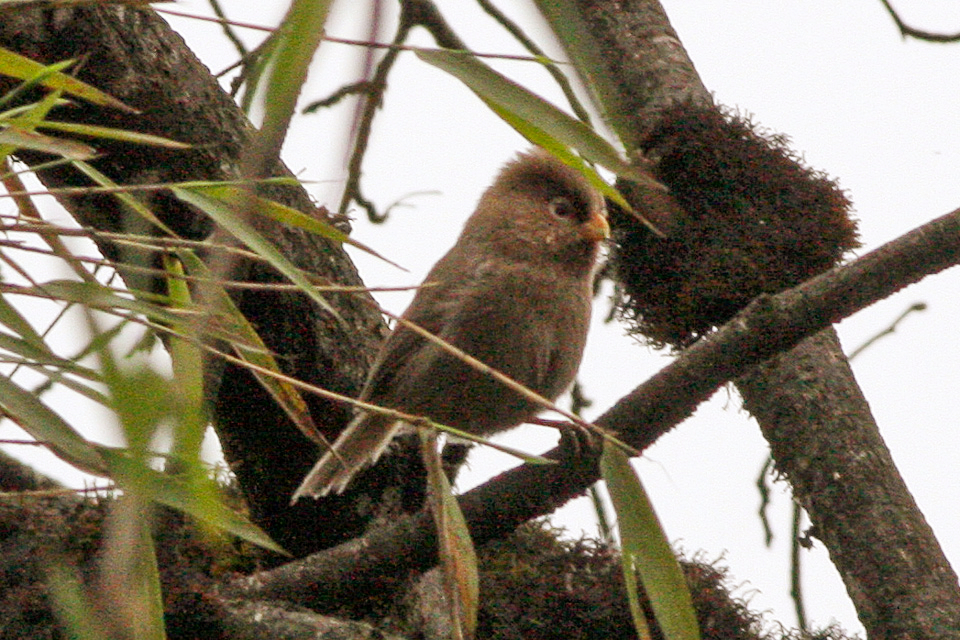
Garden Warbler
Sylvia borin
Order: Passeriformes / Family: Sylviidae

Wikimedia Commons
About the Garden Warbler
The Garden Warbler, known scientifically as Sylvia borin, is a medium-sized songbird belonging to the family Sylviidae. Despite its relatively plain appearance, this warbler holds a significant place in the avian world, primarily due to its extensive migratory patterns and melodious song. Found across Europe and parts of western Asia, the Garden Warbler frequents a variety of habitats, often preferring deciduous and mixed woodlands, as well as scrublands and gardens. During the breeding season, it is a common sight in the UK, Germany, and Scandinavia, while in winter, it migrates south to sub-Saharan Africa, showcasing one of the most remarkable long-distance migrations amongst small passerines.
The ecological role of the Garden Warbler is multifaceted. As an insectivore, it plays a pivotal role in controlling insect populations, especially during the breeding season when its diet predominantly consists of caterpillars and other soft-bodied insects. As autumn approaches, its diet shifts toward berries and fruits, aiding in seed dispersal for various plant species. This shift not only highlights the bird's adaptability but also its importance in maintaining the ecological balance across different habitats.
Seasonal behaviors of the Garden Warbler are quite distinct. During spring and summer, males are known for their vigorous singing, a display used to establish territories and attract mates. This song, though lacking the colorful diversity of some other warblers, is rich and flute-like, contributing to the tranquillity of European woodlands. In autumn, the warblers become less vocal as they prepare for their arduous journey to Africa, traveling in mostly solitary migrations, a behavior that minimizes competition for food resources along the route.
The Garden Warbler belongs to the family Sylviidae, within the order Passeriformes. These birds typically live average 6 years with a maximum recorded of 10 years..
How to Identify a Garden Warbler
Identifying the Garden Warbler can be challenging due to its lack of distinctive markings. Adults feature a uniform brownish-gray plumage above with a paler, grayish-white underside. Unlike many of its relatives, the Garden Warbler lacks the conspicuous eye-ring or wing bars, contributing to its somewhat nondescript appearance. However, its subtle beauty lies in its streamlined shape and the soft texture of its feathers. Juveniles resemble adults but may exhibit a slightly duller overall coloration.
There is little sexual dimorphism in this species, meaning males and females look quite similar. This can add to the difficulty in field identification but becomes easier when the bird is singing during the breeding season, as only the male sings. In flight, the Garden Warbler shows a steady, direct flight pattern, often flying low over vegetation. Perched, it sits upright on slender branches, frequently flicking its wings and tail.
Confusion with similar species, such as the Blackcap (Sylvia atricapilla), is common. However, the Garden Warbler's lack of a distinctive cap, which gives the Blackcap its name, can help differentiate the two. Listening for the song is another reliable method, as the Garden Warbler's song is more continuous and less varied compared to the Blackcap's.
Having trouble telling birds apart? Upload a photo to our bird identification tool for an instant species match.
Garden Warbler Habitat and Range
Preferred Habitat
The Garden Warbler thrives in a range of habitats, with a strong preference for dense vegetation. Deciduous and mixed woodlands provide the ideal environment, particularly areas with a rich understory of shrubs. This bird also frequents overgrown gardens, hedgerows, and scrubland, showcasing its adaptability to varying landscapes.
In terms of elevation, the Garden Warbler is typically found from lowland areas up to elevations of about 1,500 meters, depending on the region. It exhibits some seasonal habitat shifts, breeding primarily in temperate forests of Europe and migrating to moist savannas and woodlands in Africa during winter.
While predominantly a rural bird, the Garden Warbler can occasionally be found in urban parks and large gardens, particularly ones that offer dense shrubbery and a variety of plant life. Its presence in urban areas is less common compared to rural settings, but it highlights the bird's versatile nature in adapting to diverse environments.
Geographic Range
The breeding range of the Garden Warbler spans most of Europe, extending into western Asia. It is particularly abundant in countries like Germany, Poland, and the United Kingdom, where suitable woodland habitats are prevalent. Scandinavia, too, hosts a significant population during the breeding season.
In winter, the Garden Warbler undertakes a remarkable migration to sub-Saharan Africa, reaching as far as South Africa. This journey covers thousands of kilometers and involves passing through various countries, including Morocco and across the Sahara Desert, a testament to the bird's resilience and navigational abilities.
Migration corridors typically follow the western and central European routes down through the Iberian Peninsula or through Italy and the Mediterranean islands. Population density is highest in central and eastern Europe during the breeding season, while in Africa, it is more widespread, occurring in various habitats from West Africa to the eastern seaboard.
Want to know which birds visit your area? Browse our backyard birds by location guides for region-specific species lists.
What Does the Garden Warbler Eat?
The Garden Warbler's diet primarily consists of insects during the breeding season. It feeds on caterpillars, beetles, flies, and spiders, which provide the necessary protein for raising young chicks. The warbler employs a gleaning technique, meticulously picking insects from foliage and occasionally sallying out to catch flying prey.
As the seasons transition to autumn, the Garden Warbler's diet shifts significantly toward fruits and berries. It favors elderberries, blackberries, and other soft fruits, which not only provide sustenance but also help the bird build fat reserves for migration. This dietary flexibility showcases the warbler's adaptability to changing food availability and seasonal conditions.
During migration and in its wintering grounds in Africa, the Garden Warbler continues to exploit available food sources, including both insects and fruits, depending on the habitat and time of year. It is most active in feeding during the early morning and late afternoon, times when its insect prey is also more active.
Garden Warbler Behavior and Social Structure
The Garden Warbler is primarily solitary outside of the breeding season, with a distinct territorial behavior when breeding. Males arrive at breeding grounds ahead of females to establish territories, which they defend vigorously through song and displays. The male's song is a critical part of courtship, serving both to attract a mate and to ward off intruding males.
Courtship involves the male performing a series of displays, including wing tremors and hopping, to capture the female's attention. Once paired, Garden Warblers exhibit strong pair bonds throughout the breeding season. Despite their solitary nature, they may occasionally join mixed-species flocks outside of breeding season, particularly during migration.
The Garden Warbler's response to predators involves a range of alarm calls and evasive actions. When threatened, it uses dense vegetation as cover, darting swiftly from perch to perch. Daily activity patterns show a preference for foraging during daylight hours, with peaks in activity during the morning and late afternoon.
Garden Warbler Nesting and Reproduction
Garden Warblers construct their nests low to the ground in dense vegetation, often choosing brambles, nettles, or other thick shrubs for concealment. The nest is a cup-shaped structure, skillfully woven from grass, leaves, and spider silk, providing a secure environment for the eggs.
A typical clutch consists of 3-5 eggs, which are incubated primarily by the female for about 11-13 days. During this period, the male assists by foraging and feeding the female. After hatching, both parents share the responsibilities of feeding and caring for the chicks.
Fledging occurs approximately 10-12 days after hatching, though the young remain dependent on the parents for some time afterward. Garden Warblers generally produce one brood per season, but in favorable conditions, a second brood may occasionally be attempted.
Garden Warbler Sounds and Vocalizations
The Garden Warbler's song is a musical and continuous warble, composed of a series of melodious phrases delivered at a steady pace. The song's rhythm is fluid and flute-like, lacking the sharp trills or whistles found in some other warblers.
Call notes include soft 'tuk' sounds and more urgent alarm calls when disturbed or threatened. During the dawn chorus, the Garden Warbler's song blends into the symphony of other woodland birds, but its distinctive melody can often be singled out by experienced birders.
Compared to the Blackcap, its closest relative, the Garden Warbler's song is less varied but equally rich in quality, offering a soothing backdrop to the early morning or late evening hours.
Interesting Facts About the Garden Warbler
- 1The Garden Warbler can travel up to 18,000 kilometers during its annual migration, a remarkable feat for such a small bird.
- 2Despite its plain appearance, the Garden Warbler's song is highly regarded among bird enthusiasts for its melodious quality.
- 3The Garden Warbler is one of the earliest migrants to leave Europe, often departing as early as late July.
- 4During migration, Garden Warblers have been observed flying nonstop over the Sahara Desert, a journey taking several days.
- 5While primarily insectivorous, the Garden Warbler's digestive tract adapts to handle a fruit-based diet in late summer.
- 6Garden Warblers have a high metabolic rate, requiring constant feeding to maintain energy levels during migration.
- 7In Africa, the Garden Warbler shares its wintering grounds with other migratory birds, forming temporary mixed-species flocks.
Garden Warbler Conservation Status
According to the IUCN Red List, the Garden Warbler is classified as a species of Least Concern, indicative of a stable population trend across its range. However, threats such as habitat loss due to agricultural expansion and deforestation pose challenges to its long-term survival. Conservation efforts focus on preserving and restoring natural habitats, particularly in breeding areas across Europe. Monitoring programs track population changes, ensuring timely interventions if declines are detected. Historically, the Garden Warbler has maintained robust numbers, but climate change and shifting migratory patterns could influence future populations. Awareness and habitat management remain crucial components in securing the species' future.