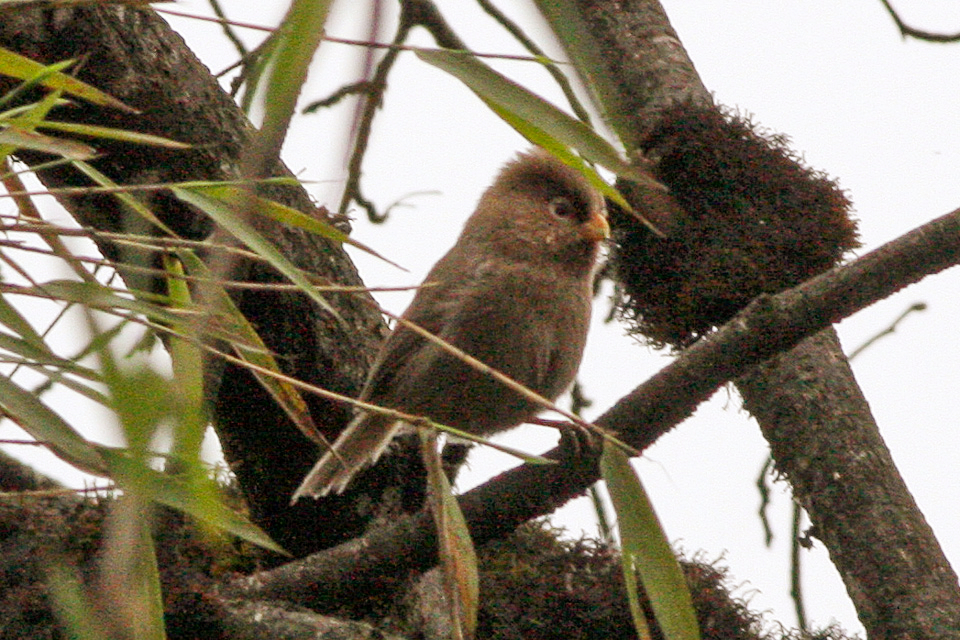
Golden-breasted Fulvetta
Lioparus chrysotis
Order: Passeriformes / Family: Sylviidae

Wikimedia Commons
About the Golden-breasted Fulvetta
The Golden-breasted Fulvetta (Lioparus chrysotis) is a small yet captivating bird that inhabits the montane forests of the Himalayas and Southeast Asia. This bird is particularly renowned for its stunning plumage, which features a vibrant golden breast that stands out amidst the lush greenery of its habitat. Found predominantly in countries such as Nepal, Bhutan, India, and parts of China, the Golden-breasted Fulvetta thrives in the dense undergrowth of subtropical and temperate forests. Its presence is often an indicator of rich biodiversity within these regions. These birds play a significant ecological role as insectivores, helping to control pest populations and maintain ecological balance in forest ecosystems. During the breeding season, these fulvettas become more conspicuous as they engage in elaborate courtship displays and vocalizations to attract mates. Their seasonal behaviors also include altitudinal migrations, where they move to lower elevations during the colder months. This migration is crucial for their survival, as it allows them to access more abundant food sources and milder climates. The Golden-breasted Fulvetta's ability to adapt to various elevations and its reliance on specific forest types highlight the importance of conserving these habitats. The bird's ecological niche as both a predator of insects and a prey species for larger birds of prey underscores its role in the forest food web. Furthermore, the fulvetta's vibrant coloration and melodious song have made it a subject of interest among birdwatchers and ornithologists, contributing to its significance as an indicator species for healthy forest environments.
The Golden-breasted Fulvetta belongs to the family Sylviidae, within the order Passeriformes. These birds typically live average 3-5 years, with a maximum recorded of 6 years..
How to Identify a Golden-breasted Fulvetta
The Golden-breasted Fulvetta can be identified by its striking golden-yellow breast and belly, contrasted with an olive-green back and grayish head. Adult plumage is characterized by a distinctive black eye stripe that runs from the bill to the nape, accentuating its expressive eyes. Juveniles tend to have a more muted coloration, with less pronounced golden hues and a paler overall appearance. Males and females appear similar, though males may display slightly brighter plumage during the breeding season. This species can be confused with similar small passerines such as the Rufous-winged Fulvetta, but the latter lacks the golden breast and has more rufous tones on its wings. In flight, the Golden-breasted Fulvetta exhibits rapid, fluttering wing beats and a short, rounded tail. When perched, it often adopts an upright posture, frequently flicking its wings and tail. Its distinctive coloration and active behavior make it easier to spot among the forest understory, despite its small size.
Having trouble telling birds apart? Upload a photo to our bird identification tool for an instant species match.
Golden-breasted Fulvetta Habitat and Range
Preferred Habitat
Golden-breasted Fulvettas primarily inhabit montane forests, preferring elevations between 1,500 and 3,000 meters. These birds favor dense undergrowth and thickets, where they find shelter and abundant food sources. In regions such as the eastern Himalayas and parts of Southeast Asia, they are common in broadleaf evergreen and mixed forests. During winter, they may descend to lower elevations, seeking warmer climates and more accessible food supplies. While they are predominantly forest dwellers, their adaptability allows them to occasionally venture into shrublands and forest edges. Unlike some other passerines, the Golden-breasted Fulvetta is less likely to be found in urban areas, highlighting its dependence on intact forest ecosystems for survival.
Geographic Range
The breeding range of the Golden-breasted Fulvetta extends across the eastern Himalayas, including Nepal, Bhutan, and northeastern India, such as the states of Sikkim and Arunachal Pradesh. It is also found in parts of southern China, particularly Yunnan and Sichuan provinces. During the non-breeding season, these birds may migrate altitudinally within their range, moving to lower elevations in search of milder climates and better foraging opportunities. Some populations in Southeast Asia, including northern Myanmar and northern Vietnam, are considered resident, with limited seasonal movements. Population densities are highest in areas with abundant forest cover and minimal human disturbance, making remote and protected areas crucial for their conservation.
Want to know which birds visit your area? Browse our backyard birds by location guides for region-specific species lists.
What Does the Golden-breasted Fulvetta Eat?
The diet of the Golden-breasted Fulvetta predominantly consists of insects and other small arthropods. These birds forage actively in the forest understory, using their sharp eyesight to detect movement among leaves and branches. They employ a range of foraging techniques, including gleaning from foliage and bark, hover-gleaning, and flycatching to capture prey. During the breeding season, their diet shifts slightly to include a higher proportion of protein-rich insects to support the nutritional needs of their growing chicks. While primarily insectivorous, they may occasionally consume seeds and berries, particularly during the winter months when insect abundance declines. Their feeding schedule is generally diurnal, with peaks in activity during the early morning and late afternoon.
Golden-breasted Fulvetta Behavior and Social Structure
Golden-breasted Fulvettas are sociable birds, often found in small flocks or mixed-species feeding groups. Their social structure revolves around these flocks, which provide increased protection from predators and aid in locating food resources. These birds exhibit territorial behavior during the breeding season, with males vigorously defending their nesting sites through vocalizations and displays. Courtship displays include fluttering flights and vocal duets, strengthening pair bonds. Flocking patterns vary seasonally, with larger flocks observed during the non-breeding season. When faced with predators, such as raptors, they rely on their agility and quick movements to escape. They are diurnal, with peak activity in the cooler hours of the day, and they roost communally at night for warmth and safety.
Golden-breasted Fulvetta Nesting and Reproduction
Golden-breasted Fulvettas construct cup-shaped nests from moss, leaves, and grass, often lined with feathers for insulation. Nests are typically located in dense shrubs or low trees, concealed from predators and sheltered from the elements. The clutch size ranges from 2 to 4 eggs, with both parents sharing incubation duties over a period of about 14 to 16 days. Once hatched, the chicks are altricial, requiring extensive parental care. Both parents participate in feeding and brooding, ensuring the chicks remain warm and well-fed. Fledging occurs approximately 12 to 15 days after hatching, with the young birds remaining under parental supervision for several weeks. The species may raise one or two broods per year, depending on environmental conditions and food availability.
Golden-breasted Fulvetta Sounds and Vocalizations
The primary song of the Golden-breasted Fulvetta is a series of melodious and clear whistles, often described as a 'tsee-tsee-chur' sequence. These vocalizations serve both territorial and mate-attraction purposes. Their call notes are soft and twittering, frequently used for communication within flocks. Alarm calls are sharper and more urgent, serving to alert group members of potential threats. During the dawn chorus, these fulvettas are among the first to sing, their voices adding to the symphony of forest sounds. Their song is reminiscent of the Black-throated Bushtit, but with a distinctly brighter tone.
Interesting Facts About the Golden-breasted Fulvetta
- 1The Golden-breasted Fulvetta was first described in the mid-19th century, highlighting its long-standing recognition in ornithology.
- 2Despite its vibrant colors, the Golden-breasted Fulvetta is adept at camouflage, blending seamlessly into the dappled light of forest undergrowth.
- 3During courtship, male Golden-breasted Fulvettas perform fluttering flights, showcasing their agility and vivid plumage.
- 4The species' altitudinal migration is a crucial survival strategy, allowing it to exploit seasonal food resources effectively.
- 5Golden-breasted Fulvettas often form mixed-species flocks, associating with other insectivorous birds to enhance foraging efficiency.
- 6These birds contribute to forest health by controlling insect populations, acting as natural pest regulators.
- 7The Golden-breasted Fulvetta's song is a delightful component of the dawn chorus in its native forests, enriching the auditory landscape.
Golden-breasted Fulvetta Conservation Status
The Golden-breasted Fulvetta currently holds a status of Least Concern on the IUCN Red List, with a stable population trend. However, habitat loss due to deforestation and land conversion poses a significant threat to their populations. Conservation efforts focus on protecting forest habitats and establishing protected areas in key regions. Historical population changes are not well-documented, but ongoing habitat degradation could impact future numbers. Engaging local communities in conservation initiatives and promoting sustainable land-use practices are vital for the long-term survival of this species.