
Golden-headed Manakin
Pipra erythrocephala
Order: Passeriformes / Family: Pipridae

Wikimedia Commons
About the Golden-headed Manakin
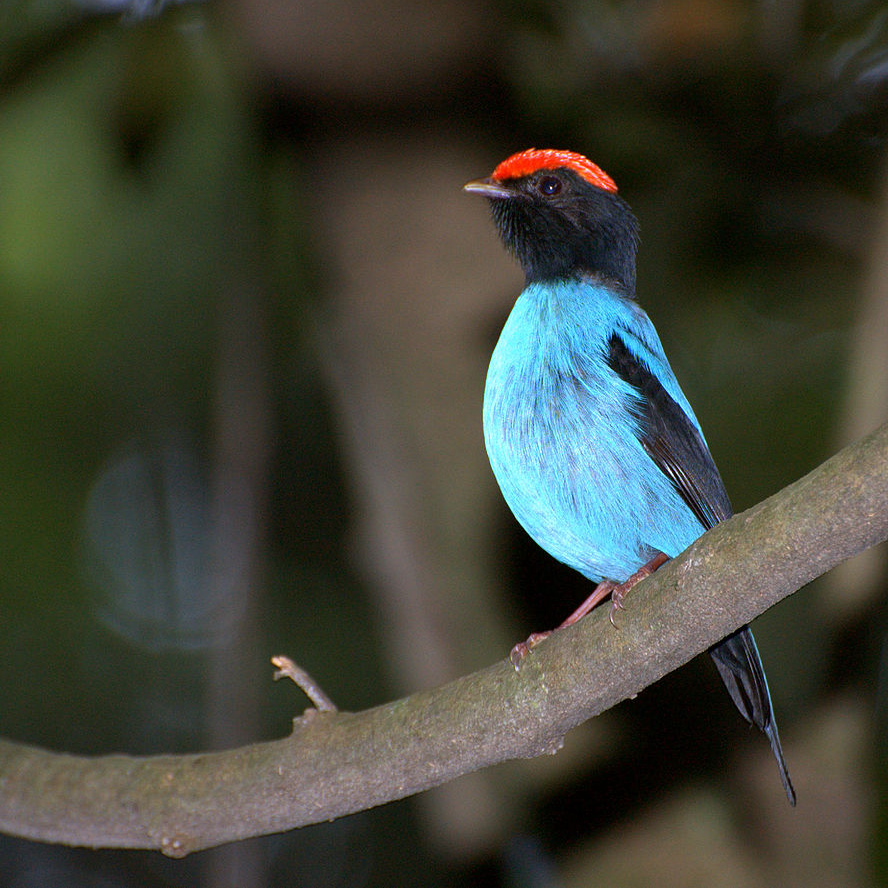
The Golden-headed Manakin (Pipra erythrocephala) is a visually stunning bird renowned for its vibrant, golden-yellow crown set against a contrasting black body. This small passerine bird is a member of the family Pipridae, which includes a variety of small, often colorful tropical birds. The species inhabits the tropical lowland forests of Central and South America, with a range extending from Panama through the Amazon Basin, encompassing countries such as Colombia, Venezuela, and Brazil. The bird's preference for dense, humid forest environments highlights its reliance on such ecosystems for survival.
Significantly, the Golden-headed Manakin plays a crucial ecological role as a seed disperser. Its diet consists primarily of fruits, which it consumes while perched. As the bird digests the fruit, seeds are subsequently excreted, contributing to the propagation of various plant species across its habitat. This mutualistic relationship between the manakin and fruit-bearing plants underlines the interconnected nature of tropical ecosystems.
Seasonally, the Golden-headed Manakin exhibits specific behavioral adaptations. During the breeding season, which typically aligns with the wet season, males engage in elaborate courtship displays. These displays, performed in designated lekking areas, involve impressive aerial maneuvers and rapid wing beats designed to attract females. Outside the breeding season, these birds may become less conspicuous, blending into the dense forest canopy where they forage for food.
While the manakin is not currently considered endangered, its habitat faces threats from deforestation and habitat fragmentation. These pressures can have cascading effects on the species, emphasizing the importance of conservation efforts to preserve tropical forests. Protecting these environments ensures the survival of the Golden-headed Manakin and maintains the ecological balance of these biodiverse regions.
The Golden-headed Manakin belongs to the family Pipridae, within the order Passeriformes. These birds typically live average 7 years, with a maximum recorded of 10 years..
How to Identify a Golden-headed Manakin
Identifying the Golden-headed Manakin involves observing its distinct color pattern. Adult males boast a brilliant golden-yellow crown that starkly contrasts with the rest of their entirely black plumage. This vivid coloration is the hallmark of the species and is most visible during the breeding season when males perform courtship displays. Females and juveniles, however, exhibit a more subdued appearance. They are generally olive-green, which provides effective camouflage against the forest backdrop, making them less noticeable to predators.
Male Golden-headed Manakins are particularly distinguishable from similar species due to their unique head coloration. Unlike other manakins that may have red or blue accents, the golden crown is exclusive to Pipra erythrocephala. In the field, these birds often adopt an upright perching posture, which, combined with their small size, makes them resemble a vibrant ornament nestled within the foliage.
In flight, the Golden-headed Manakin's silhouette is compact, with rapid wing beats that are characteristic of many small passerines. The bird's flight is agile and direct, often involving short, quick hops between branches rather than extended flights. This behavior, coupled with their distinctive calls, aids birdwatchers in locating these elusive forest dwellers despite their small size and dense habitat.
Having trouble telling birds apart? Upload a photo to our bird identification tool for an instant species match.
Golden-headed Manakin Habitat and Range
Preferred Habitat
The Golden-headed Manakin thrives in tropical lowland rainforests, a habitat characterized by dense vegetation and high humidity. It predominantly occupies areas with abundant understory, where it can forage for fruits and insects. These habitats are typically found at elevations below 1000 meters, although the bird can occasionally inhabit slightly higher altitudes in the Andean foothills.
In terms of geographic distribution, the Golden-headed Manakin is widespread across the Amazon Basin, favoring the lush forests of countries such as Colombia, Venezuela, and the northern regions of Brazil. The bird's presence is less frequent in urban areas, as it prefers the seclusion and resources offered by untouched forest environments.
Seasonal habitat shifts are minimal for this species, given its non-migratory nature. However, during the breeding season, males may establish territories in specific lekking sites within the forest, where they perform courtship displays. These areas are often characterized by clearings or perches that provide visibility for potential mates.
Geographic Range
The Golden-headed Manakin has a broad range that encompasses much of Central and South America. Its breeding range extends from the lowland forests of Panama southward through Colombia and into the vast Amazon Basin. Within this region, the bird can be found in Venezuela, Guyana, Suriname, French Guiana, and the northern parts of Brazil.
Unlike many migratory birds, the Golden-headed Manakin is a resident species, meaning it does not undertake long-distance migrations. Instead, it remains within its established range year-round, taking advantage of the stable climate and continuous food supply provided by tropical forests.
Population density hotspots typically occur in areas where the forest remains intact and undisturbed by human activity. These include the dense Amazon rainforests and parts of the Orinoco River Basin. Conservation of these key habitats is essential for maintaining healthy populations of the Golden-headed Manakin.
Want to know which birds visit your area? Browse our backyard birds by location guides for region-specific species lists.
What Does the Golden-headed Manakin Eat?
The diet of the Golden-headed Manakin primarily consists of a variety of fruits, making it an essential frugivore within its ecosystem. The bird's preference for small, fleshy fruits allows it to play a vital role in seed dispersal across the tropical forests it inhabits. Common fruit sources include berries and the fruits of specific understory plants that are abundant in its range.
During certain times of the year, primarily in the breeding season when energy demands increase, the manakin may supplement its diet with insects. This includes small arthropods such as ants and beetles, which provide necessary proteins for maintaining vitality.
In terms of foraging behavior, the Golden-headed Manakin employs a sit-and-wait strategy. It typically perches quietly in the canopy or understory, scanning for ripe fruits or insect prey. This method allows the bird to conserve energy while remaining vigilant for both food and potential predators. Its feeding schedule is largely dictated by the availability of food, with increased activity observed in the early morning and late afternoon when conditions are cooler.
Golden-headed Manakin Behavior and Social Structure
Socially, the Golden-headed Manakin is known for its complex and intriguing behaviors, particularly during the breeding season. Males engage in lekking, a unique form of courtship display where multiple individuals congregate in a communal area to perform elaborate dances and vocalizations. These displays involve short, rapid flights, wing snaps, and distinctive calls designed to attract females. The intensity of these performances underscores the males' roles in securing mating opportunities.
Territorial behavior is most pronounced during the breeding season, with males aggressively defending their chosen lek sites from intruders. Outside of this period, Golden-headed Manakins are more solitary, though they may occasionally be observed in small, loose flocks.
In response to predators, the manakin relies on its swift flight and cryptic coloration. Males, despite their vivid crowns, can blend into the shadowy canopy, while females and juveniles benefit from their olive-green plumage.
Daily activity patterns of the Golden-headed Manakin include periods of active foraging interspersed with rest. The bird is most active during the cooler parts of the day, engaging in feeding and social interactions in the morning and late afternoon.
Golden-headed Manakin Nesting and Reproduction
Golden-headed Manakins have a unique approach to nesting, with females solely responsible for nest construction and chick-rearing. The nest is typically a small, cup-shaped structure made of fine plant materials such as rootlets, leaves, and moss. These nests are often suspended from thin branches in the understory or lower canopy, providing some protection from ground predators.
Clutch sizes are generally small, usually consisting of two eggs. The eggs are pale with subtle speckling, providing some camouflage in the nest. Incubation, done exclusively by the female, lasts approximately 16 to 18 days.
After hatching, the nestlings remain under the care of the female, who feeds them regurgitated fruits and insects for about two to three weeks until they fledge. The number of broods per year can vary, but in favorable conditions, the female may raise multiple broods during a single breeding season, maximizing reproductive success.
Golden-headed Manakin Sounds and Vocalizations
The vocalizations of the Golden-headed Manakin are distinct and play a crucial role in their courtship and territorial displays. The primary song consists of a series of high-pitched, rapid notes that can resemble a fast-paced trill or buzz, often described as 'zree-zree-zree'. This song is typically delivered by males from prominent perches within their lekking areas.
Call notes are shorter and include sharp 'tik' or 'wit' sounds used for communication among individuals and during interactions within the lek. Alarm calls are less musical, often harsher, and serve to warn others of potential threats.
During the dawn chorus, the manakin's calls blend with those of other forest inhabitants, creating a symphony of sounds that mark the start of a new day in the tropics.
Interesting Facts About the Golden-headed Manakin
- 1Male Golden-headed Manakins can perform up to 80 wing snaps per second during courtship displays, a feat unmatched by most birds.
- 2Despite their striking appearance, Golden-headed Manakins are only about 10 cm in length, making them one of the smaller members of the Pipridae family.
- 3The lekking behavior of Golden-headed Manakins involves up to 10 males displaying in proximity, with each trying to outdo the others in attracting a mate.
- 4Golden-headed Manakins are known to consume over 50 different fruit species, highlighting their role as important seed dispersers in their ecosystem.
- 5The species' range covers over 5 million square kilometers, yet it remains elusive due to its preference for dense forest habitats.
- 6Golden-headed Manakins can be surprisingly difficult to spot despite their colorful appearance, often heard before they are seen due to their distinctive calls.
- 7The bird's vibrant crown is not just for show; it plays a crucial role in sexual selection, with females often choosing mates based on the brightness of the male's plumage.
Golden-headed Manakin Conservation Status
The Golden-headed Manakin currently holds a status of Least Concern on the IUCN Red List, indicating a stable population. However, the primary threat to its survival is habitat loss due to deforestation and land conversion for agriculture. These activities reduce available breeding and foraging areas, impacting population dynamics. Conservation efforts focus on habitat preservation, emphasizing the importance of maintaining large, contiguous forest tracts. Protecting these areas not only safeguards the Golden-headed Manakin but also supports a wide range of other species dependent on tropical forest ecosystems. Historically, population trends have remained relatively stable, though localized declines can occur in regions experiencing significant environmental degradation. Continued monitoring and conservation initiatives are vital to prevent future declines and ensure the species thrives in its natural habitat.
Other Pipridae Species


Birds Similar to the Golden-headed Manakin
These species are often confused with the Golden-headed Manakin due to similar appearance or overlapping range.

