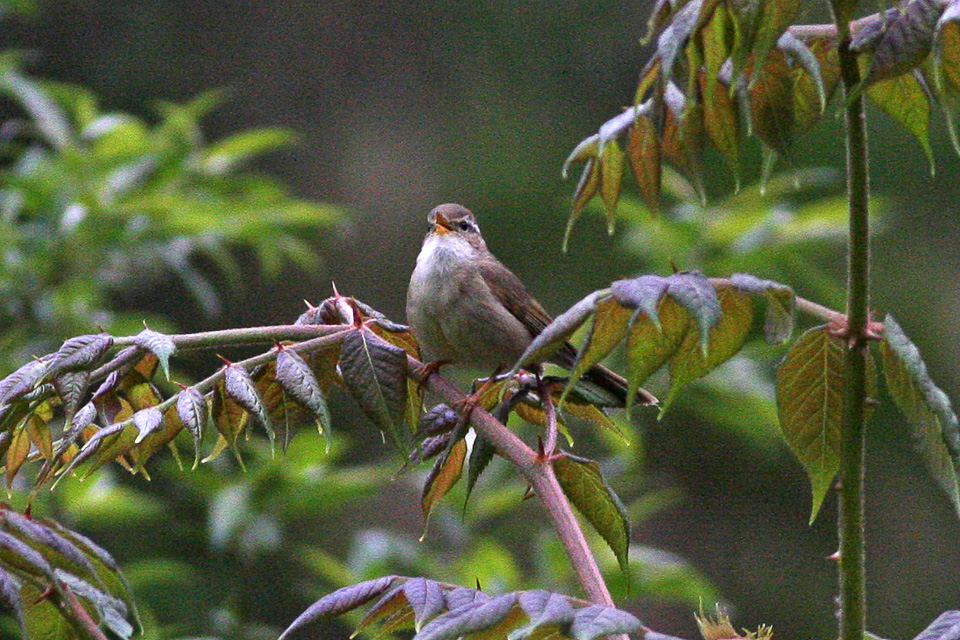
Green Warbler
Phylloscopus nitidus
Order: Passeriformes / Family: Phylloscopidae

Wikimedia Commons
About the Green Warbler
The Green Warbler, scientifically known as Phylloscopus nitidus, is a small passerine bird celebrated for its striking green plumage and melodious song. This bird primarily inhabits the temperate and subtropical forests of the Himalayas, ranging from Pakistan through northern India to Nepal and Bhutan. Its presence signals the health and richness of the forest ecosystems it occupies due to its role in insect control and seed dispersal. As a member of the Phylloscopidae family, Green Warblers are part of a group known for their leaf warbler characteristics, which include a preference for dense foliage and an insectivorous diet. During the breeding season, which typically spans from April to June, these warblers thrive in the lush montane forests where they find ample food and nesting opportunities. In contrast, their wintering grounds extend into the forests of southern India and Sri Lanka, allowing them to exploit different habitats seasonally. The Green Warbler's role in its ecosystem extends beyond its immediate impact on insect populations. As a prey species for larger birds of prey and small mammals, it fits into a complex food web, contributing to the biodiversity of its habitats. It also participates in mixed-species flocks during migration and winter, facilitating interspecies interactions that can enhance foraging success and provide protection from predators. The adaptability of the Green Warbler to various habitats, from montane forests to lower elevation woodlands, reflects its ecological versatility. However, habitat destruction and climate change pose significant threats to these birds, potentially affecting their migration patterns and breeding success. Conservation efforts focus on preserving forest habitats and understanding migration routes to safeguard the future of this vibrant species.
The Green Warbler belongs to the family Phylloscopidae, within the order Passeriformes. These birds typically live 5 years on average, up to 7 years recorded.
How to Identify a Green Warbler
Identifying the Green Warbler involves noting its vivid green upperparts and yellowish underparts, which distinguish it from many other warblers. The bird's most striking feature is its bright yellow supercilium, or eyebrow stripe, which contrasts sharply with its olive-green crown and back. Adult Green Warblers possess a slightly forked tail and a sleek, streamlined shape that aids in their agile flight through dense foliage. Juveniles resemble adults but may have duller plumage and less pronounced markings. Males and females look similar, making gender differentiation in the field challenging. They are often confused with the similar-looking Greenish Warbler, Phylloscopus trochiloides, but can be distinguished by their brighter yellow underparts and more pronounced supercilium. In flight, the Green Warbler shows rapid, fluttering wingbeats and a characteristic zigzag pattern as it darts from branch to branch. When perching, it often adopts a horizontal stance, its tail flicking slightly as it surveys its surroundings.
Having trouble telling birds apart? Upload a photo to our bird identification tool for an instant species match.
Green Warbler Habitat and Range
Preferred Habitat
The Green Warbler primarily inhabits mixed deciduous and coniferous forests of the Himalayan region. It can be found at elevations ranging from 1,500 to 3,000 meters, favoring areas with thick understory and abundant canopy cover. During the breeding season, it prefers dense montane forests where it can remain concealed while nesting. In winter, the Green Warbler migrates to lower altitudes, inhabiting forests, wooded gardens, and plantations in southern India and Sri Lanka. Although primarily a forest dweller, it occasionally ventures into urban parks or gardens, particularly during migration, where it can find suitable foraging opportunities amidst the foliage.
Geographic Range
The Green Warbler breeds across the Himalayan range, from eastern Pakistan through northern India, Nepal, and Bhutan. Its breeding range is concentrated in the montane forests of these regions, where the climate and habitat provide ideal conditions for nesting and feeding. During the non-breeding season, the Green Warbler migrates to southern India and Sri Lanka, where it occupies forests and wooded areas. Migration routes often pass through Myanmar and Bangladesh, where the birds utilize stopover habitats to rest and feed. Population density is generally highest in primary forest areas, although the warbler can adapt to secondary growth forests as well.
Want to know which birds visit your area? Browse our backyard birds by location guides for region-specific species lists.
What Does the Green Warbler Eat?
The Green Warbler's diet primarily consists of insects and arachnids, which it gleans from leaves and branches in a methodical manner. Its preferred prey includes caterpillars, beetles, and small spiders. During the breeding season, the demand for protein-rich food increases, prompting the warbler to focus on insect larvae, which are abundant in its forest habitat. In winter, as insect availability may decline, the Green Warbler supplements its diet with small fruits and berries, although it remains largely insectivorous. Its foraging technique involves agile movements through the foliage, often seen hanging upside down or hovering briefly to snatch prey from the undersides of leaves.
Green Warbler Behavior and Social Structure
Green Warblers are largely solitary during the breeding season, exhibiting territorial behavior as males sing to defend their chosen areas. Singing occurs primarily in the early morning and late afternoon, with males perching conspicuously to broadcast their presence. During migration and in winter, these warblers join mixed-species flocks, benefiting from the collective vigilance and foraging efficiency such groups offer. Courtship involves simple displays, with males pursuing females and performing short flights to demonstrate fitness. When threatened, Green Warblers typically rely on their cryptic plumage to blend into the foliage, although they may also emit sharp alarm calls to alert others of danger. Their daily activity pattern includes peak feeding times in the morning and late afternoon, with periods of rest in between.
Green Warbler Nesting and Reproduction
Green Warblers construct cup-shaped nests using grasses, moss, and rootlets, typically lined with feathers for insulation. They place these nests in low shrubs or small trees, well concealed by surrounding foliage to protect against predators. The typical clutch size is 4 to 6 eggs, which are white with fine reddish speckles. Both parents share incubation duties over a period of about 12 to 14 days. After hatching, the chicks receive care from both parents, who feed them a steady diet of insects. Fledging occurs approximately 12 to 15 days post-hatching, during which time the young birds become more independent. Green Warblers generally raise one brood per year, although they may attempt a second under favorable conditions.
Green Warbler Sounds and Vocalizations
The Green Warbler's primary song consists of a rapid series of high-pitched trills and whistles, often described as a sweet, cascading melody. This song serves as a territorial and mating call, typically heard during the breeding season. In addition to its song, the Green Warbler emits various call notes, including soft chips and sharper alarm calls when disturbed. During the dawn chorus, their song stands out amidst the cacophony of other bird calls, with each male vigorously defending its territory. The song's rhythm and pitch can be likened to the sound of a softly bubbling brook, creating a serene backdrop in its forest habitat.
Interesting Facts About the Green Warbler
- 1The Green Warbler is known for its long migratory journey, traveling over 2,000 kilometers between breeding and wintering grounds.
- 2Despite its small size, the Green Warbler's song can be heard over 100 meters away, making it an effective tool for territory establishment.
- 3Green Warblers often join mixed-species flocks, enhancing their foraging efficiency and predator awareness during migration.
- 4The bright yellow supercilium of the Green Warbler is a key identifying feature, allowing it to stand out even in dense foliage.
- 5During the breeding season, male Green Warblers sing up to 300 times per day to attract mates and defend their territory.
Green Warbler Conservation Status
The Green Warbler is currently listed as Least Concern by the IUCN, with a stable population trend. However, habitat loss due to deforestation and climate change poses ongoing threats to its populations. Conservation efforts focus on preserving critical forest habitats and ensuring sustainable land-use practices in regions where they breed and winter. Historically, the Green Warbler has maintained stable populations, although localized declines have occurred in areas of significant habitat disturbance. Continued monitoring and habitat protection are essential to ensuring the long-term viability of this species.