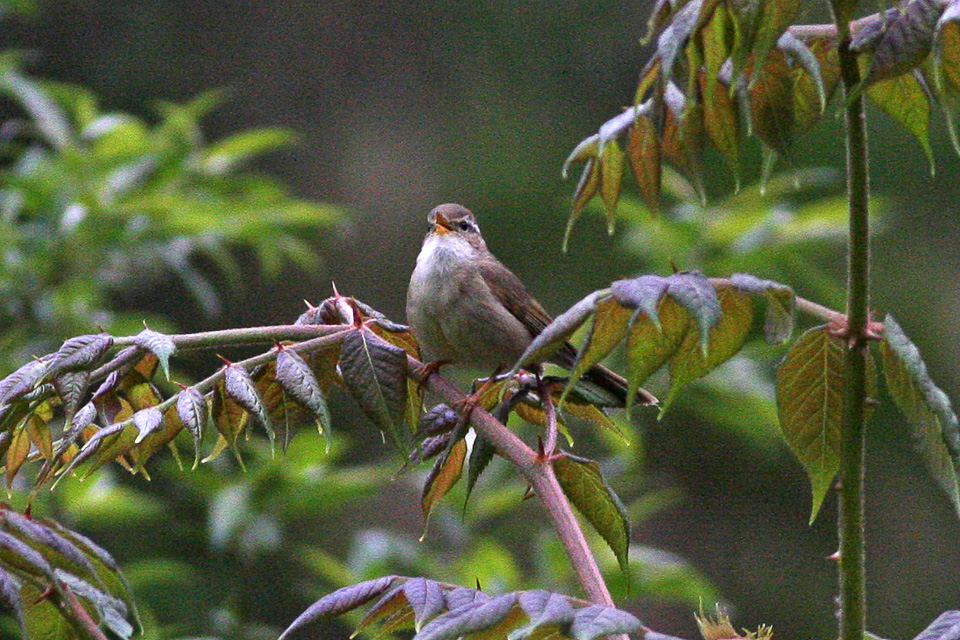
Greenish Warbler
Phylloscopus trochiloides
Order: Passeriformes / Family: Phylloscopidae

Wikimedia Commons
About the Greenish Warbler
The Greenish Warbler, scientifically known as Phylloscopus trochiloides, is a small passerine bird from the Phylloscopidae family. This species plays an essential role in its ecosystem by controlling insect populations and serving as prey for larger predators. Found predominantly across Asia and parts of Europe, the Greenish Warbler is a long-distance migrant, traveling between breeding grounds in temperate regions and wintering sites in South Asia. Its breeding range extends from Eastern Europe, through the Ural Mountains, and into Siberia, while wintering primarily in the Indian subcontinent, including India, Nepal, and Bangladesh.
Occupying a variety of forested habitats, the Greenish Warbler prefers deciduous and mixed woodlands, often favoring areas with dense undergrowth. Its adaptability allows it to thrive in both natural and suburban environments, though it is less commonly found in open grasslands and arid regions. The warbler's ecological role extends beyond controlling insects, as it also aids in seed dispersal and pollination through its interactions with various plant species.
The Greenish Warbler undergoes seasonal behavioral changes, particularly during migration and breeding. In the breeding season, males establish territories and attract mates with complex songs, while both sexes engage in raising their young. During migration, they exhibit notable endurance, covering thousands of kilometers to reach their wintering grounds. Throughout the winter months, the Greenish Warbler's behavior shifts to a more solitary and secretive nature as it focuses on feeding and conserving energy for the journey back to its breeding territories.
The Greenish Warbler belongs to the family Phylloscopidae, within the order Passeriformes. These birds typically live typically 5-8 years, with some individuals living up to 10 years..
How to Identify a Greenish Warbler
The Greenish Warbler is a small songbird, measuring approximately 11-12 centimeters in length, with a wingspan of 18-20 centimeters. This species is primarily olive-green on its upperparts, with a more subdued yellowish-white underbelly. A distinguishing feature is the pale stripe running above the eye, known as the supercilium, which contrasts with the darker eye line. The wings display two faint wing bars, making it easier to identify in the field.
Juvenile Greenish Warblers are similar in appearance to adults but may display slightly duller plumage. Sexual dimorphism is minimal, with males and females appearing almost identical. However, males are often more vocal, especially during the breeding season, when they use their songs to establish territory and attract mates.
The Greenish Warbler can be confused with similar Phylloscopus species, such as the Arctic Warbler and the Two-barred Warbler. However, the Greenish Warbler's distinct song and specific plumage details, like the length of the supercilium and wing bar presence, help differentiate it. In flight, the Greenish Warbler appears agile and quick, often displaying a fluttering flight pattern. When perched, it tends to flick its wings and tail, a behavior characteristic of many warblers.
Having trouble telling birds apart? Upload a photo to our bird identification tool for an instant species match.
Greenish Warbler Habitat and Range
Preferred Habitat
The Greenish Warbler inhabits a variety of forested environments, preferring deciduous and mixed woodlands with dense understory. In its breeding range, which spans Eastern Europe to Siberia, it favors regions with ample tree cover, often at elevations ranging from sea level to about 3,000 meters in the Himalayas.
During migration and in winter, the Greenish Warbler adapts to a broader range of habitats, including scrublands, gardens, and urban parks. While it is adaptable to some degree of human presence, it is less frequently found in open grasslands, arid zones, or highly urbanized areas devoid of significant vegetation.
Seasonal habitat shifts are pronounced, with the species moving from temperate breeding areas to subtropical or tropical wintering sites. Its ability to thrive in both natural forests and modified landscapes highlights its adaptability, though it still prefers areas with sufficient cover and food availability.
Geographic Range
The Greenish Warbler's breeding range extends across Eastern Europe, including countries like Poland and the Baltic States, through the Ural Mountains, and into Siberia. It also breeds in parts of Mongolia and China. During the winter months, the species migrates to the Indian subcontinent, primarily wintering in India, Nepal, Bangladesh, and parts of Southeast Asia.
Migration corridors follow a southeastward path from breeding grounds to wintering areas, with significant stopover sites in Central Asia. The species is commonly observed during migration in regions like Kazakhstan and the Himalayas. Population densities tend to be higher in areas with abundant food resources and suitable habitats, such as forest edges and wooded valleys.
While the Greenish Warbler is a common sight in its breeding and wintering ranges, it is less frequently encountered in Western Europe and other areas outside its primary range. Sightings in these regions are usually attributed to vagrants during migration.
Want to know which birds visit your area? Browse our backyard birds by location guides for region-specific species lists.
What Does the Greenish Warbler Eat?
The Greenish Warbler's diet primarily consists of insects and other small invertebrates, making it an essential player in controlling pest populations. During the breeding season, it consumes a variety of insects, including caterpillars, beetles, and flies, which provide the necessary protein for raising young. It often forages in the canopy, gleaning insects from leaves and branches with quick, darting movements.
In winter, the diet diversifies to include a greater proportion of soft fruits and seeds, supplementing the reduced availability of insects. This seasonal dietary shift helps the warbler maintain energy levels during the less abundant winter months. Foraging techniques remain consistent, with birds actively moving through vegetation to locate food.
Prey size typically ranges from small aphids to larger beetles, with the warbler showing a preference for soft-bodied insects. Feeding occurs throughout the day, with peaks in activity during the early morning and late afternoon, aligning with periods of increased insect activity.
Greenish Warbler Behavior and Social Structure
Greenish Warblers exhibit a variety of behaviors that aid in their survival and reproductive success. They are territorial during the breeding season, with males actively defending their territories through song and displays. These territories are essential for attracting mates and ensuring sufficient resources for raising chicks.
Courtship involves intricate displays and songs, with males performing aerial displays to attract females. Once paired, both sexes contribute to nest building and chick rearing, though males may resume singing to reinforce territorial boundaries. During the non-breeding season, Greenish Warblers become more solitary and less vocal, focusing on feeding and energy conservation.
Flocking behavior is observed during migration, when Greenish Warblers may join mixed-species flocks to enhance foraging efficiency and predator avoidance. These flocks provide safety in numbers and increase the likelihood of locating food resources. In response to predators, Greenish Warblers employ a variety of tactics, including alarm calls and evasive flight maneuvers, to avoid capture.
Daily activity patterns are influenced by environmental conditions, with peak activity occurring during cooler morning and evening hours. This schedule allows the birds to avoid the heat of midday while maximizing feeding opportunities during periods of peak insect activity.
Greenish Warbler Nesting and Reproduction
Greenish Warblers construct their nests in well-concealed locations, often choosing the fork of a tree or dense shrubbery. Nests are cup-shaped and built using natural materials such as grass, moss, and feathers, providing insulation and camouflage. These structures are typically positioned several meters above ground to reduce predation risk.
The breeding season for Greenish Warblers varies by region, usually occurring from May to July. Clutch sizes range from four to six eggs, with incubation lasting approximately 12-14 days. Both parents share responsibilities in incubating the eggs and feeding the chicks once hatched.
Fledging occurs about 12-15 days after hatching, with young birds remaining in the vicinity of the nest as they gradually develop independence. Parental care continues during this period, with adults guiding fledglings in foraging and avoiding threats. Greenish Warblers typically produce one brood per year, though conditions may allow for a second brood in some regions.
Greenish Warbler Sounds and Vocalizations
The Greenish Warbler's primary song consists of a series of rapid, high-pitched notes that rise and fall in pitch, creating a melodic and somewhat repetitive tune. This song serves to establish territory and attract mates during the breeding season and is often delivered from a concealed perch high in the canopy. The song's rhythm and quality are distinctive, often described as a two-parted phrase with a ringing cadence.
Call notes are shorter and simpler, typically consisting of single or double syllables used for communication between individuals. Alarm calls are sharper and more urgent, designed to alert other birds to the presence of predators. During the dawn chorus, Greenish Warblers are active singers, contributing to the symphony of bird songs that mark the early morning hours.
The warbler's vocalizations are a key identification feature, differing from similar species in both structure and delivery. Familiarity with these sounds can greatly enhance the ability to locate and identify the Greenish Warbler in its natural habitat.
Interesting Facts About the Greenish Warbler
- 1The Greenish Warbler's song can be heard from over 100 meters away, making it a prominent presence in its habitat.
- 2Phylloscopus trochiloides was once considered a subspecies of the Arctic Warbler due to similarities in appearance.
- 3During migration, Greenish Warblers travel up to 6,000 kilometers between breeding and wintering grounds.
- 4The species' adaptability allows it to thrive in both natural and urban environments, though it prefers areas with dense vegetation.
- 5Greenish Warblers play a significant role in controlling insect populations, particularly during the breeding season.
- 6The warbler's migration coincides with the peak of insect abundance, ensuring ample food supply during its journey.
- 7Greenish Warblers contribute to seed dispersal and pollination, interacting with a variety of plant species in their habitats.
Greenish Warbler Conservation Status
The Greenish Warbler is currently listed as Least Concern by the IUCN, with a stable population trend. Despite its extensive range and adaptability, the species faces threats from habitat loss and degradation due to deforestation and urban expansion. Conservation efforts focus on habitat protection and sustainable forestry practices to ensure the long-term viability of its populations. Historical population changes have been relatively minor, with occasional fluctuations corresponding to environmental conditions and human impacts. Ongoing monitoring and research are essential to track population trends and implement effective conservation measures. International cooperation is crucial, given the warbler's migratory nature and reliance on habitats across multiple countries. Protecting critical stopover sites and wintering areas is as important as safeguarding breeding habitats, ensuring the Greenish Warbler continues to thrive across its range.