Hypositta perdita
Hypositta perdita
Order: Passeriformes / Family: Vangidae

Wikimedia Commons
About the Hypositta perdita
The Hypositta perdita, commonly referred to as the Lost Hypositta, is a bird of considerable intrigue among ornithologists due to its elusive nature and limited known population. This species, a member of the Vangidae family, is primarily found in the dense montane forests of Madagascar. It plays a crucial ecological role as an insectivore, helping to control insect populations within its habitat. As a forest dweller, it contributes to the health of its ecosystem by participating in the complex food web. The Hypositta perdita is particularly adapted to life among trees, showcasing behaviors and physical adaptations that make it an efficient climber and forager. Seasonal variations in its behavior have been recorded, with slight shifts in diet and foraging patterns observed during the breeding season. This elusive bird has fascinated researchers and birdwatchers alike, largely due to its restricted range and the difficulty of observing it in its natural habitat. Its significance extends beyond its ecological role, as it serves as an indicator of forest health in its native regions, being sensitive to environmental changes and forest degradation. Conservation efforts are ongoing to ensure the survival of the Hypositta perdita, as its habitat faces threats from deforestation and human encroachment. Efforts to study and protect this species are crucial, as it not only helps maintain the biodiversity of Madagascar's unique ecosystems but also holds intrinsic value as part of the world's natural heritage.
The Hypositta perdita belongs to the family Vangidae, within the order Passeriformes. These birds typically live Unknown, potentially similar to related species..
How to Identify a Hypositta perdita
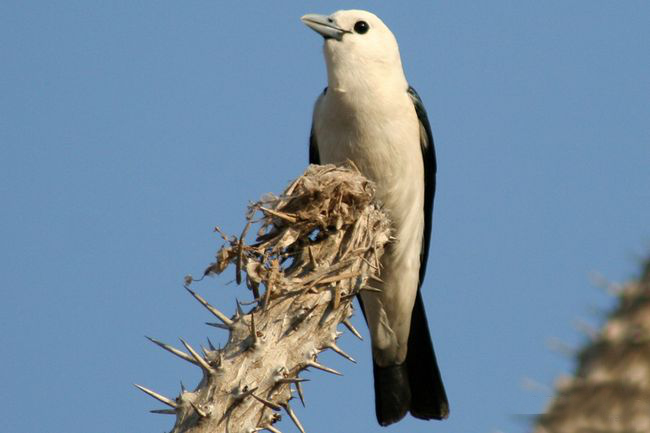
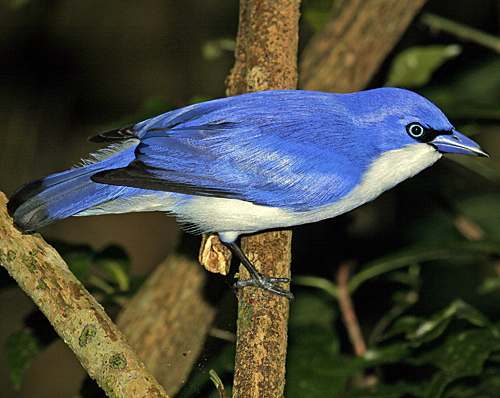
The Hypositta perdita is characterized by its distinctive plumage and unique morphology, which aid in its identification. Adult birds display a predominantly gray coloration with subtle white streaking on the underparts, providing excellent camouflage against the bark of trees. The bird's wings are relatively short, with a noticeable rounded shape that aids in maneuverability through dense foliage. The tail is medium-length and slightly rounded. Males and females are similar in appearance, though males may exhibit slightly brighter plumage during the breeding season. Juveniles resemble adults but tend to have duller coloration and less defined streaking. One of the key identification features is the bird's strong, curved bill, which is adapted for gleaning insects from bark and foliage. The Hypositta perdita can be confused with other tree-creeping birds, but its combination of plumage, size, and behavior help distinguish it. In flight, the Hypositta perdita shows a silhouette typical of tree-dwelling birds, with a compact body and broad wings. When perched, it often adopts a vertical posture, clinging to tree trunks and branches. This posture, along with its methodical foraging behavior, is a useful cue for identification in the field.
Having trouble telling birds apart? Upload a photo to our bird identification tool for an instant species match.
Hypositta perdita Habitat and Range
Preferred Habitat
The Hypositta perdita inhabits the montane forests of Madagascar, thriving in elevations ranging from 800 to 2000 meters. These forests, characterized by dense canopy cover and a rich understory, provide the ideal environment for the bird's foraging habits. During the breeding season, it may venture into slightly lower elevations as it follows insect prey. The species shows a preference for mature forests with abundant old-growth trees, which offer ample foraging opportunities and nesting sites. While primarily a forest bird, the Hypositta perdita occasionally appears in adjacent secondary forests, though it avoids heavily deforested areas and urban environments, reflecting its reliance on pristine forest conditions for survival.
Geographic Range
The breeding range of the Hypositta perdita is confined to the montane regions of Madagascar, particularly within the eastern and central highlands. This restricted range is a crucial factor in its conservation status. The bird does not migrate long distances, rather it exhibits altitudinal movements within its range, following seasonal food availability. During non-breeding periods, it may descend to lower elevations in search of food. Population density is highest in protected areas where natural forest cover remains intact, such as within Madagascar's national parks. These areas act as strongholds for the species, offering some protection from habitat loss.
Want to know which birds visit your area? Browse our backyard birds by location guides for region-specific species lists.
What Does the Hypositta perdita Eat?
The diet of the Hypositta perdita primarily consists of insects, with a particular preference for beetles and caterpillars. It employs a methodical gleaning technique, moving slowly along tree trunks and branches to pick off prey. This behavior showcases its adaptation to a life spent navigating the vertical world of forest trees. Seasonal diet variations occur, with the bird expanding its prey selection during the breeding season to include a wider range of insects and occasionally small arthropods to meet increased energy demands. Foraging typically occurs during daylight hours, with peak activity in the early morning and late afternoon. The bird's feeding schedule aligns with the activity patterns of its insect prey, ensuring optimal foraging success.
Hypositta perdita Behavior and Social Structure
The Hypositta perdita exhibits solitary or paired behavior, particularly during the breeding season when it becomes more territorial. Males engage in courtship displays that include vocalizations and posturing to attract females. Once paired, the birds maintain a territory, actively defending it from intruders through vocalizations and physical displays. Outside the breeding season, the bird may join small mixed-species flocks, benefiting from the increased vigilance and foraging efficiency these groups offer. The Hypositta perdita displays a keen awareness of its surroundings, often responding to potential threats with rapid movements to the opposite side of the trunk or branch, effectively using the tree as a shield. Daily activity patterns are diurnal, with foraging and social interactions concentrated during daylight hours.
Hypositta perdita Nesting and Reproduction
The nesting habits of the Hypositta perdita are closely tied to its forest habitat. It constructs cup-shaped nests using materials such as twigs, moss, and lichen, typically positioned in the forks of small branches high in the canopy. Nest placement ensures protection from ground predators and a favorable microclimate. The clutch size ranges from two to four eggs, with incubation duties shared between both parents. The incubation period lasts approximately two weeks, followed by a fledging period of another two to three weeks. During this time, both parents vigorously defend the nest and provide for the young. The species typically raises one brood per year, though favorable conditions may lead to a second attempt.
Hypositta perdita Sounds and Vocalizations
The vocalizations of the Hypositta perdita are a key component of its behavior and identification. Its primary song consists of a series of melodious, high-pitched notes delivered in a rapid sequence, often described as a twittering or trilling sound. This song serves both territorial and courtship purposes. The bird also produces a variety of calls, including short 'chip' notes used to maintain contact between pairs or signal alarm. During the dawn chorus, the Hypositta perdita becomes particularly vocal, joining the symphony of forest birds in a display that reinforces territorial boundaries and strengthens pair bonds.
Interesting Facts About the Hypositta perdita
- 1The Hypositta perdita's name 'perdita' means 'lost' in Latin, reflecting its elusive nature and the difficulty of locating it in the wild.
- 2This species is one of the few in the Vangidae family that exhibits a specialized tree-climbing behavior, akin to nuthatches.
- 3Despite its small size, the Hypositta perdita plays a critical role in controlling insect populations in its forest habitat.
- 4The bird's distinctive song can carry over long distances, making it easier to detect vocally than visually in dense forests.
- 5The Hypositta perdita's preference for mature forests makes it an important indicator species for the health of these ecosystems.
- 6Reproductive success in the Hypositta perdita is closely linked to the availability of suitable nesting sites and food resources.
- 7The bird's foraging technique of gleaning insects from tree bark is an adaptation that reduces competition with other insectivorous birds.
Hypositta perdita Conservation Status
The Hypositta perdita is currently classified as Near Threatened by the IUCN, with its population trend showing a decline due to ongoing habitat loss. Deforestation and habitat fragmentation pose the most significant threats, driven by agricultural expansion and logging activities. Conservation efforts focus on habitat protection and restoration, with several national parks in Madagascar providing critical refuge for this species. Initiatives include reforestation projects and community-based conservation programs aimed at sustainable land-use practices. Historical population changes indicate that the species was once more widespread, but modern pressures have led to its current restricted distribution.