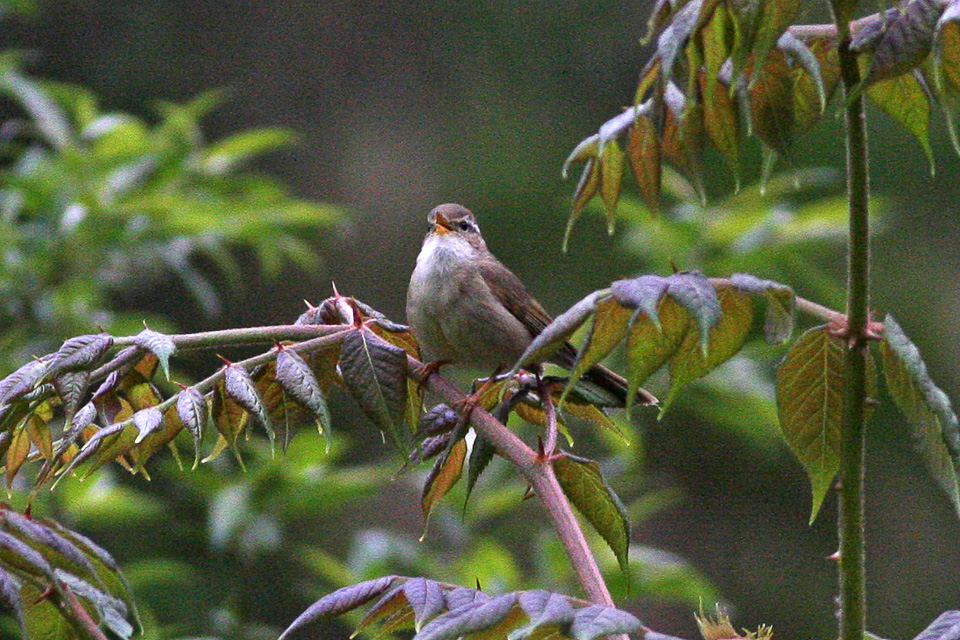
Island Leaf Warbler
Phylloscopus maforensis
Order: Passeriformes / Family: Phylloscopidae

Wikimedia Commons
About the Island Leaf Warbler
The Island Leaf Warbler, scientifically known as Phylloscopus maforensis, thrives in the lush forested regions of the Indonesian archipelago, particularly concentrated on the islands of New Guinea, the Bismarck Archipelago, and nearby smaller islands. This small songbird, a member of the Phylloscopidae family, plays a vital role in the complex ecosystem of these tropical regions. Its presence is indicative of healthy forest environments, where it contributes to the control of insect populations, thus maintaining ecological balance.
The significance of the Island Leaf Warbler extends beyond its ecological role; it is a vital performer in the symphony of sounds that characterize its habitat. These warblers are active throughout the year, singing to establish territories and attract mates, especially during the breeding season. The bird's energetic foraging behavior and its affinity for high canopy levels make it an essential component of the forest avifauna. Moreover, its ability to adapt to various subtropical and tropical forest types demonstrates its resilience and ecological importance.
In its native range, the Island Leaf Warbler inhabits lowland and montane forests, usually at elevations ranging from sea level to about 1500 meters. The bird displays seasonal behaviors related to breeding, often becoming more vocal and territorial during the spring and summer months. It is during these periods that the warbler's ecological role becomes most apparent, as it consumes large quantities of insects, including caterpillars, beetles, and other small invertebrates. This feeding behavior not only aids in pest control but also supports forest regeneration by limiting herbivore populations.
The Island Leaf Warbler belongs to the family Phylloscopidae, within the order Passeriformes. These birds typically live typically 3-5 years, with some living up to 7 years..
How to Identify a Island Leaf Warbler
The Island Leaf Warbler is a small, vibrant bird, typically measuring around 11 centimeters in length. Adult birds exhibit a striking yellow-green plumage, which provides excellent camouflage among the leaves of their forest habitat. The underparts are a softer yellow, while the wings and tail are tinged with a subtle olive or brownish hue. A distinguishing feature is the bird's sharp, pointed bill, designed for precision in gleaning insects from foliage.
Juveniles resemble adults but may appear slightly duller with less defined coloration, particularly in the wing and tail feathers. There is little sexual dimorphism in this species, meaning that males and females look remarkably similar. This lack of distinct male and female plumage can sometimes make field identification challenging, although behavioral cues during the breeding season, such as singing males, can aid in distinguishing sexes.
The Island Leaf Warbler can be confused with other Phylloscopus species, but its combination of size, vibrant coloration, and distinctive vocalization patterns helps differentiate it. In flight, the warbler presents a compact silhouette with rapid wingbeats, a characteristic feature among leaf warblers. When perched, it often adopts an alert posture, frequently flicking its wings and tail as it forages.
Having trouble telling birds apart? Upload a photo to our bird identification tool for an instant species match.
Island Leaf Warbler Habitat and Range
Preferred Habitat
The Island Leaf Warbler primarily inhabits dense forest canopies, favoring both primary and secondary growth forests. It is commonly found in the lowland tropical forests of New Guinea, the Bismarck Archipelago, and associated island ecosystems. These regions provide the humid and rich environment ideal for the warbler's insectivorous diet.
While predominantly a forest dweller, the warbler occasionally ventures into montane regions, thriving at elevations up to 1500 meters. The dense foliage of these montane forests offers abundant food resources and nesting opportunities. Unlike some other species, the Island Leaf Warbler is less frequently observed in urban environments, preferring the seclusion and resources of its native forest habitats.
Seasonal shifts in habitat are minimal, as the warbler remains within its forested environment year-round. However, it may move vertically within its range in response to food availability, particularly during breeding periods when insect populations peak.
Geographic Range
The Island Leaf Warbler is endemic to the islands of the Indonesian archipelago, with its primary range spanning New Guinea, the Bismarck Archipelago, and nearby smaller islands. This geographical confinement makes the species particularly significant to these regions, as it does not migrate beyond local movement within its range.
During the breeding season, populations may become more concentrated in areas with abundant food resources, particularly in lowland and mid-elevation forests. These habitats provide the necessary conditions for nesting and raising young. The warbler does not exhibit long-distance migratory behavior, instead relying on the rich and diverse ecosystems of its home range to meet its life cycle needs.
Population densities are higher in undisturbed forested areas, where the intricate structure of the canopy supports a thriving insect population. Conservation of these habitats is crucial to maintaining the Island Leaf Warbler's population, as deforestation poses a significant threat to its restricted range.
Want to know which birds visit your area? Browse our backyard birds by location guides for region-specific species lists.
What Does the Island Leaf Warbler Eat?
The Island Leaf Warbler's diet is primarily insectivorous, with a strong preference for small arthropods found in the forest canopy. Its feeding strategy involves active gleaning and snatching of prey from leaves and branches, utilizing its sharp bill to capture a variety of insects such as caterpillars, beetles, and spiders.
Seasonal dietary shifts occur as insect populations fluctuate; during the breeding season, the warbler's consumption of protein-rich prey increases to support the energy demands of raising offspring. In other seasons, the warbler may also consume a limited amount of plant matter, such as fruits and seeds, although this forms only a minor component of its overall diet.
The warbler's feeding schedule is diurnal, with most foraging activity occurring during the early morning and late afternoon when insect activity is at its peak. This strategic feeding timing maximizes energy intake while minimizing competition with other insectivorous birds.
Island Leaf Warbler Behavior and Social Structure
The Island Leaf Warbler exhibits a solitary or small group social structure, often seen foraging alone or in pairs. During the breeding season, these warblers become territorial, with males engaging in vocalizations to defend their territories and attract mates. The warbler's vocal displays are complemented by physical behaviors, such as wing flicking and tail fanning, which serve both as territorial markers and courtship displays.
While not known for flocking in large numbers, the warbler does occasionally join mixed-species foraging flocks, which can provide added protection from predators and increase foraging efficiency. Its response to potential threats includes rapid, agile flight and the use of dense foliage for cover.
Daily activity patterns of the Island Leaf Warbler reflect its reliance on insect prey. Peak activity occurs during the cooler, more insect-abundant hours of the day, with periods of rest and preening interspersed throughout. These behavioral adaptations ensure the warbler's survival and reproductive success in its complex forest habitat.
Island Leaf Warbler Nesting and Reproduction
The nesting habits of the Island Leaf Warbler involve constructing cup-shaped nests, typically situated in the fork of a tree or within dense foliage to provide concealment from predators. The nests are intricately woven from plant fibers, moss, and leaves, creating a secure environment for the eggs.
Clutch sizes generally range from two to four eggs, which are cream-colored with subtle speckles. The incubation period lasts approximately 12-14 days, during which time the female primarily undertakes incubation duties, while the male may assist by providing food.
Once hatched, the chicks remain in the nest for an additional 10-12 days before fledging. Both parents share responsibilities in feeding and caring for the young, ensuring that they receive adequate nutrition for growth and development. The Island Leaf Warbler typically raises one to two broods per year, depending on environmental conditions and food availability.
Island Leaf Warbler Sounds and Vocalizations
The primary song of the Island Leaf Warbler is a rapid, melodic trill, often described as a series of high-pitched, cascading notes. This song serves as both a territorial call and a courtship display, with males singing from prominent perches to attract females and deter rivals.
Call notes are sharp and clear, often used for communication between mates or as alarm signals to warn of nearby predators. These calls are less complex than the primary song but serve an essential role in maintaining pair bonds and coordinating activities.
During the dawn chorus, the Island Leaf Warbler's song contributes to the rich tapestry of sounds that characterize its forest habitat. The warbler's vocalizations can be compared to the rapid chatter of a small stream, both in rhythm and pitch, providing a unique soundscape for its native environment.
Interesting Facts About the Island Leaf Warbler
- 1The Island Leaf Warbler can consume up to 300 insects a day, making it a highly effective insect predator.
- 2Despite its small size, the Island Leaf Warbler's song can be heard over 100 meters away in dense forest habitats.
- 3The warbler's vibrant yellow-green coloration provides excellent camouflage among the leaves, making it difficult to spot.
- 4Island Leaf Warblers are known to participate in mixed-species flocks, enhancing their foraging success and protection.
- 5The species exhibits little sexual dimorphism, meaning males and females look almost identical to the casual observer.
- 6Their nests are often constructed at heights between 2 and 10 meters, providing safety from ground predators.
- 7The Island Leaf Warbler is non-migratory, residing year-round in the same regions, which is unusual for many warblers.
Island Leaf Warbler Conservation Status
The Island Leaf Warbler currently holds a status of Least Concern according to the IUCN Red List. While the population is generally stable, habitat loss due to deforestation poses a significant threat. Conversion of forested areas for agriculture or development can lead to declines in suitable habitats. Conservation efforts focus on preserving and restoring native forest habitats, with some regions implementing protected areas to safeguard biodiversity. Monitoring population trends is crucial, as changes in the warbler's habitat can have rapid impacts on its population. Historically, the Island Leaf Warbler has maintained steady numbers due to its adaptability to different forest types. However, continued vigilance and habitat management are necessary to ensure its ongoing survival in the face of environmental pressures.