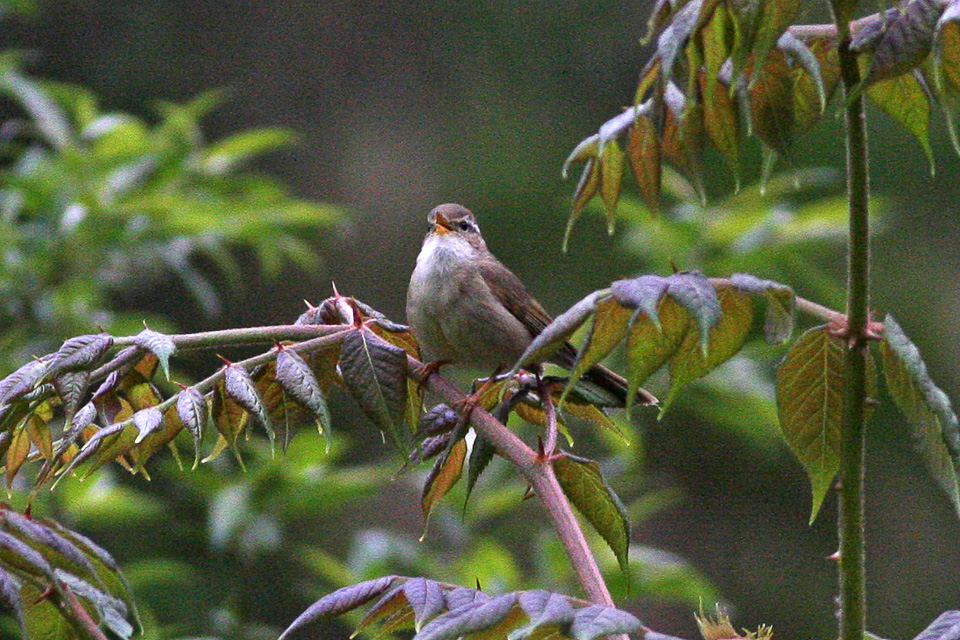
Kamchatka Leaf Warbler
Phylloscopus examinandus
Order: Passeriformes / Family: Phylloscopidae

Wikimedia Commons
About the Kamchatka Leaf Warbler
The Kamchatka Leaf Warbler, scientifically known as Phylloscopus examinandus, is a small passerine bird that belongs to the family Phylloscopidae. This species is one of the quintessential representatives of the leaf warblers and is especially noted for its vibrant green plumage, which provides excellent camouflage amidst the lush foliage of its preferred habitats. The bird's significance goes beyond its striking appearance; it plays a crucial ecological role as both insect predator and prey. Indigenous to East Asia, the Kamchatka Leaf Warbler is predominantly found in the Kamchatka Peninsula, as well as across various regions of Japan, including Hokkaido and Honshu, during its breeding season.
In terms of ecological role, the Kamchatka Leaf Warbler contributes to insect population control. It primarily feeds on insects and their larvae, thus helping maintain the balance within its ecosystem. As a prey species, it is an integral part of the food web, providing sustenance for predators such as larger birds of prey. During the breeding season, the warbler occupies dense forests, favoring areas with abundant canopy cover and rich understory, which offer both protection and ample food supply.
Seasonal behaviors of the Kamchatka Leaf Warbler are marked by pronounced migrations. Post-breeding, the bird undertakes a remarkable journey southwards to its wintering grounds in Southeast Asia, particularly in the Philippines and parts of Indonesia. This migration is a critical period in the bird's lifecycle, requiring significant energy reserves and navigation skills. The transition between breeding and wintering grounds is timed with the availability of food resources, ensuring the bird's survival and reproductive success. The Kamchatka Leaf Warbler's adaptability to diverse habitats across its range highlights its resilience and ecological importance.
The Kamchatka Leaf Warbler belongs to the family Phylloscopidae, within the order Passeriformes. These birds typically live average 6 years, with a maximum recorded of 8 years..
How to Identify a Kamchatka Leaf Warbler
Identifying the Kamchatka Leaf Warbler in the field involves noting several distinctive features. Adult warblers exhibit a bright green upperpart with subtle olive hues, which seamlessly blends with the forest canopy. The underparts range from whitish to pale yellow, presenting a clean contrast with the upper plumage. The bird's supercilium, or eyebrow line, is a striking pale color, often appearing almost white, which aids in distinguishing it from similar species. Juvenile Kamchatka Leaf Warblers share similar plumage characteristics but tend to have a more muted color palette, lacking the vibrancy of adults.
Differentiating between males and females in the field can be challenging due to their similar appearances. However, during the breeding season, males often exhibit more vivid coloration and display behaviors such as singing to attract mates and defend territories. The Kamchatka Leaf Warbler can be confused with the Arctic Warbler and the Sakhalin Leaf Warbler, but differences in song and subtle plumage variations can aid in accurate identification.
In flight, the Kamchatka Leaf Warbler presents a compact silhouette with rapid wingbeats typical of small passerines. When perched, it often displays a slight forward lean and an active demeanor, constantly flitting between branches in pursuit of insects. This energetic behavior, combined with its distinctive call, makes it easier to locate within its dense forest habitat.
Having trouble telling birds apart? Upload a photo to our bird identification tool for an instant species match.
Kamchatka Leaf Warbler Habitat and Range
Preferred Habitat
The Kamchatka Leaf Warbler primarily inhabits dense temperate forests, favoring areas with thick canopy cover and a well-developed understory. These forests, often composed of coniferous and mixed deciduous trees, provide both shelter and abundant food sources. During the breeding season, the warbler is commonly found at elevations ranging from sea level to approximately 1,500 meters, particularly in the Kamchatka Peninsula and the northern islands of Japan.
Seasonal shifts in habitat preference occur as the bird migrates to its wintering grounds. In Southeast Asia, the Kamchatka Leaf Warbler frequents subtropical and tropical forests, including secondary growth and forest edges. This adaptability to different forest types across seasons is a testament to its ecological versatility.
While the Kamchatka Leaf Warbler is primarily a forest dweller, it occasionally ventures into more open areas, especially during migration. However, it tends to avoid urban environments, preferring the security and resources provided by natural habitats. This preference highlights the importance of forest conservation in maintaining viable populations of this species.
Geographic Range
The Kamchatka Leaf Warbler's range is primarily concentrated in East Asia. During the breeding season, it occupies the Kamchatka Peninsula and extends into the northern reaches of Japan, including the islands of Hokkaido and Honshu. These regions provide the necessary breeding habitat, characterized by dense forests and a temperate climate.
As the breeding season concludes, the warbler embarks on a southward migration toward its wintering grounds. This journey takes it to various locations across Southeast Asia, with significant populations wintering in the Philippines and parts of Indonesia. The migration corridors used by the Kamchatka Leaf Warbler are critical to its survival, requiring secure stopover sites where the birds can rest and refuel.
Population density hotspots for the Kamchatka Leaf Warbler are typically aligned with areas that offer optimal habitat conditions. While its breeding range is relatively restricted, during migration and winter, the species becomes more widespread, taking advantage of diverse forest habitats across its range. The bird's adaptability to different environments underscores its resilience in face of varying climatic conditions.
Want to know which birds visit your area? Browse our backyard birds by location guides for region-specific species lists.
What Does the Kamchatka Leaf Warbler Eat?
The Kamchatka Leaf Warbler's diet primarily consists of insects and their larvae, which it forages with remarkable agility. This insectivorous diet plays a crucial role in controlling pest populations within its habitat. During the breeding season, the bird intensifies its feeding efforts to support the energy demands of raising young. It actively pursues a variety of prey, including caterpillars, beetles, and flies, which are abundant in its forested environment.
Seasonal dietary changes occur as the Kamchatka Leaf Warbler migrates to its wintering grounds. In Southeast Asia, the bird continues to focus on insects but may also consume small quantities of plant material, such as berries, especially when insect availability decreases. This dietary flexibility allows the warbler to thrive in diverse habitats across its range.
The warbler's foraging technique involves flitting between branches and leaves, employing a combination of visual cues and quick, precise movements to capture prey. This method is highly effective, enabling the bird to exploit the rich insect life within its forest habitat. Feeding typically occurs during daylight hours, with peaks in activity observed in the early morning and late afternoon when insect activity is highest.
Kamchatka Leaf Warbler Behavior and Social Structure
The Kamchatka Leaf Warbler exhibits a range of behaviors that are characteristic of its family. It is a primarily solitary bird outside of the breeding season, often seen flitting energetically through the forest canopy in search of insects. During the breeding season, however, the warbler becomes territorial, with males engaging in vigorous singing to establish and defend their territories.
Courtship displays are subtle yet significant, involving a combination of song and visual posturing to attract females. Once paired, the pair works together to raise their young, with both parents participating in feeding and caring for the chicks. Flocking behavior is uncommon for the Kamchatka Leaf Warbler, but during migration, it may join mixed-species flocks, which provide safety in numbers from predators.
The warbler's response to predators is typically evasive, relying on its cryptic plumage and agile flight to avoid detection. Daily activity patterns are largely diurnal, with peak activity occurring during dawn and dusk. This pattern coincides with the periods of highest insect activity, optimizing the bird's foraging efficiency.
Kamchatka Leaf Warbler Nesting and Reproduction
Nesting for the Kamchatka Leaf Warbler involves constructing a well-hidden cup-shaped nest, typically located in dense foliage or on the ground among grasses and low shrubs. The nest is crafted from natural materials such as moss, leaves, and fine grasses, providing camouflage and insulation for the eggs.
Preferred nesting locations are within its breeding range in the Kamchatka Peninsula and northern Japan, where dense forests provide the necessary cover and resources. The typical clutch size for this species is 4 to 6 eggs, which the female incubates for about 11 to 14 days. Once hatched, the chicks are altricial, requiring significant parental care and feeding.
Fledging occurs approximately 12 to 15 days after hatching, with both parents involved in feeding and protecting the young. The number of broods per year is generally one, although in favorable conditions, a second brood may be attempted. Parental roles are well-defined, with the male primarily responsible for territory defense and the female for incubation duties.
Kamchatka Leaf Warbler Sounds and Vocalizations
The primary song of the Kamchatka Leaf Warbler is a melodious series of high-pitched notes that rise and fall in a rhythmic sequence. The song is both distinctive and enchanting, often described as a rapid trill interspersed with clear, ringing notes. This song is most frequently heard during the breeding season, serving both to attract a mate and to establish territory.
Call notes are softer and less complex than the song, consisting of short, sharp chirps used for communication between mates and to signal alarm. The alarm calls are more abrupt and urgent, alerting nearby birds to potential threats. During the dawn chorus, the Kamchatka Leaf Warbler contributes its voice to the symphony of birdsong that characterizes the forest.
The warbler's vocalizations are a key aspect of its identity, offering both a means of individual recognition among conspecifics and an auditory signal to birdwatchers and researchers aiming to locate this elusive species in its dense forest habitat.
Interesting Facts About the Kamchatka Leaf Warbler
- 1The Kamchatka Leaf Warbler was only recently recognized as a separate species in 2005, highlighting the complexity of warbler taxonomy.
- 2Despite its small size, the Kamchatka Leaf Warbler can travel thousands of kilometers during its migration between breeding and wintering grounds.
- 3Its song is one of the most melodious among leaf warblers, often compared to the sound of flowing water.
- 4The warbler's bright green plumage provides excellent camouflage, making it challenging to spot in its forest habitat.
- 5Kamchatka Leaf Warblers are known to participate in mixed-species foraging flocks during migration, enhancing their foraging efficiency.
- 6The species exhibits a fascinating adaptability to both temperate and tropical forest environments across its range.
- 7Due to its elusive nature, the Kamchatka Leaf Warbler is a prized sighting for birdwatchers visiting East Asia.
Kamchatka Leaf Warbler Conservation Status
The Kamchatka Leaf Warbler is currently listed as Least Concern by the IUCN, reflecting a stable global population trend. However, local populations can be affected by habitat loss due to deforestation and land-use changes, particularly in its breeding and wintering ranges. The primary threats to this species include habitat degradation and climate change, which have the potential to alter the availability of suitable forest habitats. Conservation efforts for the Kamchatka Leaf Warbler focus on preserving its natural habitat. Protected areas in the Kamchatka Peninsula and key wintering sites in Southeast Asia play a crucial role in sustaining the species. Additionally, ongoing research and monitoring help track population trends and inform conservation strategies. Historically, the Kamchatka Leaf Warbler has maintained a relatively stable population, thanks in part to its adaptability to various forest environments. Continued conservation efforts are essential to ensure the preservation of this species, particularly in light of ongoing environmental changes.