Lafresnaye's Vanga
Xenopirostris xenopirostris
Order: Passeriformes / Family: Vangidae

Wikimedia Commons
About the Lafresnaye's Vanga
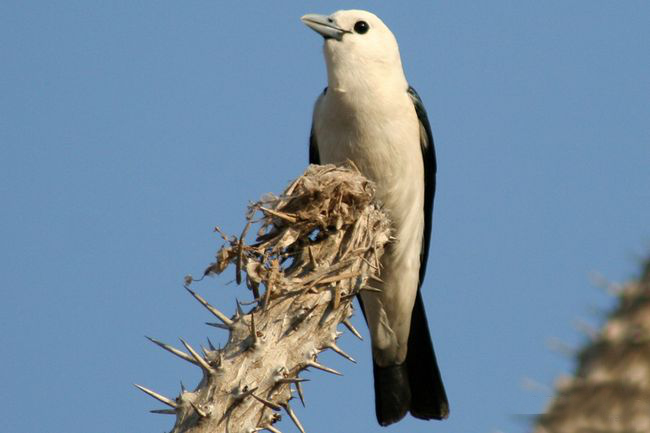
The Lafresnaye's Vanga, known scientifically as Xenopirostris xenopirostris, is an intriguing bird species belonging to the Vangidae family. This bird is predominantly found in Madagascar, where it plays a vital role in the island's unique ecological systems. The species is named in honor of the French ornithologist Frédéric de Lafresnaye, reflecting its distinct place in avian taxonomy. Lafresnaye's Vanga is especially notable for its stout, slightly curved bill, which it uses to expertly forage for insects in the dry forests and scrublands of southwestern Madagascar.
Significantly, the Lafresnaye's Vanga contributes to the ecological balance by controlling insect populations, a crucial function given the diversity of life in Madagascar's forests. The bird's presence in these ecosystems helps maintain the health of the forest, providing natural pest control and contributing to the dispersal of seeds and nutrients through its foraging activities.
This bird's habitat primarily includes the spiny forests, dry deciduous forests, and subarid thorn scrubs that characterize southwest Madagascar. In these environments, Lafresnaye's Vanga displays a range of seasonal behaviors, adapting its foraging strategies to the varying availability of food resources throughout the year. During the dry season, when insect prey becomes scarce, the bird may expand its diet to include a greater variety of arthropods and small reptiles.
Overall, the Lafresnaye's Vanga's role in its environment underscores the importance of conserving Madagascar's unique habitats. The bird's reliance on specific forest types makes it vulnerable to habitat loss, a significant conservation concern. Therefore, understanding and protecting the ecological relationships within these forests is critical to ensuring the survival of this distinctive species.
The Lafresnaye's Vanga belongs to the family Vangidae, within the order Passeriformes. These birds typically live typically 5-7 years with a max recorded of 9 years..
How to Identify a Lafresnaye's Vanga
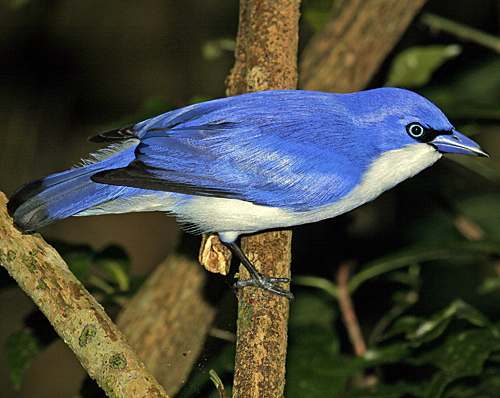
Identifying Lafresnaye's Vanga in the field requires attention to several distinctive features. Adult birds exhibit a striking combination of plumage and physical attributes. They possess a robust, ivory-colored bill that is slightly downcurved, setting them apart from other bird species in their range. The plumage is predominantly grayish-brown on the upperparts, with a paler gray on the underparts, providing effective camouflage in their forest habitat.
Juveniles resemble adults but can be distinguished by their slightly duller plumage and less pronounced bill curvature. Sexual dimorphism is subtle in Lafresnaye's Vanga, with males generally appearing slightly larger than females, although this size difference requires careful observation.
In flight, Lafresnaye's Vanga exhibits a stocky silhouette with broad wings and a short tail, a profile that aids in maneuvering through dense forest canopies. When perched, the bird often adopts an upright posture, making it easier to observe the distinctive bill and head shape. Despite these identifiable traits, confusion with other Vanga species may occur, necessitating a closer inspection of plumage patterns and vocalizations for accurate identification.
Having trouble telling birds apart? Upload a photo to our bird identification tool for an instant species match.
Lafresnaye's Vanga Habitat and Range
Preferred Habitat
Lafresnaye's Vanga inhabits the dry and spiny forests of southwestern Madagascar, a region characterized by unique vegetation adapted to arid conditions. This habitat includes thorny scrubs and dry deciduous forests, where the bird finds both shelter and ample foraging opportunities. These environments often feature trees such as the baobab and Euphorbia, providing critical nesting sites and feeding grounds.
The species can be found at elevations ranging from sea level to approximately 800 meters, although it generally prefers lower elevations where its preferred habitat types are most prevalent. Seasonal shifts in habitat use are minimal, as the bird remains a year-round resident of these forests. Lafresnaye's Vanga is scarce in more urbanized areas, preferring the relatively undisturbed forest interiors where human presence is minimal.
Geographic Range
The range of Lafresnaye's Vanga is restricted to the island of Madagascar, with its distribution concentrated in the southwestern part of the island. This endemic bird species is primarily found in the regions of Toliara and Mahafaly, where suitable habitat conditions align with its ecological needs. Unlike some avian species, Lafresnaye's Vanga does not engage in long-distance migrations, instead remaining within its localized range throughout the year.
Within this range, the bird's population density is highest in areas where dry and spiny forests are well-preserved, such as the Tsimanampetsotsa National Park. Population hotspots are closely tied to the availability of suitable habitats, which are increasingly threatened by deforestation and land conversion for agriculture.
Want to know which birds visit your area? Browse our backyard birds by location guides for region-specific species lists.
What Does the Lafresnaye's Vanga Eat?
Lafresnaye's Vanga primarily feeds on insects and arthropods, making it an insectivore by nature. The bird's robust bill is an adaptation for probing into bark and foliage to extract hidden insects, which form the bulk of its diet. During the breeding season, the demand for protein increases, prompting the birds to focus on larger prey items such as beetles, grasshoppers, and caterpillars.
Seasonal changes in diet occur as the availability of preferred prey fluctuates. In the dry season, when insect abundance diminishes, Lafresnaye's Vanga may expand its diet to include small reptiles and a wider variety of invertebrates. The bird employs a methodical foraging technique, often working systematically through tree branches and undergrowth in search of prey. Feeding primarily occurs during the cooler parts of the day, such as early morning and late afternoon, to avoid the heat of the midday sun.
Lafresnaye's Vanga Behavior and Social Structure
Lafresnaye's Vanga exhibits a social structure that includes both solitary and paired behaviors. Outside the breeding season, the bird may be observed foraging alone or in small family groups. During the breeding season, pairs become more territorial, defending their nesting sites against intruders. Courtship displays involve mutual preening and vocal exchanges, strengthening pair bonds.
The bird's daily activity pattern consists of foraging during dawn and dusk, with periods of rest during the hottest parts of the day. Lafresnaye's Vanga is generally non-migratory, remaining within its established territory year-round. When faced with predators, the bird employs alarm calls and may engage in mobbing behavior to deter threats. Despite its relatively small size, Lafresnaye's Vanga is a vigilant and resourceful bird, adept at navigating the challenges of its forest environment.
Lafresnaye's Vanga Nesting and Reproduction
Lafresnaye's Vanga constructs its nest primarily in the forked branches of trees or shrubs, selecting locations that offer both concealment and a strategic vantage point. The nest itself is a cup-shaped structure made from twigs, leaves, and other natural fibers, bound together with spider silk or plant matter to enhance stability.
The breeding season typically occurs during the dry season, from September to December, when food resources are more predictable. The clutch size generally consists of two to three eggs, which are incubated by both parents for a period of approximately 14 to 16 days. After hatching, the chicks are altricial, requiring intensive parental care. Both male and female participate in feeding the young, which fledge around 18 to 20 days post-hatching.
Generally, Lafresnaye's Vanga raises one brood per year, though resource availability may influence the possibility of a second brood. The careful selection of nesting sites and cooperative breeding efforts reflect the bird's adaptation to its challenging environment.
Lafresnaye's Vanga Sounds and Vocalizations
The primary song of Lafresnaye's Vanga is a series of melodic whistles and trills, characterized by a rhythmic and somewhat repetitive pattern. The pitch varies, but the quality remains clear and flute-like, making it a distinctive component of the soundscape in Madagascar's dry forests.
Call notes are shorter and more abrupt, often used in communication between mates or signaling territory boundaries. Alarm calls are sharper and more urgent, designed to alert nearby birds to potential threats. During the dawn chorus, Lafresnaye's Vanga's song can be heard echoing through the forest, marking its presence and asserting its territory.
Interesting Facts About the Lafresnaye's Vanga
- 1Lafresnaye's Vanga is named after the French ornithologist Frédéric de Lafresnaye, reflecting its scientific discovery history.
- 2The bird's robust, slightly curved bill is specially adapted for extracting insects from bark and foliage.
- 3Lafresnaye's Vanga primarily inhabits the dry and spiny forests of Madagascar, a unique ecosystem found nowhere else on earth.
- 4The species is non-migratory, remaining in its range throughout the year, unlike many other Vangidae that may migrate seasonally.
- 5During the breeding season, Lafresnaye's Vanga exhibits territorial behavior, defending its nesting area from intruders.
- 6The species is part of a larger family of birds endemic to Madagascar, highlighting the island's rich biodiversity.
- 7Despite its restricted range, Lafresnaye's Vanga plays a crucial role in controlling insect populations within its habitat.
Lafresnaye's Vanga Conservation Status
Currently, the IUCN lists Lafresnaye's Vanga as Least Concern, although its population trend is declining. Primary threats include habitat loss due to deforestation and agricultural expansion, which reduce the availability of suitable nesting and foraging sites. Conservation efforts focus on habitat protection and the establishment of reserves, such as the Tsimanampetsotsa National Park. Historically, the species faced less pressure, but recent increases in human activity have accelerated habitat degradation. Continued conservation attention is crucial to maintaining the ecological integrity of Madagascar's forests and ensuring the survival of Lafresnaye's Vanga.