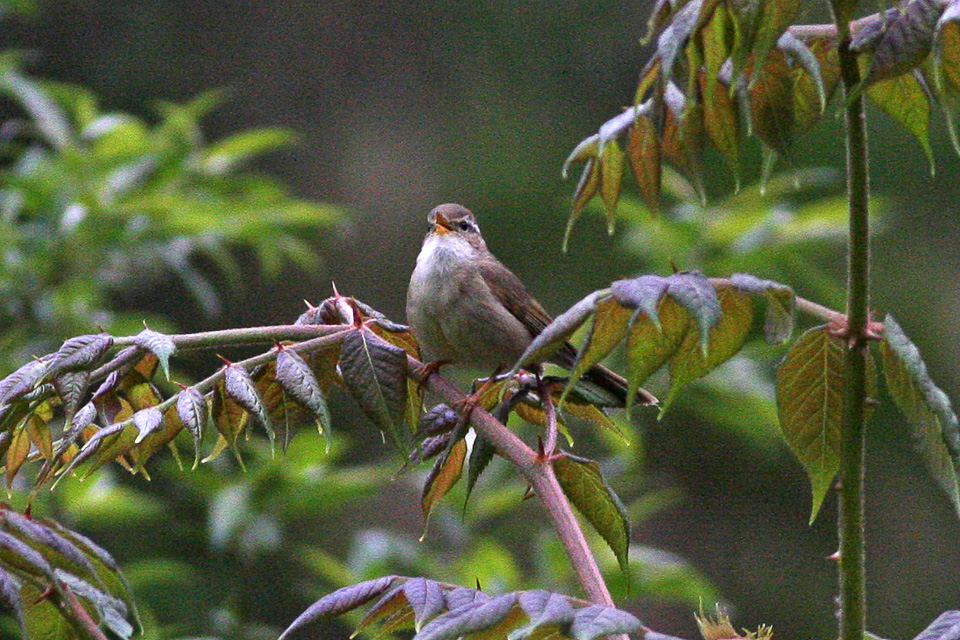
Limestone Leaf Warbler
Phylloscopus calciatilis
Order: Passeriformes / Family: Phylloscopidae

Wikimedia Commons
About the Limestone Leaf Warbler
The Limestone Leaf Warbler (Phylloscopus calciatilis) is a fascinating avian species endemic to Southeast Asia, particularly thriving in the limestone karst regions of Vietnam and Laos. This bird is a recent addition to ornithological records, having been described scientifically only in the early 21st century, highlighting the continuous discoveries in avian biodiversity. Its presence in these unique habitats underscores the ecological significance of limestone forests and their role in supporting specialized fauna.
These warblers primarily inhabit subtropical and tropical moist lowland forests, where they play a crucial role in insect population control. By consuming a variety of insects, they help maintain ecological balance within these ecosystems. The Limestone Leaf Warbler exhibits seasonal variations in its behavior, primarily driven by breeding needs. During the breeding season, typically in the spring and early summer months, they become more vocal and territorial. Their vocalizations serve not only to attract mates but also to establish dominance over prime nesting sites.
Ecologically, the Limestone Leaf Warbler is an indicator species for the health of limestone habitats. Its presence signifies a well-functioning ecosystem with adequate insect populations and healthy forest cover. Additionally, the conservation of this species and its habitat has broader implications for biodiversity preservation, as limestone regions are often biodiversity hotspots home to numerous endemic and threatened species. The warbler's restricted range makes understanding and protecting its habitat a priority for conservationists and researchers.
The Limestone Leaf Warbler belongs to the family Phylloscopidae, within the order Passeriformes. These birds typically live average 4-6 years, with a maximum recorded of 8 years..
How to Identify a Limestone Leaf Warbler
The Limestone Leaf Warbler is a small, agile bird, typically measuring about 10 to 11 centimeters in length. Its plumage is predominantly greenish on the upperparts, providing excellent camouflage among the leaves and mosses of its forest habitat. The underparts are a lighter, whitish color, which can sometimes exhibit a pale yellow wash, particularly on the belly. Adult males and females look remarkably similar, making them challenging to differentiate in the field.
Juvenile Limestone Leaf Warblers share the same general coloration as adults but may appear slightly duller, lacking the luster seen in mature birds. One distinguishing feature to note is their prominent white eye stripe, which stands out against their greenish plumage and aids in identification. The beaks are slender and pointed, perfectly adapted for gleaning insects from foliage.
In flight, the Limestone Leaf Warbler exhibits a rapid, fluttering pattern, often staying close to the canopy. When perching, they tend to remain upright, often flicking their wings and tail, a behavior that can help distinguish them from other similar Phylloscopus species in overlapping regions. While confusion with similar leaf warblers is possible, the specific combination of habitat, size, and vocalizations aids in correct identification.
Having trouble telling birds apart? Upload a photo to our bird identification tool for an instant species match.
Limestone Leaf Warbler Habitat and Range
Preferred Habitat
The Limestone Leaf Warbler is closely associated with limestone karst habitats, which are characterized by rugged outcrops and dense vegetation. These areas are primarily found in the northern parts of Vietnam and Laos, where the warbler makes its home amidst dense foliage of subtropical and tropical moist lowland forests. The warbler is most often encountered at elevations ranging from 300 to 1,200 meters above sea level, although it shows a preference for lower elevations within this range.
Seasonally, there is little shift in habitat preference for the Limestone Leaf Warbler, as it remains in these limestone regions year-round. However, minor movements within the habitat might occur as they seek optimal nesting sites or areas with higher insect abundance during different seasons. While primarily found in rural and semi-rural settings, the warbler shows little affinity for urbanized areas, remaining largely undisturbed by human developments.
These specific habitat requirements make the Limestone Leaf Warbler a key species for monitoring the health of limestone ecosystems. Limestone habitats are often overlooked in conservation but play a critical role in regional biodiversity, hosting a variety of specialized flora and fauna that are not found elsewhere.
Geographic Range
The breeding range of the Limestone Leaf Warbler is restricted to Southeast Asia, with confirmed populations primarily in northern Vietnam and Laos. In Vietnam, it is predominantly found in the limestone karst regions of Ha Giang, Cao Bang, and Tuyen Quang provinces. In Laos, its presence is noted in similar habitats, though specific localities are less documented due to limited field research.
Unlike many other warbler species, the Limestone Leaf Warbler does not undertake extensive migrations. It is considered a resident species, remaining in its breeding range throughout the year. This lack of migratory behavior is likely due to the stable climate and consistent availability of food resources in its habitat.
Population density hotspots tend to coincide with areas of well-preserved limestone forests. The warbler's restricted range makes it vulnerable to habitat destruction, particularly from limestone quarrying and deforestation. Conservation efforts are crucial in these areas to ensure the survival of this unique species and the preservation of its specialized habitat.
Want to know which birds visit your area? Browse our backyard birds by location guides for region-specific species lists.
What Does the Limestone Leaf Warbler Eat?
The diet of the Limestone Leaf Warbler primarily consists of insects, which it actively hunts among the foliage of its forest habitat. This warbler favors small insects such as caterpillars, beetles, and various arthropods, which are abundant in its environment. Throughout the year, the warbler's diet may shift slightly to include other small invertebrates, depending on seasonal availability.
During the breeding season, the demand for protein-rich food increases, leading the Limestone Leaf Warbler to forage more intensively. It employs a technique known as 'leaf gleaning,' where it meticulously searches the undersides of leaves and branches for prey. This foraging behavior is often accompanied by rapid wing flicks, which help flush out hidden insects.
The warbler typically feeds during daylight hours, with peak activity in the early morning and late afternoon when insect activity is at its highest. Despite their small size, these warblers are efficient hunters, contributing significantly to the control of insect populations within their habitat.
Limestone Leaf Warbler Behavior and Social Structure
Limestone Leaf Warblers exhibit a range of behaviors that enhance their survival in the dense limestone forests. These birds are generally solitary or found in pairs, particularly during the breeding season. Outside of this period, they may join mixed-species foraging flocks, allowing them to exploit food resources more efficiently and reduce predation risks.
Territoriality is a key aspect of their behavior during the breeding season. Males establish and defend small territories through vocal displays and occasional physical confrontations with rivals. Their song, a series of melodious notes, serves both to attract females and to deter competing males. Courtship involves males performing aerial displays and offering food to potential mates.
In response to predators, Limestone Leaf Warblers exhibit discreet flight and seek cover in dense foliage. They rely on their cryptic plumage and quick movements to evade detection. Daily activity patterns involve periods of intense foraging interspersed with rest during the hottest parts of the day, reflecting their adaptation to the warm, humid climate of their habitat.
Limestone Leaf Warbler Nesting and Reproduction
Limestone Leaf Warblers build their nests in low shrubs or small trees, typically concealed among dense foliage to protect against predators. The nest is cup-shaped and constructed using a variety of plant materials such as grasses, leaves, and roots, often lined with softer materials like feathers or moss.
Clutch size generally ranges from three to five eggs, with the female primarily responsible for incubation. The incubation period lasts approximately 12 to 14 days, during which the male continues to defend the territory and provide food for the female. After hatching, both parents participate in feeding the chicks, which fledge after about 11 to 13 days.
These warblers may raise one or two broods per year, depending on environmental conditions and food availability. The parental roles are well defined, with both contributing to the care and protection of the young, ensuring high survival rates for the fledglings.
Limestone Leaf Warbler Sounds and Vocalizations
The primary song of the Limestone Leaf Warbler is a melodious series of clear, high-pitched notes that can be likened to a gentle, cascading waterfall. This song is often delivered from a concealed perch within the forest canopy, making visual detection of the singer challenging. The warbler's call notes are sharp and distinctive, often used to maintain contact between mates or signal alarm.
During the dawn chorus, the Limestone Leaf Warbler's song stands out due to its clarity and rhythmic pattern, contributing to the rich acoustic tapestry of the forest. Alarm calls are more rapid and staccato, serving as an alert to nearby birds of potential danger.
Comparatively, the song of the Limestone Leaf Warbler is softer and more varied than that of many other Phylloscopus species, allowing experienced birdwatchers to distinguish it by ear amidst the diverse avian vocalizations of its habitat.
Interesting Facts About the Limestone Leaf Warbler
- 1The Limestone Leaf Warbler was only scientifically described in 2009, highlighting the biodiversity of limestone habitats.
- 2This warbler is known for its exceptional camouflage, which allows it to blend seamlessly with the foliage of its limestone forest home.
- 3Despite its small size, the Limestone Leaf Warbler plays a crucial role in controlling insect populations within its habitat.
- 4The species' discovery emphasized the importance of limestone ecosystems, which are often overlooked in conservation efforts.
- 5The Limestone Leaf Warbler's vocalizations can be distinguished from other warblers by their softer, more varied tones.
- 6Limestone karst regions where these warblers live are not only important for biodiversity but also for their geological uniqueness.
- 7This warbler's habitat preference makes it an excellent indicator species for the health of limestone forest ecosystems.
Limestone Leaf Warbler Conservation Status
The Limestone Leaf Warbler is currently classified as Least Concern on the IUCN Red List, but its restricted range makes it vulnerable to habitat destruction. The primary threat to this species is the loss of limestone forest habitat due to quarrying and agricultural expansion. Conservation efforts focus on habitat preservation and the establishment of protected areas within its range. Local and international conservation organizations are working to raise awareness about the importance of limestone ecosystems and the species that depend on them. Historical population trends suggest a stable population, but ongoing habitat degradation could undermine this stability. Protecting the Limestone Leaf Warbler involves not only safeguarding its immediate environment but also engaging in broader conservation initiatives to promote sustainable land use practices in areas surrounding its habitat.