
Little Lorikeet
Parvipsitta pusilla
Order: Psittaciformes / Family: Psittaculidae

Wikimedia Commons
About the Little Lorikeet
The Little Lorikeet, scientifically known as Parvipsitta pusilla, is a small, vibrant parrot endemic to eastern and southeastern Australia. Known for its bright green plumage and red face, this bird is a frequent inhabitant of open woodlands and forests, particularly favoring areas rich in eucalyptus. As a member of the Psittaculidae family, it plays a crucial role in its ecosystem as both a pollinator and seed disperser. The Little Lorikeet's affinity for flowering trees means it is often found in regions where these plants are abundant, such as New South Wales and Queensland. During the breeding season, which typically spans from August to January, these birds become more vocal and visible as they search for nesting sites in tree hollows. This species thrives in diverse habitats, from coastal woodlands to the edges of rainforests. In urban areas, they adapt well, often seen in parks and gardens where suitable food sources are available. Despite its adaptability, the Little Lorikeet faces challenges due to habitat loss and competition for nesting sites with other bird species. The ecological role of the Little Lorikeet extends beyond pollination. By foraging on nectar and pollen, they contribute to the reproductive success of native flora. Additionally, their diet includes small insects, which provides a natural pest control mechanism. Their presence in mixed-species flocks highlights their social nature and their role in the dynamics of bird communities. Seasonal movements of the Little Lorikeet are closely linked to the flowering patterns of eucalypts and other native trees. These lorikeets may travel considerable distances to exploit food resources but are not considered migratory in the traditional sense. Their adaptability to different habitats and conditions is a testament to their resilience, yet ongoing conservation efforts are essential to safeguard their future.
The Little Lorikeet belongs to the family Psittaculidae, within the order Psittaciformes. These birds typically live 7-10 years, with some individuals reaching 12 years..
How to Identify a Little Lorikeet
Identifying the Little Lorikeet involves noting its distinctive green body, which blends seamlessly with the foliage of its preferred habitats. Adults exhibit a striking red patch on the face, which contrasts vividly against their predominantly green plumage. This species measures around 15 cm in length and has a wingspan of approximately 23 cm, making it a small member of the parrot family. Juveniles resemble adults but tend to have duller colors and lack the prominent red facial markings. Both male and female Little Lorikeets share similar plumage, making them difficult to distinguish in the field. In flight, these lorikeets display rapid wingbeats and a swift, direct flight pattern, often moving in small, noisy flocks. Unlike similar species, the Little Lorikeet lacks the blue or purple hues found in larger lorikeets, which aids in its identification. Their perching posture is typically upright, and they often cling to flowering branches while feeding.
Having trouble telling birds apart? Upload a photo to our bird identification tool for an instant species match.
Little Lorikeet Habitat and Range
Preferred Habitat
The Little Lorikeet occupies a range of habitats, primarily favoring open eucalyptus woodlands and forests. These areas provide the necessary nectar-rich flowers that form the bulk of their diet. In coastal regions, the Little Lorikeet can be found in swamp forests and heathlands, while inland, they are often seen in dry sclerophyll forests and woodlands. They can also adapt to urban environments, frequenting parks and gardens where flowering trees are present. This adaptability allows them to exploit a range of elevations from sea level up to 1000 meters. Seasonal shifts in habitat are largely driven by the flowering cycles of eucalypts, which are their primary food source. As such, they may move locally to follow these blooms.
Geographic Range
The Little Lorikeet's range extends across eastern and southeastern Australia, with populations concentrated in New South Wales, Queensland, and Victoria. They are generally considered resident birds, although some local movements occur in response to food availability. Their breeding range overlaps significantly with their year-round distribution, as they do not undertake long-distance migrations. Despite this, they may travel regionally to take advantage of flowering events. Population densities are highest in areas with extensive eucalyptus forests, such as the coastal and subcoastal regions of New South Wales. The Little Lorikeet is not present in Tasmania, Western Australia, or the Northern Territory, emphasizing its preference for temperate and subtropical climates.
Want to know which birds visit your area? Browse our backyard birds by location guides for region-specific species lists.
What Does the Little Lorikeet Eat?
The Little Lorikeet primarily feeds on nectar and pollen from a variety of flowering plants, with a strong preference for eucalyptus species. This diet is supplemented by small insects and their larvae, which they glean from the foliage and flowers. Seasonal changes in their diet align with the flowering cycles of their preferred trees. During peak flowering seasons, nectar forms the bulk of their intake, but they will increase their insect consumption when flowers are less abundant. Their foraging technique involves acrobatically clinging to branches and flowers, often hanging upside down to access nectar. This behavior not only aids in pollination but also allows them to exploit a wider range of feeding sites. These lorikeets typically feed in the early morning and late afternoon, taking advantage of cooler temperatures and increased nectar flow.
Little Lorikeet Behavior and Social Structure
Little Lorikeets exhibit gregarious and social behavior, often forming small flocks that can number up to 20 individuals. These flocks move cohesively through the forest canopy, maintaining contact with frequent vocalizations. Their territorial behavior is most evident during the breeding season, when pairs become more aggressive in defending their nesting sites. Courtship displays are subtle and involve mutual preening and feeding between mates. In response to predators, such as raptors and snakes, Little Lorikeets rely on their agility and speed, often taking to flight en masse to confuse and evade threats. Daily activity patterns include periods of intense foraging interspersed with rest and preening sessions in the higher branches of trees. They are most active during the cooler parts of the day, avoiding the midday heat.
Little Lorikeet Nesting and Reproduction
Little Lorikeets nest in tree hollows, typically selecting sites in mature eucalyptus trees that offer both protection and proximity to food sources. The nesting season generally extends from August to January, coinciding with peak flowering periods. Clutch sizes range from 2 to 4 eggs, which are incubated by the female for approximately 21 days. During this time, the male provides food for the female and, post-hatching, both parents take turns feeding the chicks. Fledging occurs around 6 to 7 weeks after hatching, though young birds may remain with their parents for some time as they learn to forage independently. Little Lorikeets typically raise one brood per year but may attempt a second if conditions are favorable.
Little Lorikeet Sounds and Vocalizations
The Little Lorikeet's vocalizations are characterized by high-pitched, rapid chattering, often described as a series of tinkling notes. These calls are used for communication within flocks and to maintain contact while foraging. Alarm calls are sharper and more insistent, serving to alert other birds of potential threats. During the dawn chorus, their calls blend with those of other bird species, contributing to the vibrant soundscape of their habitats. Their vocalizations, while not melodic, are distinctive and serve as an important tool for identification in the field.
Interesting Facts About the Little Lorikeet
- 1The Little Lorikeet can travel over 30 km in a day while foraging for food, showcasing its impressive stamina.
- 2Despite their small size, Little Lorikeets are highly aggressive and will defend their feeding territories vigorously.
- 3These birds have specially adapted brush-tipped tongues that allow them to efficiently extract nectar from flowers.
- 4Little Lorikeets are one of the few parrot species capable of hanging upside down while feeding, an adaptation that aids in accessing nectar.
- 5Their bright red face is a key distinguishing feature that helps them stand out despite their predominantly green plumage.
- 6Little Lorikeets play a critical role in pollinating eucalyptus flowers, a vital process for maintaining healthy forest ecosystems.
- 7In urban settings, Little Lorikeets often visit backyard gardens, where they are attracted to the nectar of exotic flowers.
Little Lorikeet Conservation Status
The Little Lorikeet is currently listed as Least Concern by the IUCN, with stable population trends. However, ongoing habitat destruction and competition with invasive species for nesting sites pose significant threats. Conservation efforts focus on habitat preservation and the management of invasive species. Historical population changes have been relatively stable, but urban expansion and agricultural development continue to impact their natural habitats. Environmental programs aimed at preserving old-growth forests and promoting the planting of native flora are vital for their long-term survival.
Other Psittaculidae Species


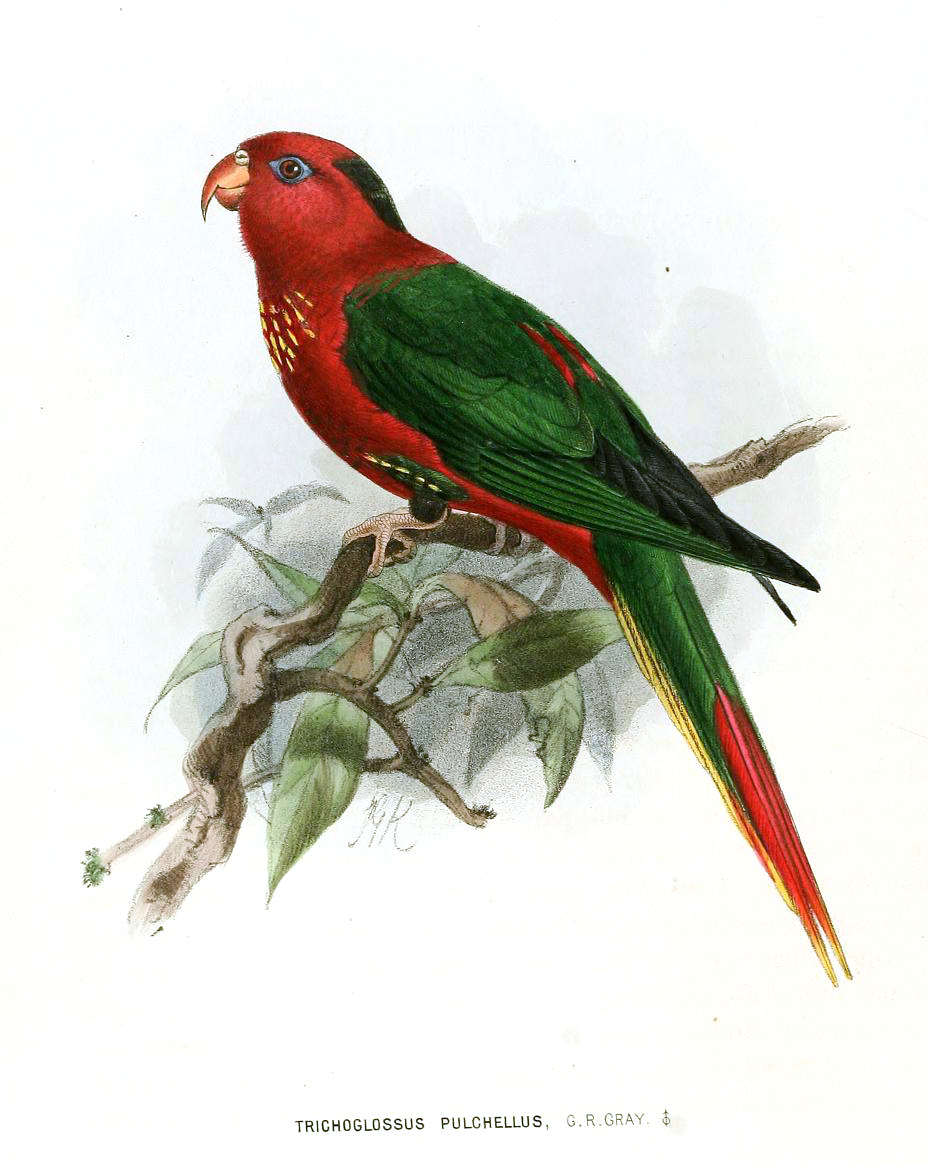
Birds Similar to the Little Lorikeet
These species are often confused with the Little Lorikeet due to similar appearance or overlapping range.

