
Long-wattled Umbrellabird
Cephalopterus penduliger
Order: Passeriformes / Family: Cotingidae

Wikimedia Commons
About the Long-wattled Umbrellabird
The Long-wattled Umbrellabird (Cephalopterus penduliger) is a captivating species belonging to the family Cotingidae. This striking bird is predominantly found in the humid, montane cloud forests of western Colombia and Ecuador, particularly within the Chocó biogeographic region. The region's high rainfall and rich biodiversity provide a perfect habitat for this unique species. The bird plays a crucial ecological role as a seed disperser, assisting in the maintenance of forest diversity. The male Long-wattled Umbrellabird is easily recognized by its extraordinary long, feathered wattle, which can extend up to 35 centimeters. This wattle is used in courtship displays, a defining feature that sets it apart from other members of its genus, such as the Amazonian Umbrellabird (Cephalopterus ornatus). The female, in contrast, lacks this prominent feature, making her slightly less conspicuous.
The Long-wattled Umbrellabird contributes significantly to the ecological balance of its habitat. By consuming a variety of fruits, this bird helps in dispersing seeds across the forest, which promotes plant regeneration and diversity. Given that the Chocó region boasts one of the highest concentrations of endemic species in the world, the Long-wattled Umbrellabird is an integral part of this ecosystem's dynamic. Its presence is an indicator of forest health, reflecting the rich biodiversity sustained by the cloud forest environment. Seasonal behavior in the Long-wattled Umbrellabird is largely influenced by fruit availability, leading to altitudinal migrations within its range.
Due to its dependence on specific habitats, the Long-wattled Umbrellabird is highly susceptible to deforestation and habitat fragmentation. The bird is currently classified as Vulnerable by the IUCN. Conservation efforts are critical in preserving the montane forests that this species calls home. Initiatives aimed at protecting these habitats are vital for the survival of the Long-wattled Umbrellabird and the myriad of other species that share its environment. The continued existence of the Long-wattled Umbrellabird underscores the importance of cloud forest conservation, both for the unique avifauna and for the broader ecological benefits these forests provide.
The Long-wattled Umbrellabird belongs to the family Cotingidae, within the order Passeriformes. These birds typically live 8-10 years, with a max recorded of 15 years.
How to Identify a Long-wattled Umbrellabird
The Long-wattled Umbrellabird is a large, entirely black bird with a prominent crest and a striking long wattle. Males are distinguished by their sizable feathered wattle, which hangs from their throat and can be inflated during display. This wattle is covered in short, black feathers and can measure up to 35 centimeters in length. In contrast, females are smaller and lack the extensive wattle, although they do possess a smaller version. Juveniles resemble females but can be identified by their smaller size and less developed crest.
When observing the Long-wattled Umbrellabird, note its unique silhouette. In flight, its broad wings and long tail are evident, though it is more often seen perching in the canopy where its glossy black plumage blends into the shadowy forest interior. Its posture is typically upright, with the wattle hanging conspicuously when the bird is at rest.
While the Long-wattled Umbrellabird can be confused with other umbrellabird species, such as the Amazonian Umbrellabird, the key distinguishing feature is the extreme length of the male's wattle. This feature, coupled with its habitat preferences, aids in its identification. The bird's deep, resonant calls also set it apart, often heard reverberating through the forest before the bird is seen.
Having trouble telling birds apart? Upload a photo to our bird identification tool for an instant species match.
Long-wattled Umbrellabird Habitat and Range
Preferred Habitat
The Long-wattled Umbrellabird inhabits the humid montane cloud forests of the Chocó biogeographic region, primarily in western Colombia and Ecuador. These forests, characterized by high rainfall and persistent fog, create a lush environment with abundant epiphytes and thick undergrowth. The bird is typically found at elevations ranging from 300 to 1,800 meters, though it is most common at mid-elevations.
During the breeding season, the Long-wattled Umbrellabird prefers undisturbed primary forests, where it can find ample fruiting trees. Seasonal shifts in fruit availability may prompt altitudinal migrations to lower elevations during the non-breeding season. While largely absent from urban areas, this species can occasionally be found in secondary forests if they are sufficiently mature and continuous with primary forest tracts.
The Long-wattled Umbrellabird's sensitivity to habitat disruption means it is rarely found in fragmented or heavily degraded forests. Preservation of its cloud forest habitat is crucial for its continued survival, underscoring the importance of conservation efforts in the region.
Geographic Range
The Long-wattled Umbrellabird's range is confined to the humid forests of western Colombia and Ecuador, specifically within the Chocó biogeographic region. This area is recognized for its exceptional biodiversity and high levels of endemism, providing a unique environment for this species.
The bird does not engage in long-distance migrations but exhibits altitudinal movements in response to seasonal changes in fruit availability. During the breeding season, typically from March to June, it occupies higher elevations within its range. In contrast, during the non-breeding season, it may descend to lower elevations in search of food.
Population density hotspots include the forests of the Mindo and Bilsa Biological Stations in Ecuador, which serve as key conservation areas. The species is less frequently encountered outside protected reserves, reflecting its reliance on intact forest habitats.
Want to know which birds visit your area? Browse our backyard birds by location guides for region-specific species lists.
What Does the Long-wattled Umbrellabird Eat?
The Long-wattled Umbrellabird primarily feeds on fruits, making it an important seed disperser in its ecosystem. Its diet consists largely of figs and other fruits from the Lauraceae and Moraceae families. These fruits provide the necessary nutrients and energy for the bird's survival and reproduction.
During the breeding season, the availability of fruiting trees dictates the bird's foraging behavior. The Long-wattled Umbrellabird is known to forage solitarily or in small groups, often following mixed-species flocks to locate fruiting trees. It typically feeds in the canopy, plucking fruits with its strong bill.
In addition to fruits, the Long-wattled Umbrellabird may occasionally consume insects and small vertebrates, supplementing its diet with protein. This opportunistic feeding behavior allows it to adapt to seasonal fluctuations in fruit availability, ensuring its survival in the variable environment of the cloud forest.
Long-wattled Umbrellabird Behavior and Social Structure
The Long-wattled Umbrellabird exhibits interesting social and territorial behavior, particularly during the breeding season. Males establish territories in the canopy, where they perform elaborate courtship displays to attract females. These displays involve inflating the wattle and producing deep, resonant calls that can carry over long distances through the forest.
During the non-breeding season, Long-wattled Umbrellabirds may form loose associations or join mixed-species flocks. This social behavior is thought to facilitate foraging, as it increases the likelihood of locating fruiting trees. The bird's daily activity patterns revolve around feeding and resting, with peak foraging activity occurring in the early morning and late afternoon.
In response to predators, such as hawks and eagles, the Long-wattled Umbrellabird relies on its cryptic plumage to remain inconspicuous. Its black feathers blend into the shadows of the forest interior, providing effective camouflage. In cases of direct threat, the bird may engage in evasive flight or retreat to dense vegetation, using its agility and strong wings to swiftly escape danger.
Long-wattled Umbrellabird Nesting and Reproduction
Nesting in the Long-wattled Umbrellabird is a solitary affair, with females taking on the primary role in nest construction and incubation. The nests are typically located high in the canopy, constructed from twigs, leaves, and mosses to create a sturdy platform.
The female lays a clutch of one to two eggs, which she incubates alone for about 25-28 days. During this period, the male may play a role in defending the territory but does not participate in incubation. After hatching, the chicks remain in the nest for approximately 35-40 days before fledging.
Parental care continues after fledging, with the female providing the majority of the care. She feeds the young with regurgitated fruits, ensuring they receive the necessary nutrients for growth. Typically, the Long-wattled Umbrellabird raises one brood per year, although this can vary depending on environmental conditions and fruit availability.
Long-wattled Umbrellabird Sounds and Vocalizations
The Long-wattled Umbrellabird is known for its distinctive vocalizations, which include deep, resonant booms and grunts. These sounds are most commonly heard during the breeding season, as males use them to attract females and establish territories.
The primary song of the Long-wattled Umbrellabird is a series of low-frequency, booming notes that carry well through the dense forest. These notes are often repeated in a rhythmic pattern, creating a haunting, echoing effect. In addition to the primary song, the bird also produces a variety of call notes, including grunts and whistles, which are used in communication with conspecifics.
Alarm calls are less frequently heard but consist of sharp, harsh notes used to alert other birds to the presence of predators. The dawn chorus often features the Long-wattled Umbrellabird's vocalizations, contributing to the vibrant acoustic landscape of the cloud forest.
Interesting Facts About the Long-wattled Umbrellabird
- 1The Long-wattled Umbrellabird's wattle can extend up to 35 centimeters, making it one of the most distinctive features among birds.
- 2Despite its large size, the Long-wattled Umbrellabird is remarkably elusive, often heard before it is seen in the dense canopy.
- 3The Long-wattled Umbrellabird plays an important role in seed dispersal, aiding the regeneration of cloud forest habitats.
- 4During displays, the Long-wattled Umbrellabird inflates its wattle, producing resonant booms that can carry over a kilometer.
- 5The species name 'penduliger' refers to the pendulous nature of the bird's wattle, highlighting its unique anatomy.
- 6The Long-wattled Umbrellabird's habitat, the Chocó biogeographic region, harbors some of the world's highest biodiversity.
- 7This umbrellabird is one of only three species in its genus, each adapted to different forest environments in South America.
Long-wattled Umbrellabird Conservation Status
The Long-wattled Umbrellabird is currently classified as Vulnerable by the IUCN, with its population trend showing a decline. The primary threats to this species are habitat loss and fragmentation, driven by deforestation for agriculture and logging. Conservation efforts are focused on protecting the remaining tracts of cloud forest in the Chocó region. Initiatives include establishing protected areas and promoting sustainable land-use practices that minimize habitat destruction. Historical population changes reflect the impact of human activities on this species, with significant declines observed in areas subjected to intense deforestation. Support for conservation programs, such as ecotourism and community-based forest management, is crucial for the Long-wattled Umbrellabird's survival. These efforts not only help preserve critical habitat but also raise awareness about the importance of biodiversity conservation in the region.
Other Cotingidae Species


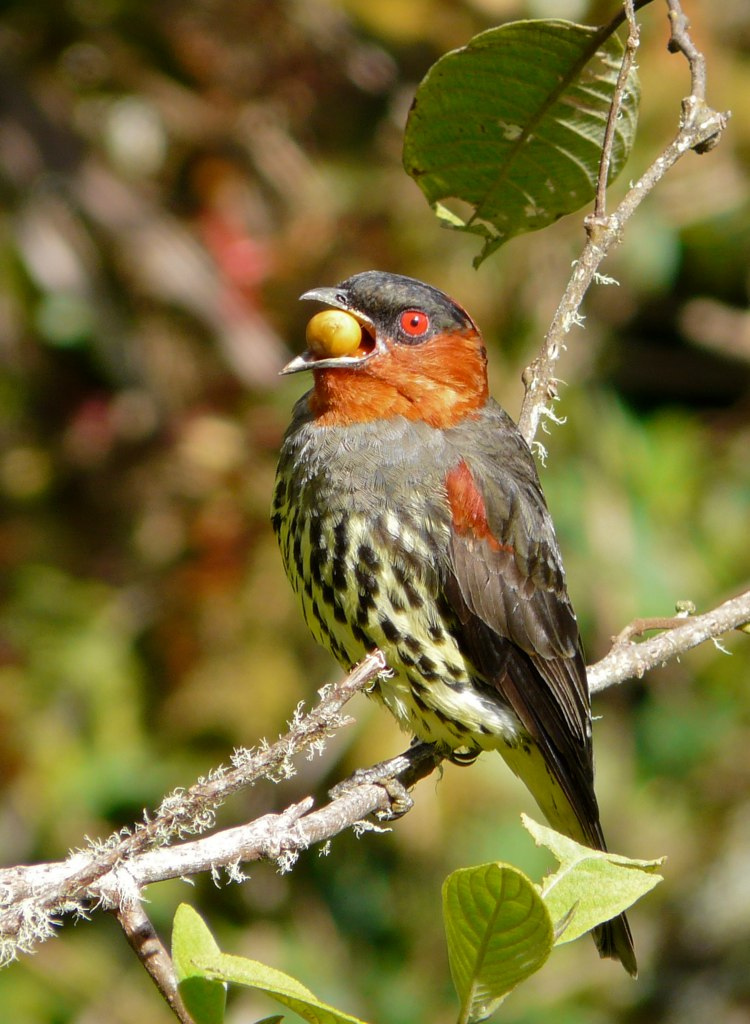

Birds Similar to the Long-wattled Umbrellabird
These species are often confused with the Long-wattled Umbrellabird due to similar appearance or overlapping range.

