
Marbled Wren-Babbler
Napothera marmorata
Order: Passeriformes / Family: Pellorneidae
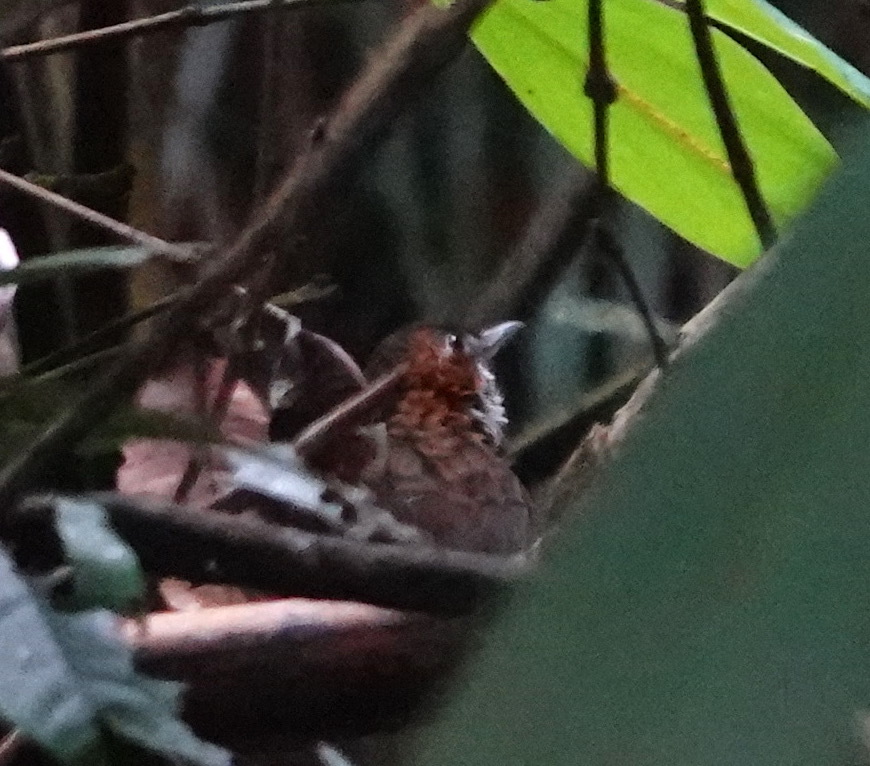
Wikimedia Commons
About the Marbled Wren-Babbler
The Marbled Wren-Babbler (Napothera marmorata) is a fascinating bird found predominantly in the humid montane forests of Southeast Asia. Characterized by its intricate marbled plumage, this bird is a member of the family Pellorneidae. It thrives in dense undergrowth and forest floor areas, where its cryptic coloration provides excellent camouflage. Its presence is often more easily detected by its distinctive vocalizations than by sight, as the bird tends to stay hidden within the thick vegetation. The Marbled Wren-Babbler plays a significant ecological role in its habitat by participating in the control of insect populations, feeding on a variety of small invertebrates. This bird is a critical part of the forest ecosystem, contributing to the balance of species within its environment. The species is known for its relatively sedentary behavior, with little evidence of long-distance migrations. However, some local movements may occur based on seasonal availability of food resources and habitat conditions. The Marbled Wren-Babbler is most active during the early morning and late afternoon, avoiding the midday heat by retreating to shaded areas. Its ability to adapt to seasonal changes is vital for its survival, particularly in regions where monsoon seasons can dramatically alter the landscape. The bird's role in seed dispersal is less pronounced compared to frugivorous species, but its foraging activities contribute to the aeration and turnover of forest soil, indirectly benefiting plant growth. Conservation of the Marbled Wren-Babbler and its habitat is crucial, as deforestation and habitat degradation pose significant threats to its populations. Protecting the montane forest environments where it thrives ensures not only the survival of this species but also the preservation of the rich biodiversity that these ecosystems support.
The Marbled Wren-Babbler belongs to the family Pellorneidae, within the order Passeriformes. These birds typically live typically 5 years, with some living up to 7 years..
How to Identify a Marbled Wren-Babbler
The Marbled Wren-Babbler can be identified by its distinctive marbled brown and white plumage, which provides effective camouflage against the leaf litter of its forest floor habitat. Adult birds exhibit a complex pattern of dark brown and lighter buff tones across their body, with a speckled or streaked appearance that varies slightly among individuals. Juveniles resemble adults but often display a somewhat duller coloration and less defined pattern, aiding in their concealment from predators. There is little sexual dimorphism in this species, with males and females appearing similar in size and coloration. The bird's relatively small stature, with a length of approximately 14 centimeters, and its rounded wings make it well-suited for navigating through dense vegetation. Similar species, such as the Eyebrowed Wren-Babbler, can be distinguished by their more pronounced facial markings and overall coloration. In flight, the Marbled Wren-Babbler's silhouette is compact, with short, rounded wings that enable quick, agile movements within its forest habitat. When perched, the bird often adopts a hunched posture, blending seamlessly into its surroundings.
Having trouble telling birds apart? Upload a photo to our bird identification tool for an instant species match.
Marbled Wren-Babbler Habitat and Range
Preferred Habitat
The Marbled Wren-Babbler inhabits the montane forests of Southeast Asia, particularly within the elevations ranging from 800 to 2,500 meters. These forests, characterized by high humidity and dense undergrowth, provide the ideal environment for this bird's survival. It prefers areas with thick leaf litter and ample ground cover, which offer protection from predators and abundant food resources. The species is found in regions such as the mountains of Thailand, Myanmar, and Malaysia, where the forest canopy remains largely intact. While the Marbled Wren-Babbler predominantly occupies natural forest environments, it shows limited adaptability to secondary growth or disturbed habitats. Seasonal habitat shifts are minimal, although some movement to lower elevations may occur during periods of extreme weather conditions. Unlike many bird species, the Marbled Wren-Babbler does not adapt well to urban environments, making the conservation of its natural habitat crucial for its continued survival.
Geographic Range
The range of the Marbled Wren-Babbler primarily includes the montane forest regions of Southeast Asia. It is found in specific areas such as the highlands of northern Thailand, the Shan Hills of Myanmar, and the Cameron Highlands of Malaysia. The bird's range is relatively restricted compared to more widespread species, with its populations concentrated in these specific mountainous regions. There is no evidence of long-distance migration, with the species typically remaining within its breeding range year-round. However, some altitudinal movements may occur, particularly in response to seasonal changes in temperature and food availability. Population density hotspots are often found in undisturbed or minimally disturbed forest areas, where the bird can exploit the rich resources of the undergrowth. Conservation efforts focus on protecting these key habitats to prevent further fragmentation and loss of range.
Want to know which birds visit your area? Browse our backyard birds by location guides for region-specific species lists.
What Does the Marbled Wren-Babbler Eat?
The diet of the Marbled Wren-Babbler consists primarily of small invertebrates, including insects, spiders, and other arthropods. It forages by meticulously picking through leaf litter and probing into crevices within the forest floor. This bird demonstrates a preference for areas rich in decaying organic material, where prey items are abundant. Seasonal diet changes are not well-documented, although fluctuations in prey availability likely influence its feeding habits. The Marbled Wren-Babbler employs a methodical foraging technique, using its sharp bill to extract insects from their hiding places. Prey size varies but generally includes small to medium-sized invertebrates that can be easily handled and consumed. The bird primarily feeds during the early morning and late afternoon, taking advantage of cooler temperatures and peak insect activity during these times.
Marbled Wren-Babbler Behavior and Social Structure
The social structure of the Marbled Wren-Babbler typically involves small family groups or pairs, with limited evidence of larger flocking behavior. Territorial behavior is evident, with individuals or pairs actively defending their chosen area within the forest from intruders. Courtship displays are subtle and often involve vocalizations and modest posturing rather than elaborate visual displays. The bird's response to predators includes remaining motionless and relying on its cryptic plumage to avoid detection. Daily activity patterns show a peak in foraging during cooler parts of the day, with quieter periods during midday when the bird retreats to shaded areas. The Marbled Wren-Babbler is generally non-migratory, with little evidence of significant seasonal movements. Its behavior is largely influenced by the availability of food resources and the presence of suitable habitat within its range.
Marbled Wren-Babbler Nesting and Reproduction
Nesting for the Marbled Wren-Babbler involves constructing a well-hidden nest on or near the ground, often concealed within dense vegetation or among rocks. The nest is typically a cup-shaped structure made from leaves, grass, and other plant materials, providing camouflage and protection for the eggs. Clutch size usually ranges from two to four eggs, with the incubation period lasting approximately 14 to 16 days. Both parents participate in incubation and feeding of the young, although specific roles can vary between pairs. Fledging occurs around 12 to 14 days after hatching, with young birds remaining dependent on their parents for several additional weeks. The number of broods per year is generally one to two, depending on environmental conditions and food availability. The Marbled Wren-Babbler's nesting success is closely tied to the preservation of its natural habitat, as disturbances can lead to increased predation and reduced reproductive success.
Marbled Wren-Babbler Sounds and Vocalizations
The primary song of the Marbled Wren-Babbler is a series of melodious whistles, often described as clear and flute-like, with a consistent rhythm and moderate pitch. These vocalizations play a vital role in communication between mates and in establishing territory boundaries. Call notes are softer and often used in close-range communication between individuals. Alarm calls are sharper and more urgent, serving to alert other birds of potential danger. The bird participates in the dawn chorus, contributing to the rich soundscape of the forest with its distinctive song. Compared to more common forest birds, the Marbled Wren-Babbler's song is less varied but easily recognizable once identified.
Interesting Facts About the Marbled Wren-Babbler
- 1The Marbled Wren-Babbler's intricate plumage pattern acts as effective camouflage, making it difficult to spot in its forest habitat.
- 2Unlike many birds, the Marbled Wren-Babbler does not perform long-distance migrations, staying within its mountainous range year-round.
- 3This bird's diet primarily consists of invertebrates, playing a crucial role in controlling insect populations in its ecosystem.
- 4The Marbled Wren-Babbler is more often heard than seen, as its distinctive vocalizations carry through the dense forest understory.
- 5Both male and female Marbled Wren-Babblers participate equally in raising their young, sharing responsibilities such as incubation and feeding.
- 6Despite being classified as Least Concern, the Marbled Wren-Babbler faces habitat loss threats due to ongoing deforestation in Southeast Asia.
- 7The bird's nesting sites are well-concealed on the forest floor, providing protection from predators and environmental elements.
Marbled Wren-Babbler Conservation Status
The Marbled Wren-Babbler is currently classified as Least Concern by the IUCN, although its populations face pressures from habitat loss due to deforestation and land conversion. Population trends are not well-documented, but the bird's restricted range and specific habitat requirements make it vulnerable to environmental changes. Primary threats include logging, agricultural expansion, and infrastructure development, which lead to habitat fragmentation and degradation. Conservation efforts focus on protecting key montane forest habitats and promoting sustainable land use practices. Historical population changes are challenging to assess due to limited long-term data, but ongoing monitoring is essential to ensure the species' continued survival.
Other Pellorneidae Species


Birds Similar to the Marbled Wren-Babbler
These species are often confused with the Marbled Wren-Babbler due to similar appearance or overlapping range.

