
Margelanic Whitethroat
Sylvia margelanica
Order: Passeriformes / Family: Sylviidae

Wikimedia Commons
About the Margelanic Whitethroat
The Margelanic Whitethroat, scientifically known as Sylvia margelanica, occupies a unique ecological niche within its range. This medium-sized songbird is predominantly found in the scrublands of Central Asia, particularly in Kyrgyzstan and Uzbekistan. It thrives in semi-arid environments where low shrubs offer both cover and food. The species plays a vital role in its ecosystem by controlling insect populations and serving as prey for larger birds and mammals. During spring and summer, the Margelanic Whitethroat engages in elaborate courtship displays. As a migratory bird, it winters in the warmer regions of the Indian subcontinent, marking an impressive journey that highlights its adaptability and resilience. While in its breeding territories, this bird contributes to the pollination of several plant species, thus maintaining the health of its habitat. Its presence is a clear indicator of a balanced ecosystem, as the Margelanic Whitethroat is sensitive to environmental changes and habitat degradation.
The Margelanic Whitethroat belongs to the family Sylviidae, within the order Passeriformes. These birds typically live 6 years on average, with a maximum recorded of 9 years..
How to Identify a Margelanic Whitethroat
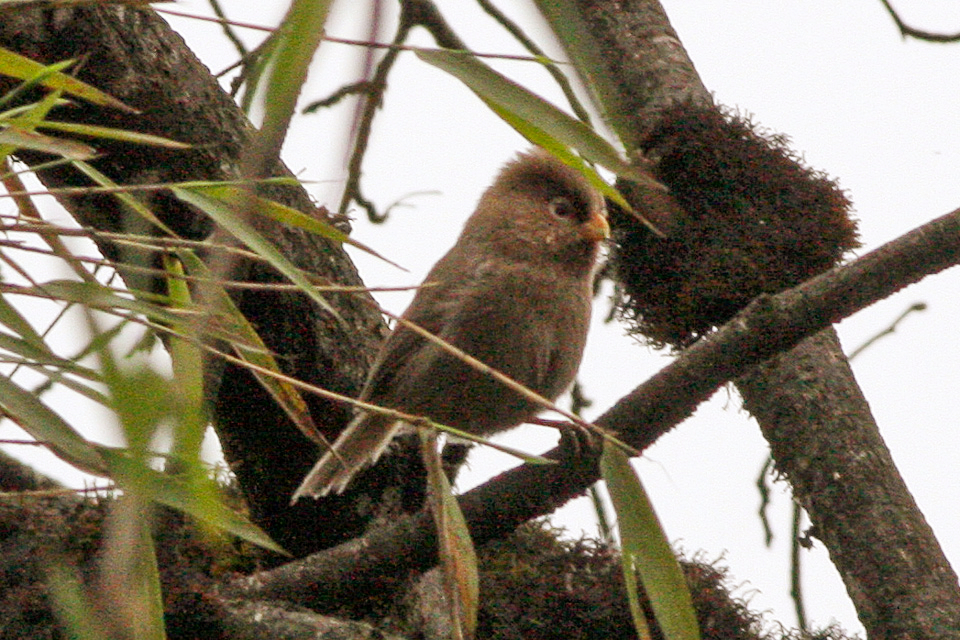
Adult Margelanic Whitethroats exhibit a distinctive combination of grayish-brown upperparts and pure white underparts, making them relatively easy to identify. The males often display a slightly darker head cap, while females and juveniles have a more uniform coloration with less contrast. Juvenile birds can be distinguished by their less vivid plumage and more pronounced buff tinges on their flanks. Observers may confuse this species with the Lesser Whitethroat, but the Margelanic Whitethroat's larger size and unique vocalizations help differentiate it. In flight, they exhibit a rounded wing shape and a noticeable white outer tail feather, providing another key identification mark. When perching, they maintain an upright posture and are often seen flicking their tails, a characteristic behavior that can aid in their identification.
Having trouble telling birds apart? Upload a photo to our bird identification tool for an instant species match.
Margelanic Whitethroat Habitat and Range
Preferred Habitat
The Margelanic Whitethroat primarily inhabits dry scrublands and open woodlands, often at elevations between 500 to 2,000 meters. These areas provide the dense undergrowth necessary for nesting and foraging. During the breeding season, they prefer regions with sparse tree cover that allow for easy access to food. In winter, they shift to lowland areas, often in agricultural lands and edges of deciduous forests. While they are not typically found in urban environments, occasional sightings occur in suburban gardens that mimic their natural habitat with dense shrubbery.
Geographic Range
The breeding range of the Margelanic Whitethroat extends across Central Asia, notably in Kyrgyzstan, Uzbekistan, and parts of Turkmenistan. During migration, they travel southeast through Afghanistan and Pakistan, finally reaching wintering grounds in northern India. Within these regions, they are most densely populated in areas where suitable habitat conditions align with their ecological needs. Migration corridors are well-established, with birds often following river valleys and mountain passes to navigate their journey.
Want to know which birds visit your area? Browse our backyard birds by location guides for region-specific species lists.
What Does the Margelanic Whitethroat Eat?
The diet of the Margelanic Whitethroat primarily consists of insects, including caterpillars, beetles, and ants, which provide necessary protein for breeding and rearing young. Seasonal shifts occur as they consume more seeds and berries in autumn and winter. This dietary flexibility aids their survival during periods when insects are less abundant. Foraging behavior involves gleaning from leaves and branches, often seen actively hopping through vegetation. Occasionally, they employ flycatching techniques, sallying out to capture airborne insects.
Margelanic Whitethroat Behavior and Social Structure
Margelanic Whitethroats are territorial during the breeding season, with males vigorously defending their space through song and chase displays. They exhibit monogamous pairing, with courtship involving intricate aerial displays and song duets. Outside the breeding season, they become more social, often seen in mixed-species flocks. Their daily activity peaks in the early morning and late afternoon when they are most vocal and active. In response to predators, they employ alarm calls and seek dense cover, while fledglings often freeze to avoid detection.
Margelanic Whitethroat Nesting and Reproduction
Nesting for the Margelanic Whitethroat involves constructing a cup-shaped nest made of twigs, grass, and feathers, typically placed low in a shrub. Clutch sizes range from 3 to 5 eggs, with an incubation period of 12 to 14 days. Both parents participate in feeding the chicks, which fledge about 11 to 14 days after hatching. The species may produce one or two broods per year, depending on environmental conditions and food availability. Parental care extends several weeks post-fledging as juveniles learn critical survival skills.
Margelanic Whitethroat Sounds and Vocalizations
The primary song of the Margelanic Whitethroat is a series of melodious warbles and trills, delivered with increasing tempo. Call notes include a sharp 'tschk' used for contact between birds. Alarm calls are more rapid and harsh, signaling danger. They participate in dawn choruses, where males sing vigorously to establish territories and attract mates. The song's rhythm and quality are akin to that of the Blackcap, though generally softer and more varied.
Interesting Facts About the Margelanic Whitethroat
- 1The Margelanic Whitethroat embarks on a migratory journey of over 2,000 kilometers annually.
- 2Its diet includes over 50 species of insects, showcasing its adaptability in food selection.
- 3During courtship, males perform aerial displays that can last up to 5 minutes.
- 4Margelanic Whitethroats can live up to 7 years in the wild, a notable lifespan for small passerines.
- 5They are capable of producing two broods a year if conditions are favorable, maximizing their reproductive success.
- 6In winter, they form loose flocks with other Sylvia species to enhance foraging efficiency.
- 7Their melodious song is often compared to that of the European Blackcap, though with a unique regional variation.
Margelanic Whitethroat Conservation Status
Currently, the Margelanic Whitethroat maintains a stable population trend and is listed as Least Concern by the IUCN. However, threats such as habitat loss due to agricultural expansion and climate change pose potential risks. Conservation efforts focus on habitat preservation and restoration, particularly in breeding and wintering areas. Historical data indicates stable numbers, but ongoing monitoring is crucial to ensure this remains the case as environmental pressures evolve.
Other Sylviidae Species



Birds Similar to the Margelanic Whitethroat
These species are often confused with the Margelanic Whitethroat due to similar appearance or overlapping range.
