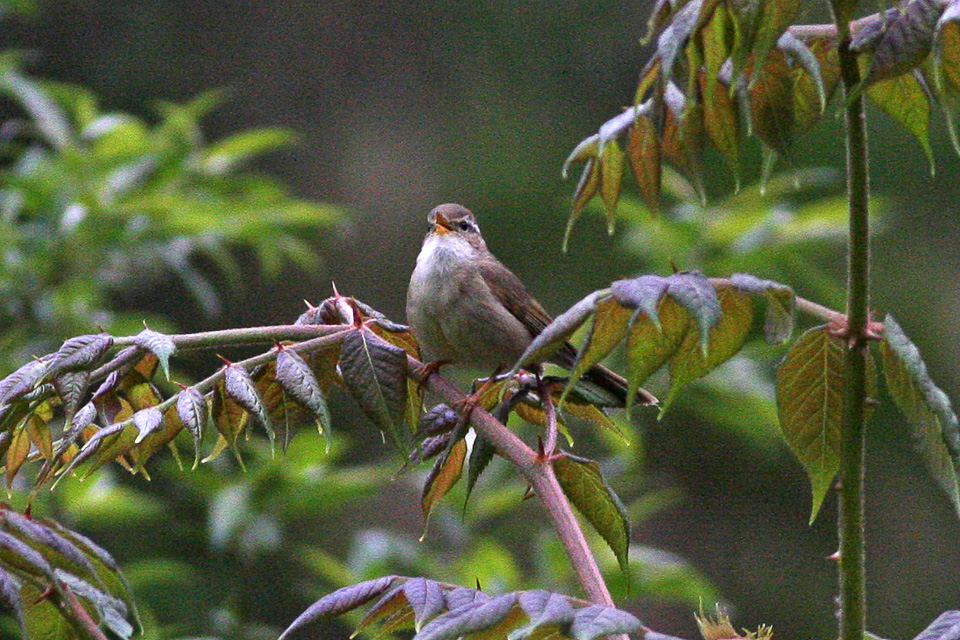
Martens's Warbler
Seicercus omeiensis
Order: Passeriformes / Family: Phylloscopidae

Wikimedia Commons
About the Martens's Warbler
Martens's Warbler, known scientifically as Seicercus omeiensis, is a small, colorful songbird that inhabits the dense montane forests of central China. Primarily found in the Sichuan and Shaanxi provinces, this warbler thrives in the subtropical and temperate forest ecosystems. These areas are characterized by dense undergrowth and a rich diversity of flora, providing the perfect environment for the warbler's insectivorous diet. The species plays a critical role in the ecosystem as both a consumer of insects and a prey item for larger birds and mammals. It is an indicator of healthy forest environments, reflecting the rich biodiversity of its habitat. During the breeding season, Martens's Warbler engages in distinctive courtship displays and territorial singing. As a migratory bird, it moves to lower elevations during the winter months. Observations suggest that its migration patterns align with the availability of food sources, primarily insects, as well as changes in temperature and habitat conditions. The warbler's adaptations to both its breeding and wintering habitats indicate a high level of ecological versatility. Conservation efforts aim to preserve its natural habitats, particularly as deforestation and habitat fragmentation pose significant threats. The warbler’s presence is a testament to the ecological richness and complexity of the regions it inhabits.
The Martens's Warbler belongs to the family Phylloscopidae, within the order Passeriformes. These birds typically live average 3-5 years with a maximum recorded of 6 years..
How to Identify a Martens's Warbler
Martens's Warbler is easily identified by its vibrant green upperparts, which contrast with its yellowish underparts. A distinctive white eye-stripe and a faint bar across its wings help differentiate it from similar species. Adults measure about 10-11 cm in length, with a wingspan of approximately 16 cm. The sexes are similar in appearance, though males may exhibit slightly more vibrant coloration during the breeding season. Juveniles resemble adults but have duller plumage and a less pronounced eye-stripe. In flight, the warbler's rounded wings and short tail are noticeable. When perched, it often flicks its wings and tail, a behavior characteristic of the Phylloscopidae family. Similar species, such as the Ashy-throated Warbler, can be confused with Martens's Warbler, but the latter's brighter plumage and distinct head markings are reliable field marks.
Having trouble telling birds apart? Upload a photo to our bird identification tool for an instant species match.
Martens's Warbler Habitat and Range
Preferred Habitat
Martens's Warbler primarily inhabits subtropical and temperate montane forests. It prefers areas with dense undergrowth and a rich canopy, often found at elevations between 1,500 and 3,000 meters. During the breeding season, the warbler favors forested slopes and valleys where dense vegetation offers ample coverage and food resources. In winter, it may descend to lower elevations, seeking milder climates and abundant insect prey. While it primarily occupies forested environments, it can occasionally be found in more open areas, provided there is sufficient shrub cover. The species is generally absent from urban environments, reflecting its reliance on undisturbed forest habitats.
Geographic Range
Martens's Warbler breeds in the montane forests of central China, particularly in Sichuan and Shaanxi provinces. This region represents the core of its breeding range, characterized by lush, mountainous terrain. During migration, the warbler travels to lower elevations within the same geographic area, although some individuals may venture further south within China. The species is endemic to China, with no confirmed sightings outside of this country. Population density is highest in well-preserved forested areas, where the warbler can find ample food and nesting sites. Threats to its range include deforestation and habitat fragmentation, underscoring the need for targeted conservation efforts.
Want to know which birds visit your area? Browse our backyard birds by location guides for region-specific species lists.
What Does the Martens's Warbler Eat?
Martens's Warbler primarily feeds on insects and other small invertebrates, which it gleans from foliage and branches. During the breeding season, it consumes a wide variety of insects, including caterpillars, beetles, and flies, which provide the necessary protein for raising young. In winter, its diet remains insectivorous, but the warbler may also consume small amounts of plant material, such as berries, when insects are less abundant. The species employs a range of foraging techniques, including hover-gleaning and sallying, to capture prey. Feeding occurs throughout the day, peaking in the early morning and late afternoon when insect activity is highest.
Martens's Warbler Behavior and Social Structure
Martens's Warbler exhibits a range of behaviors characteristic of small, active songbirds. It is generally solitary or found in pairs during the breeding season, with males establishing and defending territories through song. The warbler's song is a critical component of its courtship, attracting females and deterring rival males. Outside the breeding season, it may join mixed-species foraging flocks, benefiting from increased vigilance and foraging efficiency. The warbler is diurnal, with peak activity occurring in the morning and late afternoon. It employs a variety of foraging techniques, including gleaning and sallying, and is known for its acrobatic maneuvering among branches. In response to predators, the warbler exhibits alarm calls and erratic flight patterns to evade capture.
Martens's Warbler Nesting and Reproduction
Martens's Warbler constructs a cup-shaped nest using grass, moss, and leaves, typically situated low in shrubs or small trees. The nest site is carefully selected for its concealment, often in dense undergrowth. A typical clutch comprises 3-5 eggs, which are incubated primarily by the female for about 12-14 days. Both parents participate in feeding the chicks, which fledge approximately 12-15 days after hatching. The warbler usually raises one brood per year, though favorable conditions may allow for a second. The fledglings remain dependent on their parents for several weeks post-fledging, gradually learning to forage independently.
Martens's Warbler Sounds and Vocalizations
The primary song of Martens's Warbler is a series of high-pitched, melodious notes, often described as a rapid trill. It sings frequently during the breeding season, with males using song to establish territory and attract mates. The warbler's call notes are sharp and metallic, serving as contact calls between individuals. Alarm calls are short and harsh, designed to alert others to potential threats. The species participates in the dawn chorus, with singing activity peaking at sunrise.
Interesting Facts About the Martens's Warbler
- 1Martens's Warbler was first described in 1995, making it a relatively recent addition to ornithological records.
- 2This warbler's song is a crucial tool for territory defense, with males often engaging in vocal duels.
- 3Despite its small size, Martens's Warbler can travel significant distances during seasonal migrations within China.
- 4The species is named after the German ornithologist, Jochen Martens, who conducted extensive research on Asian birds.
- 5Martens's Warbler is known for its elusive behavior, often remaining hidden in dense foliage while foraging.
Martens's Warbler Conservation Status
Martens's Warbler is currently listed as Least Concern by the IUCN, with a stable population trend. However, habitat destruction poses a significant threat, primarily through deforestation and land conversion. Conservation efforts focus on protecting critical habitats and preserving the integrity of montane forest ecosystems. Historical data indicate that the warbler's population has remained relatively stable, though ongoing monitoring is essential to detect potential changes. Conservation strategies include habitat restoration and the establishment of protected areas.