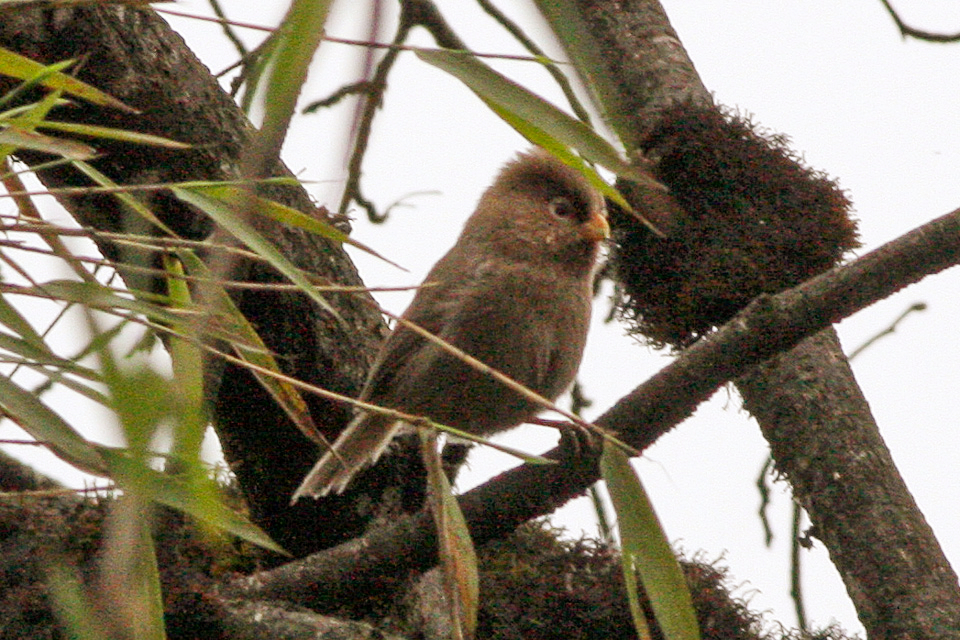
Menetries's Warbler
Sylvia mystacea
Order: Passeriformes / Family: Sylviidae

Wikimedia Commons
About the Menetries's Warbler
The Menetries's Warbler (Sylvia mystacea) is a small passerine bird belonging to the Sylviidae family, known for its subtle yet striking appearance and fascinating behaviors. This warbler is predominantly found across the arid and semi-arid regions of the Middle East, extending into parts of Central Asia. It has carved out a niche within the sparsely vegetated landscapes, thriving in areas that other species might overlook. The Menetries's Warbler plays a vital role in the ecosystem, primarily as an insectivore, helping to control insect populations. Its presence in these dry regions is indicative of a well-adapted species capable of surviving harsh environmental conditions. Throughout the year, particularly during the breeding season, Menetries's Warblers become more vocal and visible, as they engage in complex mating rituals and territorial displays. Their ecological significance is heightened by their role as both prey and predator, contributing to the intricate food web of their habitats. These warblers typically breed in spring, when conditions are most favorable, taking advantage of the increased insect availability. During migration, they undertake remarkable journeys, showcasing their resilience and adaptability. As a species, Menetries's Warbler serves as an indicator of habitat health and biodiversity within its range. Observations of their behavior and population trends provide valuable insights into the ecological state of their environments. The conservation of Menetries's Warbler is crucial, as they face threats from habitat destruction and climate change, which could disrupt their delicate balance with nature.
The Menetries's Warbler belongs to the family Sylviidae, within the order Passeriformes. These birds typically live average 3-5 years, with maximum recorded lifespan of 7 years..
How to Identify a Menetries's Warbler
Menetries's Warbler is characterized by its sleek appearance, with males displaying a distinct grey plumage and a prominent red eye-ring. Their underparts are generally lighter, presenting a subtle contrast against the darker back and wings. Females and juveniles, while similar in structure, exhibit slightly more muted tones compared to the vibrant males, lacking the intense eye-ring coloration. This sexual dimorphism can aid birders in distinguishing between individuals in the field. The species' slender build and pointed beak are typical of insectivorous warblers, providing clues to its feeding habits. In flight, Menetries's Warbler displays a rapid and agile movement, often low to the ground or through bushy landscapes. When perched, they maintain an upright posture, frequently flicking their tails as they survey their surroundings. The potential for confusion with similar species exists, particularly with other Sylvia warblers like the Rüppell's Warbler. However, the latter typically presents a blacker head and a less pronounced eye-ring, serving as key differentiators.
Having trouble telling birds apart? Upload a photo to our bird identification tool for an instant species match.
Menetries's Warbler Habitat and Range
Preferred Habitat
Menetries's Warbler primarily inhabits arid and semi-arid regions, favoring open, scrubby landscapes with sparse vegetation. These areas often include desert fringes, semi-deserts, and dry steppes found in countries like Iran, Iraq, and parts of Central Asia. The species thrives at low elevations, although it can be found up to 1,500 meters in some areas. Seasonal habitat shifts are minimal due to their specialized niche, though they may move to slightly denser vegetation during the breeding season for added cover. While not commonly found in urban environments, Menetries's Warbler may occasionally venture into rural gardens or areas with suitable shrubbery, especially during migrations.
Geographic Range
Menetries's Warbler breeds across a swath of the Middle East, from eastern Turkey to Iran, extending into parts of Central Asia such as Kazakhstan and Uzbekistan. During winter, some populations migrate southward, reaching as far as the Arabian Peninsula and parts of Pakistan. These migratory patterns highlight key corridors through regions like the Caucasus and the Zagros Mountains. Within their range, population densities can vary, with higher concentrations often found in areas where suitable scrubland habitat intersects with insect-rich environments. Despite their wide range, the species is more localized in areas with optimal breeding and feeding conditions.
Want to know which birds visit your area? Browse our backyard birds by location guides for region-specific species lists.
What Does the Menetries's Warbler Eat?
Menetries's Warbler primarily feeds on insects, making it a crucial player in controlling insect populations within its habitat. Its diet includes a variety of small arthropods, such as caterpillars, beetles, and spiders. During the breeding season, the warbler's diet becomes more protein-rich to support the demands of raising young. In the winter months, when insect availability may decrease, the warbler may supplement its diet with small fruits and berries, although this constitutes a minor part of its overall intake. Foraging occurs primarily in the early morning and late afternoon, when insect activity peaks. Menetries's Warbler employs a methodical approach to foraging, gleaning prey from leaves and branches or capturing insects mid-air with impressive agility.
Menetries's Warbler Behavior and Social Structure
Menetries's Warbler exhibits intriguing social and territorial behaviors, particularly during the breeding season when males prominently defend their territories through song and physical displays. These warblers are generally solitary or found in pairs, although small family groups may form post-breeding. Courtship involves elaborate displays, with males performing aerial acrobatics and singing to attract females. Territorial disputes can be intense, with males engaging in chases and vocal duels. In response to predators, Menetries's Warbler often employs a combination of evasive flight and concealment within dense vegetation. Its daily activity patterns reflect the harsh environments it inhabits, with peak activity during cooler morning and late afternoon hours. During migration, these warblers may join mixed-species flocks, providing some protection from predators.
Menetries's Warbler Nesting and Reproduction
The nesting habits of Menetries's Warbler are adapted to the arid regions they inhabit. Nests are typically built in low shrubs or bushes, hidden from plain sight to avoid predators. Constructed primarily from twigs, grasses, and spider webs, the nests are cup-shaped and well-insulated against temperature extremes. Clutch sizes range from three to five eggs, which both parents incubate over approximately 11 to 14 days. Once hatched, the chicks remain in the nest for about 10 to 12 days before fledging. Both parents play active roles in feeding and protecting the young. Menetries's Warbler generally raises one brood per year, although favorable conditions may allow for a second.
Menetries's Warbler Sounds and Vocalizations
Menetries's Warbler's song is a melodious and varied series of trills and warbles, often delivered from a concealed perch within dense shrubbery. The primary song features a rapid sequence of notes, rising and falling in pitch, providing a rhythmic and somewhat metallic quality. Call notes are sharp and distinctive, serving both as contact calls and alarms when predators are nearby. During the dawn chorus, males sing more frequently, establishing territories and attracting mates. The warbler's vocalizations, while distinctive, can be confused with other Sylvia species, although attentive listening can usually distinguish Menetries's Warbler by its unique tonal quality.
Interesting Facts About the Menetries's Warbler
- 1Menetries's Warbler is named after French zoologist Édouard Ménétries, who first described the species in 1832.
- 2Unlike many warblers, Menetries's Warbler prefers arid landscapes, showcasing its unique adaptability.
- 3The warbler's red eye-ring is a striking feature that stands out against its grey plumage, aiding in visual identification.
- 4Menetries's Warbler can consume up to 50% of its body weight in insects daily during peak feeding times.
- 5Despite their small size, these warblers undertake long migratory journeys, showcasing impressive endurance.
- 6Their nests are cleverly constructed with spider silk, providing flexibility and strength to the structure.
- 7Menetries's Warbler's song can be heard over 100 meters away, a testament to its vocal prowess.
Menetries's Warbler Conservation Status
Menetries's Warbler is currently listed as Least Concern by the IUCN, with stable population trends observed across much of its range. Despite this, the species faces threats from habitat loss due to agricultural expansion, urbanization, and climate change, which can alter their dry habitats. Conservation efforts are focusing on habitat preservation and the management of key breeding and migratory areas. Historical population changes are not well-documented, but current datasets suggest resilience within established ranges. Continued monitoring is necessary to ensure that environmental changes do not negatively impact future population stability.