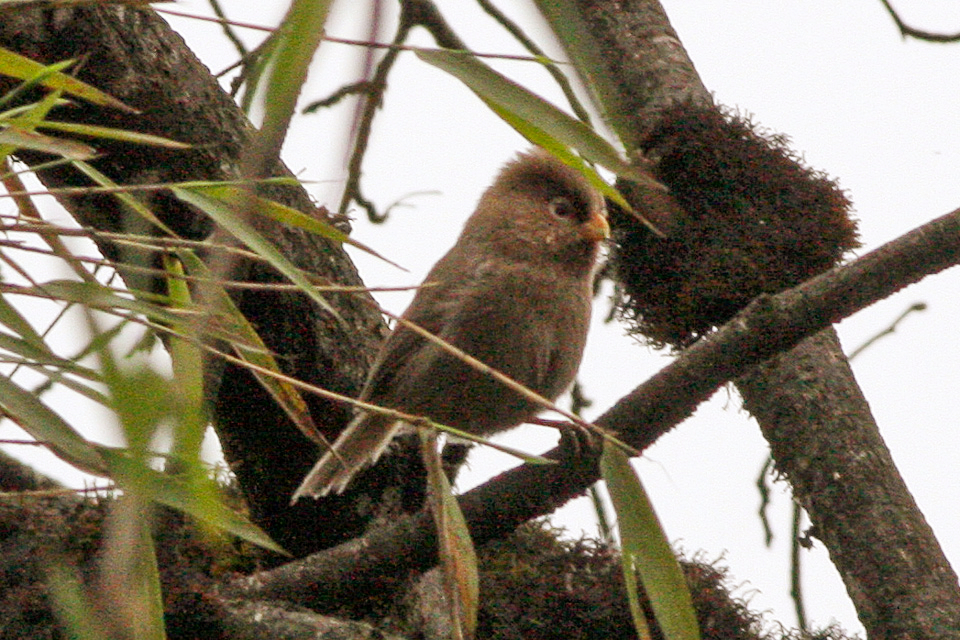
Moltoni's Warbler
Sylvia subalpina
Order: Passeriformes / Family: Sylviidae

Wikimedia Commons
About the Moltoni's Warbler
Moltoni's Warbler (Sylvia subalpina) is a discreet yet charismatic member of the Sylviidae family. This bird inhabits the Mediterranean region, particularly thriving in Italy, where it breeds extensively. The species is closely related to the Subalpine Warbler but stands out due to its unique vocalizations and slight differences in plumage. Moltoni's Warbler plays a vital role in the ecosystem as an insectivore, controlling pest populations through its diet of insects and spiders. Its ecological significance extends to serving as prey for larger avian predators, thus maintaining the balance within its habitat.
During the breeding season, which spans from April to July, Moltoni's Warbler exhibits fascinating courtship behaviors. Males sing persistently to establish territories and attract females. Their songs, intricate and melodic, can often be heard at dawn and dusk, adding a vibrant auditory backdrop to the Mediterranean landscape. Outside the breeding season, the warbler remains less conspicuous, often retreating to denser foliage, where it continues its foraging activities.
Moltoni's Warbler is often found in open scrublands, particularly in places with abundant shrub cover like the Mediterranean maquis. This habitat preference provides the bird with ample foraging opportunities and nesting sites. The warbler's presence in these areas contributes to the biodiversity and health of the ecosystem. By dispersing seeds and aiding in pollination through its feeding habits, the warbler supports the growth and regeneration of native plant species.
This species' role in the ecosystem extends beyond its immediate interactions. By serving as an indicator species, Moltoni's Warbler can provide valuable insights into the health of its habitats. Changes in its population or behavior can signal shifts in environmental conditions, prompting further investigation and conservation efforts. As such, Moltoni's Warbler is not only a charming representative of Mediterranean avifauna but also a crucial component of the region's ecological web.
The Moltoni's Warbler belongs to the family Sylviidae, within the order Passeriformes. These birds typically live average 3-4 years with a maximum recorded of 6 years.
How to Identify a Moltoni's Warbler
Moltoni's Warbler exhibits a subtle beauty in its plumage, which is predominantly grayish-brown with a distinct pinkish wash on the underparts. This pink hue is most prominent in males, particularly during the breeding season, making them easier to identify. Females and juveniles display a more subdued coloration, with less intense pink tones. The bird's throat is white, and its face features a faint eye-ring, enhancing its expressive appearance.
In the field, distinguishing Moltoni's Warbler from similar species like the Subalpine Warbler requires careful attention to details. The pink wash on the underparts and the bird's unique song are key identifiers. The warbler's flight silhouette is characterized by rapid wing beats and a slightly undulating motion, typical of many small songbirds. When perched, Moltoni's Warbler often adopts an upright posture, which can help in its identification.
Juveniles resemble females but can be identified by their fresher plumage and shorter tails. Observing these differences can assist birders in accurately identifying this species in various contexts. Additionally, Moltoni's Warbler's subtle yet distinctive vocalizations provide another layer of identification, as its song differs slightly in rhythm and tone from that of the Subalpine Warbler.
Having trouble telling birds apart? Upload a photo to our bird identification tool for an instant species match.
Moltoni's Warbler Habitat and Range
Preferred Habitat
Moltoni's Warbler primarily inhabits Mediterranean scrublands, favoring habitats with dense shrub cover such as the maquis and garrigue. These areas provide the warbler with essential resources for foraging and nesting. The bird tends to avoid heavily forested regions, preferring open landscapes where it can move freely among low vegetation.
Moltoni's Warbler is typically found at elevations ranging from sea level to about 1,500 meters, although it is most common in lower elevations where its preferred habitats are more prevalent. Seasonal habitat shifts are minimal, as the bird remains in similar environments throughout the year, albeit with some movement to slightly denser areas during the non-breeding season.
While primarily a resident of rural and semi-natural areas, Moltoni's Warbler occasionally ventures into suburban gardens, especially those that mimic its natural habitat with native Mediterranean plantings. Its presence in urban settings is rare, as the species tends to avoid highly developed or heavily trafficked areas.
Geographic Range
Moltoni's Warbler breeds primarily in the Mediterranean basin, with core populations in Italy, the islands of Corsica and Sardinia, and parts of southern France. The species' breeding range is confined to these regions, where it takes advantage of the Mediterranean climate and diverse habitats.
During the non-breeding season, some populations migrate slightly southward, expanding into North Africa, albeit in limited numbers. These movements are not extensive, with most of the population remaining within the broader Mediterranean region. Migration corridors are generally confined to short distances between breeding and wintering sites, often following coastlines and lowland routes.
Italy serves as a hotspot for Moltoni's Warbler, with high population densities in suitable habitats. The bird's distribution within its range is patchy, reflecting the availability of its preferred habitats. Conservation efforts focus on protecting these key areas to ensure the warbler's continued presence across its range.
Want to know which birds visit your area? Browse our backyard birds by location guides for region-specific species lists.
What Does the Moltoni's Warbler Eat?
The diet of Moltoni's Warbler primarily consists of insects and arachnids, making it an important insectivore in its ecosystem. During the breeding season, the warbler focuses on consuming a wide variety of insects, including caterpillars, beetles, and flies, which provide the necessary protein for raising young. Spiders also feature prominently in its diet, offering a rich source of nutrients.
As the seasons change, so does the warbler's diet. In autumn and winter, when insect availability decreases, Moltoni's Warbler may consume more seeds and berries, supplementing its diet with plant-based foods. This seasonal shift in diet showcases the bird's adaptability and resilience in varying environmental conditions.
Moltoni's Warbler employs a gleaning foraging technique, meticulously searching leaves and branches for prey. Its agility allows it to probe into crevices and foliage, accessing hidden insects. The warbler typically forages during daylight hours, with peak activity in the early morning and late afternoon when insects are most active.
Moltoni's Warbler Behavior and Social Structure
Moltoni's Warbler exhibits a complex social structure, with much of its behavior centered around breeding and territory defense. During the breeding season, males establish territories through persistent singing, using their vocalizations to ward off rivals and attract potential mates. The song serves as both a declaration of presence and a means of maintaining territory boundaries.
Courtship displays involve a combination of song and visual signals, with males performing short flights and posturing to entice females. Once paired, Moltoni's Warbler often remains monogamous for the season, with both partners participating in nest building and chick-rearing.
Outside the breeding season, Moltoni's Warbler becomes less territorial and may form loose flocks with other small insectivorous birds. These mixed-species flocks provide safety in numbers, reducing the likelihood of predation and enhancing foraging efficiency. When faced with predators, Moltoni's Warbler employs alarm calls and evasive maneuvers to elude capture.
Daily activity patterns show a preference for foraging during cooler parts of the day, with periods of rest during peak heat. Moltoni's Warbler demonstrates a high degree of adaptability, adjusting its behavior in response to environmental changes and threats.
Moltoni's Warbler Nesting and Reproduction
Moltoni's Warbler constructs a delicate cup-shaped nest, typically positioned within dense shrubbery to provide both concealment and protection from predators. The nest is composed of grasses, twigs, and plant fibers, with a lining of softer materials such as feathers or wool for insulation and comfort.
Preferred nesting locations are low to the ground, often within one to two meters, allowing easy access for feeding and brooding. The female primarily builds the nest, although the male may assist by gathering materials.
A typical clutch consists of three to five eggs, which the female incubates for about 11 to 13 days. During this period, the male plays a crucial role in provisioning, bringing food to the female while she remains on the nest. Once hatched, the chicks are altricial, requiring constant care and feeding.
Fledging occurs approximately 10 to 14 days after hatching, with both parents continuing to feed and protect the young. Moltoni's Warbler usually raises one brood per year, although in optimal conditions, a second brood may be attempted.
Moltoni's Warbler Sounds and Vocalizations
The primary song of Moltoni's Warbler is a series of rapid, melodious notes that rise and fall in pitch, creating a rhythmic and engaging tune. The song serves as a key identifier, differing slightly from that of the closely related Subalpine Warbler.
In addition to its song, Moltoni's Warbler produces a variety of call notes, including soft 'chack' sounds used for communication between mates and alarm calls to warn of predators. These calls are generally sharp and quick, designed to be heard over the rustling of foliage.
During the dawn chorus, Moltoni's Warbler is particularly active, its song blending with the myriad of other avian voices to create a vibrant soundscape. The warbler's vocalizations are essential for maintaining territory and attracting mates, with each male developing a repertoire of distinct phrases.
Interesting Facts About the Moltoni's Warbler
- 1Moltoni's Warbler was officially recognized as a separate species in 2009, highlighting the importance of vocalization studies.
- 2The species is named after the Italian ornithologist Edgardo Moltoni, who significantly contributed to avian research.
- 3Moltoni's Warbler exhibits a unique migration pattern, with limited movement compared to other warblers.
- 4Its diet shift from insects to berries in winter showcases its adaptability to seasonal changes.
- 5The warbler's preference for Mediterranean maquis makes it a key indicator of the health of this unique habitat.
- 6Moltoni's Warbler can be challenging to spot outside the breeding season due to its reclusive behavior.
- 7Despite its small size, the warbler plays a vital role in controlling insect populations in its ecosystem.
Moltoni's Warbler Conservation Status
Moltoni's Warbler is currently classified as Least Concern by the IUCN, with stable population trends observed in recent years. However, habitat degradation poses a significant threat, particularly in regions where urban expansion and agricultural development encroach on natural scrublands. Conservation efforts focus on preserving key habitats, particularly in breeding areas across the Mediterranean. Initiatives include habitat restoration projects and the establishment of protected areas to safeguard the warbler's environment. Monitoring programs track population changes, providing data essential for informed conservation strategies. Historical population changes show fluctuations linked to habitat availability, with declines in some areas offset by increases elsewhere. Continued conservation efforts aim to ensure the long-term survival of Moltoni's Warbler by addressing both current threats and potential future challenges.