
Mountain Chiffchaff
Phylloscopus sindianus
Order: Passeriformes / Family: Phylloscopidae

Wikimedia Commons
About the Mountain Chiffchaff
The Mountain Chiffchaff, scientifically known as Phylloscopus sindianus, is a small, highly active passerine bird belonging to the family Phylloscopidae. This species is primarily associated with mountainous regions, hence its common name, and is particularly prevalent in parts of Central Asia, including regions like the Tien Shan and the Himalayas. The Mountain Chiffchaff plays a significant ecological role as an insectivore, helping to control insect populations in its native habitats. Its preference for dense coniferous and mixed mountain forests makes it an important component of these ecosystems, contributing to the biodiversity and ecological balance. The bird is well adapted to its environment, navigating through thick foliage with remarkable agility.
Seasonally, the Mountain Chiffchaff exhibits distinct behaviors. During the breeding season, which occurs from late spring to early summer, the bird is most active in higher altitudes. It engages in frequent singing and territorial displays to attract mates and defend its nesting area. As the seasons change, some populations may move to lower altitudes or slightly different regions to escape harsh weather conditions, though it is generally considered a resident or altitudinal migrant rather than a long-distance migratory species. Its presence across various elevations highlights its adaptability and resilience.
The significance of the Mountain Chiffchaff extends beyond its ecological role. It is also of interest to birdwatchers and ornithologists due to its distinct vocalizations and behavior. The bird's song, a series of repetitive whistles, is a characteristic feature that aids in its identification. Conservation efforts are essential to preserving its habitat, especially in areas where deforestation and human encroachment threaten its natural environment.
The Mountain Chiffchaff belongs to the family Phylloscopidae, within the order Passeriformes. These birds typically live usually 3-4 years, with some living up to 7 years..
How to Identify a Mountain Chiffchaff
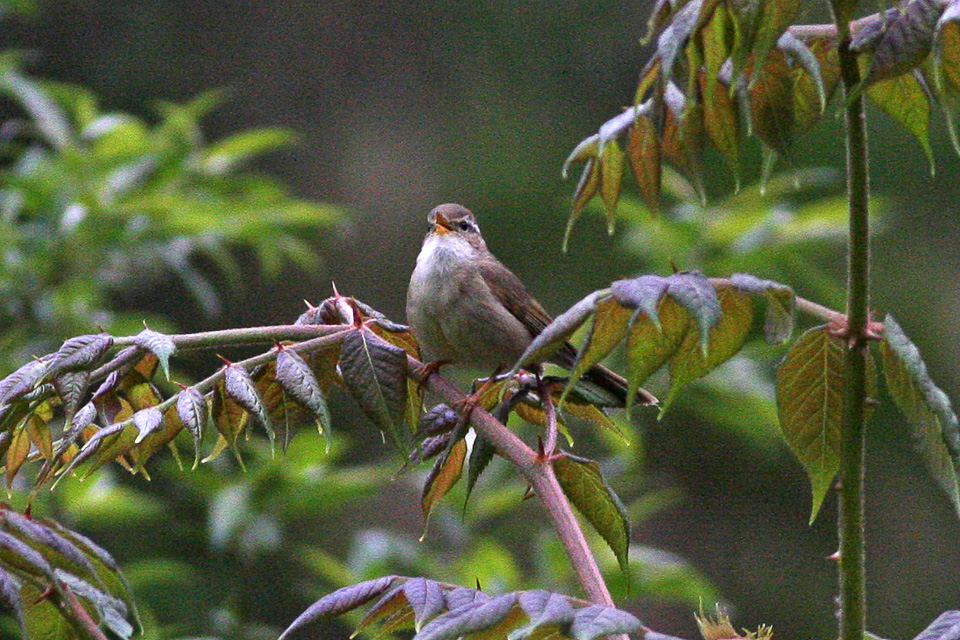
The Mountain Chiffchaff is a small songbird with a length ranging from 10 to 11 centimeters and a wingspan of approximately 15 to 20 centimeters. Adult plumage is generally olive-brown on the upperparts with a paler, buffy underbelly. A key identifying feature is the bird's facial pattern, which includes a distinct, pale supercilium and a darker eye stripe. Juveniles resemble adults, though their plumage may appear slightly duller with less defined markings.
There is little sexual dimorphism in this species, meaning males and females look remarkably similar, which can make field identification challenging. However, during the breeding season, males might be more noticeable due to their increased singing activity and territorial behavior. The Mountain Chiffchaff can be confused with other similar Phylloscopus species, such as the Common Chiffchaff or the Willow Warbler, but its preference for higher elevations and its distinct vocalizations often help in making a positive identification.
In flight, the Mountain Chiffchaff shows rapid wingbeats and a rather undulating trajectory. When perched, it often flicks its wings and tail, a behavior typical of many Phylloscopus species. Observers should note the bird's active foraging behavior as it moves through foliage searching for insects, often adopting a horizontal posture.
Having trouble telling birds apart? Upload a photo to our bird identification tool for an instant species match.
Mountain Chiffchaff Habitat and Range
Preferred Habitat
The Mountain Chiffchaff primarily inhabits mountainous regions with elevations ranging from 1,000 to 4,000 meters. It favors dense coniferous and mixed forests, particularly those that include spruce, fir, and pine trees. These habitats provide ample cover and abundant food resources in the form of insects. In addition to forested areas, the bird can also be found in shrublands and wooded river valleys, especially during its altitudinal movements.
Seasonal shifts in habitat are primarily influenced by climatic conditions. During winter, some populations may descend to lower elevations where conditions are milder and food is more readily available. While typically associated with more remote and less disturbed environments, the Mountain Chiffchaff can occasionally be found in semi-urban areas that offer suitable habitat structures, such as parks and large gardens with mature trees.
Geographic Range
The Mountain Chiffchaff's range primarily covers parts of Central Asia, extending from the western Himalayas through the Tien Shan range. It also stretches into regions of Iran and Afghanistan, where it occupies suitable mountainous habitats. During the breeding season, the bird is found at higher elevations, while in winter, it may descend to lower altitudes or move slightly southward within its range.
In countries such as Uzbekistan, Kazakhstan, and Kyrgyzstan, the Mountain Chiffchaff is considered a common resident, whereas in others like northern India and Nepal, it is more of a seasonal visitor. The bird does not undertake long-distance migrations, but rather performs altitudinal migrations dictated by weather conditions and food availability. Population density tends to be higher in areas with extensive forest cover and minimal human disturbance.
Want to know which birds visit your area? Browse our backyard birds by location guides for region-specific species lists.
What Does the Mountain Chiffchaff Eat?
The Mountain Chiffchaff primarily feeds on insects and other small invertebrates, making it an important insectivore in its ecosystem. Its diet consists largely of caterpillars, beetles, flies, and spiders, which it actively gleans from foliage and branches. During warmer months, when insect activity peaks, the bird takes advantage of the abundance of prey.
In addition to insects, the Mountain Chiffchaff may consume small amounts of plant material, such as seeds and berries, particularly during late autumn and winter when insects are less plentiful. This dietary flexibility helps it survive in varying environmental conditions. Foraging usually occurs during daylight hours, with peak activity in the early morning and late afternoon. The bird employs a variety of foraging techniques, including hovering momentarily to snatch prey from the underside of leaves.
Mountain Chiffchaff Behavior and Social Structure
The Mountain Chiffchaff is a solitary or, occasionally, a loosely social bird. During the breeding season, it exhibits territorial behavior, with males fiercely defending their chosen area through song and physical displays. Courtship involves males singing from prominent perches to attract females and establish territory boundaries.
Outside of the breeding season, the Mountain Chiffchaff may join mixed-species foraging flocks, which can enhance feeding efficiency and provide some protection against predators. Despite its small size, the bird is known for its boldness in the face of predators, often engaging in alarm calls and mobbing behavior to deter threats. Predominantly diurnal, the Mountain Chiffchaff is most active during the cooler parts of the day, taking advantage of optimal hunting conditions.
Flocking patterns are more common in non-breeding periods, when the bird may be less aggressive and more inclined to tolerate the presence of conspecifics and other species. Its response to predators includes a variety of vocal signals and evasive flight patterns.
Mountain Chiffchaff Nesting and Reproduction
The Mountain Chiffchaff typically constructs its nest close to the ground, often in dense shrubbery or among the lower branches of trees. The nest is cup-shaped and made from a variety of materials, including grass, moss, and feathers, providing good insulation and camouflage. Females are primarily responsible for nest construction, while males may assist in gathering materials.
A typical clutch consists of 4 to 6 eggs, which are pale with subtle speckling. Incubation lasts about 12 to 14 days and is primarily undertaken by the female. After hatching, both parents participate in feeding the nestlings, which fledge approximately 14 to 16 days post-hatching. The Mountain Chiffchaff may raise one to two broods per year, depending on environmental conditions and food availability.
Mountain Chiffchaff Sounds and Vocalizations
The primary song of the Mountain Chiffchaff is a simple, repetitive two-note whistle, often described as 'cheet-cheet.' This song is delivered from a high perch and serves both to establish territory and attract mates. Call notes are softer and more subdued, typically consisting of short 'tchit' sounds used in communication between mates or when foraging.
Alarm calls are sharp and quick, intended to alert other birds to potential threats. During the dawn chorus, the Mountain Chiffchaff's song can be heard clearly, standing out due to its rhythmic and persistent nature. Its vocalizations are crucial for identification, especially in dense forest habitats where visual confirmation can be challenging.
Interesting Facts About the Mountain Chiffchaff
- 1The Mountain Chiffchaff's call is so distinct that it often serves as a key identifier for birdwatchers in remote mountain regions.
- 2Despite its small size, the Mountain Chiffchaff can thrive at elevations exceeding 4,000 meters, showcasing its adaptability.
- 3The Mountain Chiffchaff is closely related to the Common Chiffchaff but can be distinguished by its preference for higher altitudes.
- 4This bird's nesting strategy involves building well-hidden nests, reducing predation risk, especially in dense forests.
- 5During the breeding season, the Mountain Chiffchaff's song can be heard echoing through mountain valleys for considerable distances.
- 6The species shows remarkable adaptability, adjusting its diet and foraging methods according to seasonal prey availability.
- 7Mountain Chiffchaffs are known to engage in mixed-species flocks, a behavior that increases foraging efficiency and predator avoidance.
Mountain Chiffchaff Conservation Status
According to the IUCN Red List, the Mountain Chiffchaff is currently classified as a species of Least Concern. The population trend is considered stable, although localized threats do exist. Habitat loss due to deforestation and land-use changes poses a considerable risk in some parts of its range. Conservation efforts focus on preserving its natural habitats, particularly in regions where human encroachment and logging activities threaten forest ecosystems. Historical population changes have been minimal, although continued monitoring is essential to ensure that the species remains secure. International cooperation in habitat conservation can further enhance the stability of Mountain Chiffchaff populations.
Other Phylloscopidae Species



Birds Similar to the Mountain Chiffchaff
These species are often confused with the Mountain Chiffchaff due to similar appearance or overlapping range.

