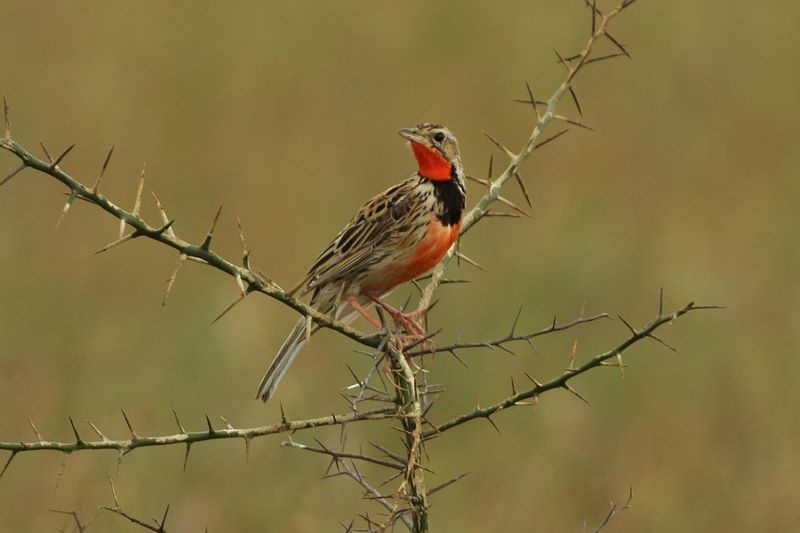
Orange-throated Longclaw
Macronyx capensis
Order: Passeriformes / Family: Motacillidae

Wikimedia Commons
About the Orange-throated Longclaw
The Orange-throated Longclaw, scientifically known as Macronyx capensis, is a remarkable bird within the family Motacillidae, known for its vivid coloration and melodic calls. This species is primarily found across the open grasslands of southern Africa, where its presence is both a visual and auditory delight. Key regions include South Africa, Botswana, Namibia, and Zimbabwe, where it thrives in moist grasslands and savannas. The Orange-throated Longclaw plays a vital ecological role as both a predator and prey within its ecosystem. As an insectivore, it helps regulate insect populations, contributing to the balance of its habitat. Additionally, its conspicuous presence provides a prey source for several avian predators, including larger raptors. Seasonally, this bird displays interesting behaviors as its breeding season coincides with the rainy season, when food abundance peaks. During this time, the Orange-throated Longclaw becomes particularly vocal and active, engaging in conspicuous courtship displays. Beyond its ecological role, the Orange-throated Longclaw holds cultural significance in local communities, often celebrated in folklore and traditional songs. Its bright plumage and melodious song make it a favorite subject for bird enthusiasts and naturalists alike. Observing this bird in its natural habitat offers insight into the complex interactions within grassland ecosystems and highlights the importance of preserving these environments. While it is not currently threatened at a global level, regional habitat changes could impact its populations. Therefore, understanding and conserving the habitats of the Orange-throated Longclaw ensures the continuation of its ecological contributions and cultural presence.
The Orange-throated Longclaw belongs to the family Motacillidae, within the order Passeriformes. These birds typically live around 5-8 years in the wild..
How to Identify a Orange-throated Longclaw
The Orange-throated Longclaw measures about 20 cm in length and is distinguished by its vivid orange throat and upper breast, which contrast against its olive-brown upperparts. The face is marked with a distinct black malar stripe, enhancing the contrast with the bright throat. Adult males and females appear similar, though males may exhibit slightly more vibrant coloration. Juveniles, however, differ significantly, showcasing a more muted palette with buffy throats and less defined markings. When comparing to similar species, the Yellow-throated Longclaw (Macronyx croceus) can cause confusion, but the latter lacks the distinctive orange coloring and instead features a yellow throat. The flight silhouette of the Orange-throated Longclaw is characterized by its long tail and swift, direct flight pattern. When perched, it exhibits an upright posture, often seen atop grasses or low shrubs, providing an excellent vantage point for spotting insects.
Having trouble telling birds apart? Upload a photo to our bird identification tool for an instant species match.
Orange-throated Longclaw Habitat and Range
Preferred Habitat
The Orange-throated Longclaw primarily inhabits open grasslands, savannas, and occasionally wetlands. It favors areas with tall grasses that provide ample cover and foraging opportunities. Found predominantly at low to moderate elevations, these birds can adapt to a variety of grassland environments, from moist to semi-arid regions. Although generally associated with rural areas, they can also inhabit peri-urban grasslands where suitable conditions persist. Seasonal habitat shifts are minimal, as the Orange-throated Longclaw tends to remain within its established range year-round, although it may exhibit local movements in response to rainfall patterns and food availability.
Geographic Range
The Orange-throated Longclaw is endemic to southern Africa, with its range encompassing much of South Africa, Botswana, Namibia, and Zimbabwe. It is a resident species, meaning it does not undertake long migrations, though it may exhibit slight local movements driven by environmental factors. The bird is most commonly found in the eastern parts of South Africa, particularly in KwaZulu-Natal and the Eastern Cape, where grassland habitats are prevalent. In Botswana and Namibia, it is less common, primarily occurring in areas where grassland meets scrubland. Specific population density hotspots include the Highveld regions of South Africa, where extensive grasslands provide ideal conditions for thriving populations.
Want to know which birds visit your area? Browse our backyard birds by location guides for region-specific species lists.
What Does the Orange-throated Longclaw Eat?
The diet of the Orange-throated Longclaw primarily consists of insects and other small invertebrates, making it an important insectivore within its ecosystem. Its foraging technique involves stalking through grass, occasionally pausing to pick off prey from blades or the ground. It favors grasshoppers, beetles, and caterpillars, which are abundant in its habitat. During the breeding season, when insects are plentiful, the bird's diet may expand to include small seeds and berries, supplementing its nutritional intake. This flexible diet allows the Orange-throated Longclaw to thrive across various grassland environments, adapting to seasonal fluctuations in prey availability. Its foraging activity peaks during the early morning and late afternoon, coinciding with cooler temperatures and increased insect activity.
Orange-throated Longclaw Behavior and Social Structure
The Orange-throated Longclaw exhibits a mostly solitary or paired lifestyle, particularly during the breeding season. Males establish and defend territories through a combination of vocalizations and aerial displays, often perching prominently to advertise their presence. A key aspect of their courtship involves the male performing elaborate flight displays, which serve to attract females and deter rival males. Outside of the breeding season, the Orange-throated Longclaw may form loose flocks, particularly in areas with abundant food sources. In response to predators, these birds rely on their cryptic plumage to blend into the grass, often freezing or crouching to avoid detection. If threatened, they may take to flight, utilizing their swift, direct flight to evade capture. Daily activity patterns are largely diurnal, with peak activity occurring during the cooler hours of morning and late afternoon.
Orange-throated Longclaw Nesting and Reproduction
The Orange-throated Longclaw nests on the ground, typically selecting a well-concealed site among tall grasses. It constructs a cup-shaped nest using a variety of materials, including grasses and rootlets, lined with finer vegetation for comfort. The female lays a clutch of 2-4 eggs, which she incubates for approximately two weeks. Both parents participate in feeding and caring for the young, which fledge roughly two weeks post-hatching. During this period, the adults remain vigilant, protecting the nest from potential predators. The Orange-throated Longclaw typically raises one brood per year, although favorable conditions may lead to a second nesting attempt.
Orange-throated Longclaw Sounds and Vocalizations
The primary song of the Orange-throated Longclaw is a melodious series of fluty notes, often described as rich and melodic. This song is frequently delivered from a prominent perch, serving as both a territorial and courtship display. Call notes are softer, including a distinctive 'chup-chup' sound used for communication between mates or within flocks. Alarm calls are more abrupt, serving to alert others of potential threats. During the dawn chorus, the Orange-throated Longclaw's song contributes to the vibrant soundscape of the grasslands, marking the start of the day's activities.
Interesting Facts About the Orange-throated Longclaw
- 1The Orange-throated Longclaw's vivid orange plumage serves as both a courtship display and a deterrent for rival males.
- 2Despite its striking appearance, the Orange-throated Longclaw can be difficult to spot due to its cryptic behavior and preference for dense grasslands.
- 3The bird's song is not only a territorial display but also a means of strengthening pair bonds during the breeding season.
- 4While primarily insectivorous, the Orange-throated Longclaw occasionally consumes small seeds, showcasing its dietary adaptability.
- 5Studies have shown that the Orange-throated Longclaw's breeding success is closely linked to rainfall patterns, which affect food availability.
Orange-throated Longclaw Conservation Status
The IUCN currently lists the Orange-throated Longclaw as a species of Least Concern, with stable population trends across its range. However, habitat loss and degradation due to agricultural expansion and urban development pose potential threats to its populations. Conservation efforts focus on preserving grassland habitats through sustainable land management practices and protected area designations. Historical population changes have been minimal, though continued monitoring is essential to ensure the species' long-term survival.
Other Motacillidae Species

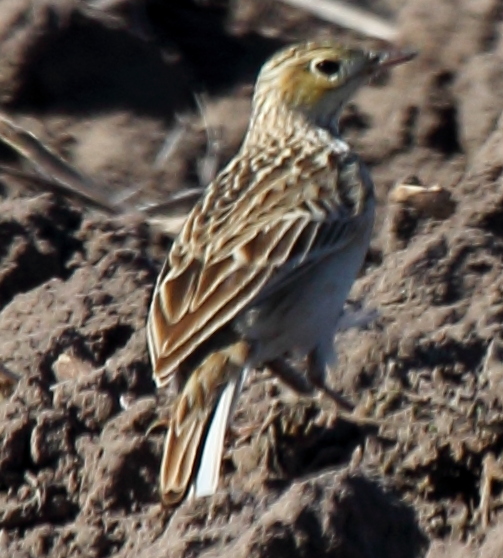


Birds Similar to the Orange-throated Longclaw
These species are often confused with the Orange-throated Longclaw due to similar appearance or overlapping range.