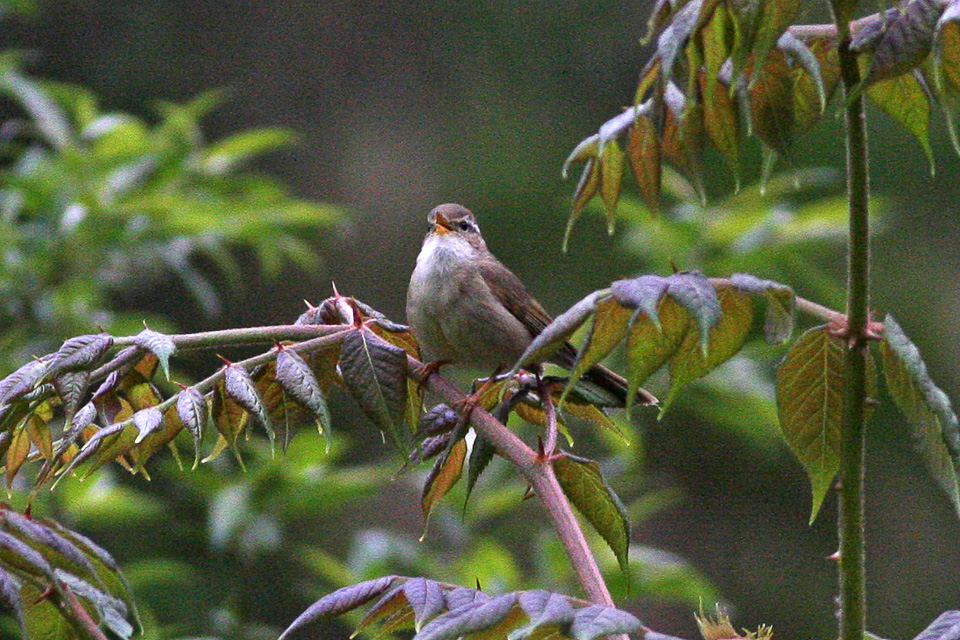
Pale-legged Leaf Warbler
Phylloscopus tenellipes
Order: Passeriformes / Family: Phylloscopidae

Wikimedia Commons
About the Pale-legged Leaf Warbler
The Pale-legged Leaf Warbler, scientifically named Phylloscopus tenellipes, plays a vital role in the ecosystems it inhabits, particularly in East Asia. This small passerine bird is a member of the family Phylloscopidae, which includes a variety of leaf warblers known for their insectivorous diet and active foraging behavior. The Pale-legged Leaf Warbler is especially significant due to its migratory patterns, which link various habitats across its range. During the breeding season, it occupies temperate forests in regions such as eastern Russia, northeastern China, and Korea. These areas provide the dense understory and rich insect life necessary for its survival and reproductive success. As the seasons change, the Pale-legged Leaf Warbler embarks on its southward journey to wintering grounds in Southeast Asia, including countries like Thailand, Vietnam, and the Philippines. This migration plays a crucial ecological role, contributing to seed dispersal and insect population control across different regions. The warbler's presence is a reliable indicator of healthy forest ecosystems, and it assists in maintaining the balance within these habitats. In addition, its seasonal behaviors, such as migration and breeding, are intricately tied to the climatic and environmental changes in its range. Understanding the Pale-legged Leaf Warbler's ecological role helps conservationists devise strategies to protect its habitats, ensuring the survival of this important species and the myriad organisms that depend on its ecological contributions.
The Pale-legged Leaf Warbler belongs to the family Phylloscopidae, within the order Passeriformes. These birds typically live average 4-6 years, with a maximum recorded of 8 years..
How to Identify a Pale-legged Leaf Warbler
Identifying the Pale-legged Leaf Warbler involves noting several key features. Adults exhibit a subtle yet distinct coloration, with olive-green upperparts and whitish underparts. The pale legs, which give the bird its common name, contrast with its relatively drab plumage. The species also displays a prominent white supercilium, or eyebrow stripe, which aids in distinguishing it from similar species. Juveniles resemble adults but may appear slightly duller with less defined markings. Unlike many bird species, the Pale-legged Leaf Warbler shows little sexual dimorphism, meaning males and females look alike in the field. This lack of significant difference can make sexing the bird challenging without close observation or in-hand examination. Among similar species, the Sakhalin Leaf Warbler (Phylloscopus borealoides) is often confused with the Pale-legged Leaf Warbler. However, subtle differences in vocalizations and habitat preference help separate these species. In flight, the Pale-legged Leaf Warbler presents a typical warbler silhouette: small and agile, with rapid wingbeats and a tendency to stay close to vegetation. When perched, its posture is upright, often flicking its wings and tail, a behavior common among the Phylloscopidae family.
Having trouble telling birds apart? Upload a photo to our bird identification tool for an instant species match.
Pale-legged Leaf Warbler Habitat and Range
Preferred Habitat
The Pale-legged Leaf Warbler inhabits a variety of forested environments, primarily favoring dense understory in temperate deciduous and mixed forests. During the breeding season, it prefers the cooler climates of northeastern Asia, including the taiga and temperate zones of eastern Russia, northeastern China, and the Korean Peninsula. These habitats provide ample insect prey and cover for nesting and rearing young. As a migratory bird, the Pale-legged Leaf Warbler undergoes habitat shifts, moving to subtropical and tropical evergreen forests during winter. In Southeast Asia, it occupies lowland forests as well as montane regions up to 2,000 meters. While primarily a forest dweller, it occasionally ventures into more open areas and forest edges during migration. Urban presence is minimal, although it may be found in suburban parks with adequate tree cover.
Geographic Range
The Pale-legged Leaf Warbler breeds across a wide range in northeastern Asia, with key breeding areas located in eastern Russia, particularly along the Siberian taiga, northeastern China, and the Korean Peninsula. Its wintering range extends into Southeast Asia, covering countries such as Thailand, Vietnam, Laos, and the Philippines. During migration, the warbler utilizes a variety of corridors, passing through China, Japan, and occasionally Taiwan. This species exhibits a typical migratory pattern, where northern populations move southward following the onset of colder weather. Within its range, the Pale-legged Leaf Warbler is relatively widespread, though population densities can vary based on habitat quality and availability. Certain areas, such as the forests of northeast China, serve as crucial stopover sites, supporting large numbers during migration. The bird's presence in these regions highlights the importance of preserving migratory pathways and suitable habitats throughout its range.
Want to know which birds visit your area? Browse our backyard birds by location guides for region-specific species lists.
What Does the Pale-legged Leaf Warbler Eat?
The Pale-legged Leaf Warbler primarily feeds on insects and other small arthropods, reflecting its role as an insectivore. Its diet consists of caterpillars, beetles, flies, and spiders, which it gleans from leaves and branches while foraging. During the breeding season, the warbler intensifies its feeding activity to meet the nutritional demands of raising young, often focusing on high-protein prey like caterpillars. As the seasons change and it migrates to wintering grounds, its diet may diversify to include a greater variety of insects, depending on local availability. The warbler employs a dynamic foraging technique, actively moving through foliage, hopping between branches, and occasionally hovering to capture prey. This behavior ensures it exploits different microhabitats within its environment, maximizing its feeding efficiency. Although primarily diurnal, the Pale-legged Leaf Warbler is most active during the early morning and late afternoon, synchronizing its feeding schedule with peak insect activity.
Pale-legged Leaf Warbler Behavior and Social Structure
The Pale-legged Leaf Warbler exhibits distinctive behaviors that are crucial for its survival and reproduction. Socially, it tends to be solitary or found in pairs during the breeding season, reflecting its territorial nature. Males establish and defend territories through song and displays, often engaging in aggressive encounters with intruders. During migration and in wintering areas, the warbler may join mixed-species flocks, which can enhance foraging efficiency and provide increased protection from predators. Courtship involves a series of vocalizations and displays, with males singing persistently to attract females and establish pair bonds. The warbler's response to predators is characterized by rapid, agile movements through dense foliage, utilizing its environment for cover. It may also issue alarm calls to alert others of potential threats. Daily, the Pale-legged Leaf Warbler follows a pattern of activity that peaks during the cooler hours of morning and late afternoon, aligning with the availability of insect prey.
Pale-legged Leaf Warbler Nesting and Reproduction
The nesting habits of the Pale-legged Leaf Warbler involve building a cup-shaped nest, typically located on or near the ground within dense vegetation. Nest materials include grasses, leaves, and moss, providing camouflage and insulation. The choice of nest site is influenced by the availability of thick undergrowth, which offers protection from predators and harsh weather. A typical clutch consists of 4-5 eggs, with the female primarily responsible for incubation over a period of approximately 12-14 days. Both parents participate in feeding the nestlings, which fledge after about 10-12 days. Parental care continues for several weeks post-fledging, as young birds learn to forage and become independent. The Pale-legged Leaf Warbler typically raises one brood per year, though favorable conditions may allow for a second. Nesting success is closely tied to habitat quality and the availability of insect prey, emphasizing the importance of conserving suitable breeding environments.
Pale-legged Leaf Warbler Sounds and Vocalizations
The Pale-legged Leaf Warbler's primary song is a series of high-pitched, melodious notes delivered in a rhythmic sequence. The song, often described as a 'tinkling' or 'sibilant' trill, is reminiscent of the sound of small bells and serves to establish territory and attract mates. In addition to its song, the warbler produces a variety of call notes, including soft 'chip' or 'tsip' sounds used in communication between mates or to signal alarm. Alarm calls are sharper and more insistent, alerting nearby individuals to potential threats. During the dawn chorus, the Pale-legged Leaf Warbler is notably vocal, contributing to the rich soundscape of its habitat. Its vocalizations, while distinct, may sometimes be confused with those of other Phylloscopidae species, necessitating careful listening and familiarity for accurate identification.
Interesting Facts About the Pale-legged Leaf Warbler
- 1The Pale-legged Leaf Warbler can travel thousands of kilometers during its migration, linking ecosystems across continents.
- 2Despite its small size, the Pale-legged Leaf Warbler plays a crucial role in controlling insect populations in its habitats.
- 3The warbler's pale legs are a unique identifying feature, distinguishing it from many similar-looking leaf warblers.
- 4During migration, the Pale-legged Leaf Warbler can form mixed flocks with other warbler species, enhancing its foraging success.
- 5The warbler's song is often one of the first signs of its presence in dense forests, making it easier to detect than to see.
- 6Pale-legged Leaf Warblers show a remarkable adaptability to different forest types, from temperate to tropical regions.
- 7The species' scientific name, Phylloscopus tenellipes, reflects its leaf-searching behavior and delicate leg structure.
Pale-legged Leaf Warbler Conservation Status
The Pale-legged Leaf Warbler is currently classified as Least Concern by the IUCN, with stable population trends across most of its range. Despite this status, the species faces threats from habitat loss due to deforestation and land conversion, particularly in its breeding and wintering areas. Conservation efforts focus on preserving critical habitats, including breeding territories in northeastern Asia and wintering grounds in Southeast Asia. These efforts are supported by international cooperation, given the warbler's migratory nature. Historical population changes have been relatively minor, with fluctuations often linked to environmental factors and habitat availability. Continued monitoring and habitat protection remain essential to ensure the long-term survival of the Pale-legged Leaf Warbler and the broader biodiversity it supports.