
Pallas's Leaf Warbler
Phylloscopus proregulus
Order: Passeriformes / Family: Phylloscopidae

Wikimedia Commons
About the Pallas's Leaf Warbler
The Pallas's Leaf Warbler, Phylloscopus proregulus, is a fascinating avian species within the family Phylloscopidae. This small songbird, renowned for its agility and vibrant plumage, plays a crucial role in the ecosystem as an insectivore, controlling pest populations. The bird inhabits temperate forests across Eurasia, with a preference for coniferous woodlands. During the breeding season, its presence is most notable in regions such as Siberia, Mongolia, and northeastern China. These warblers migrate to southern Asia, including India, Southeast Asia, and southern China, to overwinter in more temperate climates. Due to their extensive range, Pallas's Leaf Warblers contribute to biodiversity in multiple ecosystems, particularly in forested areas where they help maintain the balance of insect populations. The species exhibits remarkable adaptability, thriving in various forest types and elevations, which underscores its ecological significance. Their seasonal migration is a spectacle, with thousands moving across continents, underscoring their role in the natural phenomenon of bird migration. As insectivores, they play a pivotal role in controlling forest insect populations, thus contributing to the health and maintenance of their habitats.
The Pallas's Leaf Warbler belongs to the family Phylloscopidae, within the order Passeriformes. These birds typically live typically 2-5 years, with some individuals living up to 7 years..
How to Identify a Pallas's Leaf Warbler
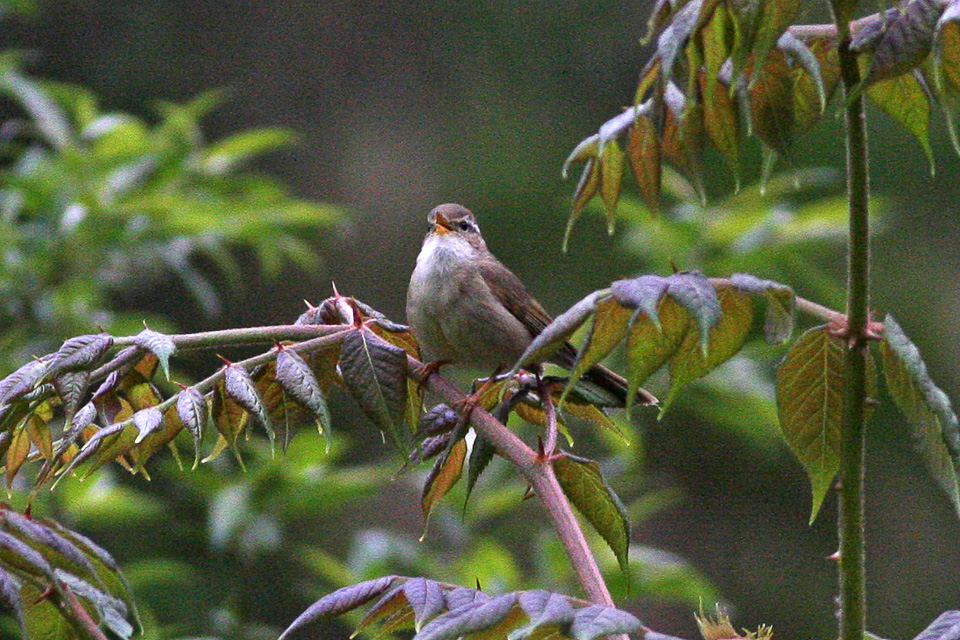
Pallas's Leaf Warbler is a small passerine, measuring approximately 9-10 cm in length, with a wingspan of about 17-20 cm. It is characterized by its bright green upperparts and contrasting yellowish underparts. One of its most distinguishing features is the yellow rump, a key field mark that helps differentiate it from similar species. The bird also exhibits a bold white wing bar and a conspicuous pale central crown stripe, adding to its distinct appearance. Juveniles resemble adults but are generally duller in plumage. There is minimal sexual dimorphism, with males and females looking alike in the field. In flight, the warbler presents a compact silhouette with rapid, fluttering wingbeats. When perching, it often adopts an upright posture, showcasing its vibrant plumage. Its small size and energetic movements can lead to confusion with other leaf warblers, but its unique combination of yellow rump and wing bar aids in accurate identification.
Having trouble telling birds apart? Upload a photo to our bird identification tool for an instant species match.
Pallas's Leaf Warbler Habitat and Range
Preferred Habitat
Pallas's Leaf Warbler inhabits a variety of forest types, primarily favoring coniferous woodlands. It thrives at elevations ranging from lowland forests up to 3,000 meters in mountainous regions. During the breeding season, it is commonly found in the dense taiga forests of Siberia and Mongolia. In winter, it descends to lower altitudes, occupying subtropical and tropical forests across southern Asia. Although primarily a forest bird, it occasionally ventures into urban parks and gardens during migration, demonstrating some adaptability to human-altered landscapes. However, its preference remains with woodlands that offer dense foliage for foraging and nesting.
Geographic Range
The breeding range of Pallas's Leaf Warbler spans the vast taiga forests of Siberia, extending into northeastern China and parts of Mongolia. As a migratory species, it undertakes long journeys to wintering grounds across southern Asia, including the Indian subcontinent, Southeast Asia, and southern China. Migration corridors often follow major geographical features such as mountain ranges and river valleys. During migration, they can appear in unexpected locations far from their usual routes, indicating their adaptability and the challenges of migratory navigation. Population density is highest in mature forests where insect prey is abundant.
Want to know which birds visit your area? Browse our backyard birds by location guides for region-specific species lists.
What Does the Pallas's Leaf Warbler Eat?
Pallas's Leaf Warbler primarily feeds on insects and other small invertebrates. Its diet consists of caterpillars, aphids, and spiders, which it skillfully gleans from the foliage. During the breeding season, when insect abundance peaks, the warbler's foraging becomes particularly intense. In winter, its diet may diversify slightly to include small fruits and seeds, providing necessary energy for survival during leaner months. The bird exhibits an energetic foraging behavior, often seen flitting through branches and foliage, catching prey with quick, precise movements. Its small size allows it to explore narrow niches in the tree canopy where larger birds cannot reach.
Pallas's Leaf Warbler Behavior and Social Structure
Pallas's Leaf Warbler exhibits solitary and territorial behavior during the breeding season, with males establishing and defending territories through song and displays. Courtship involves elaborate flight displays and vocalizations to attract mates. Outside the breeding season, the warbler becomes more social, often joining mixed-species foraging flocks. This behavior increases feeding efficiency and offers protection from predators. The bird's daily activity peaks during dawn and dusk, coinciding with insect activity. In response to predators, it relies on its agile flight and cryptic plumage to evade detection. The species is highly vocal, using an array of calls and songs to communicate and maintain social bonds within flocks.
Pallas's Leaf Warbler Nesting and Reproduction
The Pallas's Leaf Warbler constructs a neat, cup-shaped nest made from grass, moss, and lichen, typically located in a dense thicket or low shrub, close to the ground. This low nesting habit offers protection from harsh weather and predators. The female lays a clutch of 4-6 eggs, which she incubates for about 11-13 days. Both parents participate in feeding the chicks, which fledge approximately 12-14 days post-hatching. The species typically raises one brood per year, with the timing synchronized to the peak availability of insect prey to ensure the highest survival rate for the offspring.
Pallas's Leaf Warbler Sounds and Vocalizations
The primary song of Pallas's Leaf Warbler is a high-pitched, rapid series of whistles and trills, often described as sounding like a sewing machine. This intricate song serves both territorial and mate attraction purposes. Its call notes are short, sharp 'tsip' sounds, used for communication among individuals, especially within foraging flocks. Alarm calls are more urgent and harsh, alerting others to potential threats. During the dawn chorus, the warbler's song is particularly prominent, as males assert their presence and defend territories in the early light.
Interesting Facts About the Pallas's Leaf Warbler
- 1Despite its small size, Pallas's Leaf Warbler undertakes migratory journeys spanning thousands of kilometers across Asia.
- 2Named after German naturalist Peter Simon Pallas, the warbler's scientific name reflects its regal presence, 'proregulus' meaning 'before the king'.
- 3The warbler's vibrant plumage and distinct yellow rump make it a sought-after species for birdwatchers across its range.
- 4Pallas's Leaf Warbler was once considered conspecific with the similar-looking Yellow-browed Warbler, but is now recognized as a separate species.
- 5During migration, the warbler often travels in mixed-species flocks, increasing its survival chances through cooperative foraging efforts.
- 6Its song, reminiscent of a sewing machine, is a key identifier for birders trying to locate this elusive, fast-moving species.
- 7Pallas's Leaf Warbler contributes significantly to controlling insect populations in its habitat, showcasing the ecological importance of small songbirds.
Pallas's Leaf Warbler Conservation Status
Pallas's Leaf Warbler currently holds a status of Least Concern according to the IUCN, with stable population trends across its range. The species faces threats from habitat loss due to deforestation and climate change, which could impact its breeding and wintering habitats. Conservation efforts focus on protecting and managing forest habitats to ensure sustainable populations. Historically, the bird has shown resilience to environmental changes, but continuous monitoring is essential to detect any shifts in population dynamics that may require intervention.
Other Phylloscopidae Species



Birds Similar to the Pallas's Leaf Warbler
These species are often confused with the Pallas's Leaf Warbler due to similar appearance or overlapping range.
