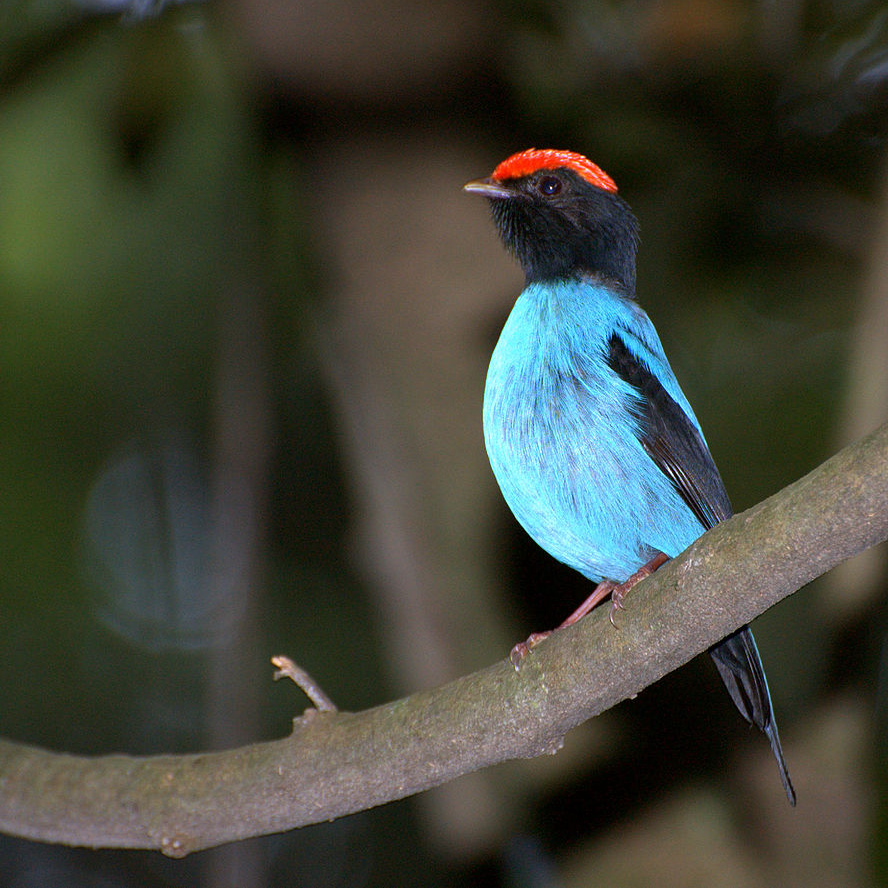
Pipra australis
Pipra australis
Order: Passeriformes / Family: Pipridae
About the Pipra australis
The Pipra australis, commonly known as the Southern Manakin, belongs to the family Pipridae and is a small, vividly colored bird native to South America. This species is particularly noted for its vibrant red plumage, a feature that is predominantly seen in the males and serves a vital role in their elaborate courtship displays. Southern Manakins play an essential ecological role as pollinators and seed dispersers, thus contributing significantly to the maintenance of their rainforest habitats.The Southern Manakin primarily inhabits the tropical rainforests of the Amazon Basin, including regions in Brazil, Bolivia, Peru, and northern Paraguay. Within these diverse ecosystems, they are often found in the understory and mid-story layers, where the dense foliage provides cover and ample food resources. This bird is a resident species and does not typically engage in long-distance migrations, although some altitudinal movements may occur in response to seasonal variations in food availability. The ecological significance of Pipra australis extends beyond its visual appeal. As frugivores, these birds play a crucial role in forest regeneration through seed dispersal. By consuming fruits and subsequently excreting seeds at different locations, they facilitate plant diversity and forest health. Additionally, their presence indicates a healthy ecosystem, as they rely on intact habitats with a rich variety of fruiting plants, which in turn support other wildlife species.Throughout the year, the Southern Manakin's behavior varies, reflecting the changing seasons and related environmental cues. During the breeding season, males engage in complex courtship displays to attract females, showcasing their brilliant plumage and acrobatic abilities. Outside of the breeding season, these birds become less conspicuous, forming small, loose groups as they forage for food. Their adaptability to various forested environments underscores their resilience, yet habitat destruction poses a significant threat to their populations.
The Pipra australis belongs to the family Pipridae, within the order Passeriformes. These birds typically live approximately 5-8 years, with some individuals reaching up to 10 years..
How to Identify a Pipra australis
Identifying the Pipra australis in the field involves noting its striking coloration and distinctive behaviors. Adult males of the species display a vivid red plumage covering the head, neck, and upper body, contrasting sharply with their black wings and tail. The females and juveniles, while less vibrant, are not without charm, exhibiting a more subdued olive-green coloration that provides effective camouflage within the dense forest canopy. The sexual dimorphism in this species is pronounced, allowing for easy differentiation between the sexes in the field. Compared to similar species, such as other manakins, the Southern Manakin's bright red and black plumage is a reliable distinguishing feature. However, keen observers should note that juveniles and females may be confused with other olive-toned forest birds. In flight, the Pipra australis presents a compact silhouette with rapid, short-winged flapping, typical of many manakin species. When perched, they often adopt an upright posture, displaying their vivid plumage to best effect, particularly during the breeding season when males engage in their striking courtship displays.
Having trouble telling birds apart? Upload a photo to our bird identification tool for an instant species match.
Pipra australis Habitat and Range
Preferred Habitat
The Southern Manakin thrives in the tropical rainforests of South America, with a preference for the dense, humid environments of the Amazon Basin. Here, they occupy the forest understory and mid-story, where the vegetation provides both cover and abundant feeding opportunities. These birds are typically found at elevations ranging from sea level to approximately 1200 meters, although they are most common in lowland areas. Habitat shifts may occur seasonally, with some altitudinal movements in response to changes in fruit availability. While primarily associated with pristine forest habitats, Pipra australis can occasionally be found in secondary growth forests and edge habitats, provided that these areas offer sufficient food resources and cover. Their presence in urban environments is rare, as they generally avoid heavily disturbed areas.
Geographic Range
Pipra australis is primarily distributed across the vast Amazon Basin, with its range encompassing parts of Brazil, Bolivia, Peru, and northern Paraguay. This species is largely sedentary, with no significant migratory movements, although some local altitudinal shifts may occur in response to seasonal changes in food availability. The Southern Manakin is most commonly encountered in regions with high densities of fruiting plants, particularly in undisturbed rainforest areas. Within its range, population densities can vary significantly, with hotspots often occurring in areas that provide optimal nesting and feeding conditions. While the species is considered widespread within its range, habitat destruction and fragmentation have led to localized declines, particularly in regions experiencing rapid deforestation.
Want to know which birds visit your area? Browse our backyard birds by location guides for region-specific species lists.
What Does the Pipra australis Eat?
The diet of the Southern Manakin is primarily frugivorous, consisting mainly of a variety of small fruits and berries. These birds play a key role in their ecosystem as seed dispersers, with their foraging habits facilitating the spread of numerous plant species. Their diet may also include insects and other small invertebrates, particularly during the breeding season when protein requirements increase. The Pipra australis employs a variety of foraging techniques, often gleaning fruit from branches or catching insects in mid-air with agile maneuvers. These birds typically feed alone or in small groups, with peak feeding activity observed during the early morning and late afternoon when temperatures are cooler.
Pipra australis Behavior and Social Structure
Southern Manakins exhibit fascinating social and solitary behaviors that are closely tied to their breeding and feeding habits. During the breeding season, males engage in elaborate courtship displays, which are a defining characteristic of the species. These displays involve intricate dances and acrobatics, with males showcasing their vivid plumage to attract females. Each male typically occupies a display territory, which they defend vigorously against rivals.Outside of the breeding season, Pipra australis adopts a more subdued lifestyle, often forming small, loose groups as they forage for food. Their social structure is relatively fluid, with individuals joining and leaving groups based on food availability and other environmental factors. In terms of daily activity, Southern Manakins are primarily diurnal, with peak activity during the cooler parts of the day. They display a range of vocalizations, with calls used for communication within groups and during courtship displays. When faced with predators, these birds rely on their agility and the dense forest canopy for protection, often retreating rapidly into cover.
Pipra australis Nesting and Reproduction
Pipra australis nests are simple yet effective, typically constructed from a mix of plant fibers, leaves, and other available materials. These nests are often situated in the fork of a tree branch, providing stability and protection from predators. The female is primarily responsible for nest construction and maintenance, while the male focuses on courtship and territorial defense. A typical clutch consists of two eggs, which the female incubates alone for approximately 16-18 days. After hatching, the chicks remain in the nest for around 15-20 days before fledging. During this time, the female provides the majority of care, although both parents may share feeding responsibilities. The Southern Manakin typically raises one brood per year, although favorable conditions may allow for a second brood.
Pipra australis Sounds and Vocalizations
The Southern Manakin's vocalizations are a key aspect of its behavior, particularly during the breeding season. Their primary song consists of a series of high-pitched, melodious notes delivered in rapid succession. This song serves to attract females and establish territory boundaries. In addition to their song, Pipra australis produces a variety of call notes, including soft churrs and sharp whistles used for communication within social groups. Alarm calls are less frequent but are characterized by a rapid, staccato series of notes, alerting others to potential threats. During the dawn chorus, the Southern Manakin's song adds to the rich tapestry of sounds that fills the rainforest, contributing to the overall acoustic environment.
Interesting Facts About the Pipra australis
- 1The Southern Manakin's courtship dance involves rapid wing beats and acrobatic leaps, earning it the nickname 'forest dancer.'
- 2Males of Pipra australis spend up to 90% of their time during the breeding season performing displays to attract females.
- 3Despite their vivid appearance, Southern Manakins are surprisingly elusive, often remaining hidden in dense foliage.
- 4The Pipra australis can consume up to 50% of its body weight in fruit each day, playing a crucial role in seed dispersal.
- 5Unlike many bird species, the female Southern Manakin takes sole responsibility for building the nest and incubating eggs.
- 6Southern Manakins often form mixed-species flocks with other frugivores, enhancing foraging efficiency and protection.
- 7Their primary song, a melodious sequence of notes, can be heard echoing through the forest, especially at dawn.
Pipra australis Conservation Status
As of the latest assessments, Pipra australis is listed as a species of Least Concern by the IUCN. While their population trend appears stable, ongoing deforestation and habitat fragmentation in the Amazon Basin pose significant threats. Conservation efforts focus on protecting large tracts of primary rainforest and promoting sustainable land-use practices. Historically, the Southern Manakin has maintained healthy population levels due to the vastness of its range and adaptability to various forested environments. However, continued habitat destruction could lead to future declines, emphasizing the need for ongoing conservation initiatives.