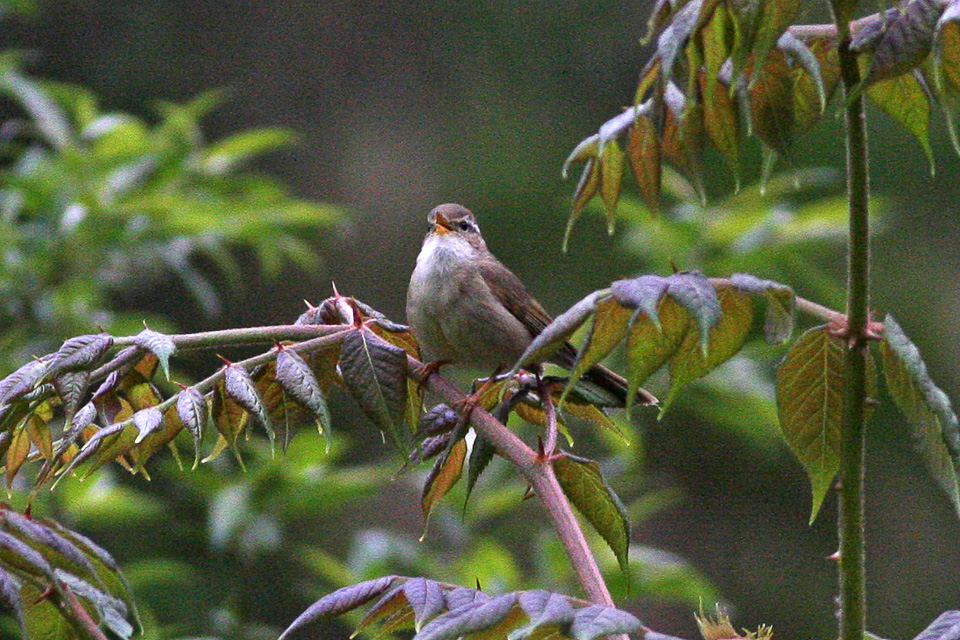
Plain Leaf Warbler
Phylloscopus neglectus
Order: Passeriformes / Family: Phylloscopidae

Wikimedia Commons
About the Plain Leaf Warbler
The Plain Leaf Warbler, scientifically known as Phylloscopus neglectus, is a small songbird renowned for its unassuming appearance and distinctive ecological niche. Despite its muted plumage, this warbler plays a vital role in the ecosystems it inhabits, primarily across Central Asia. The species thrives in montane and subtropical regions, with a preference for scrubby areas and wooded valleys. In countries like Afghanistan, Pakistan, and parts of India, the Plain Leaf Warbler is a common sight, especially during the breeding season. Its presence is significant in these regions as it aids in insect population control, thus contributing to the ecological balance. During the breeding season, which occurs from April through July, the warbler can be found in altitudinal ranges between 2,000 to 3,500 meters. It adapts to various habitats, often seen flitting through shrubs and trees in search of insects and their larvae. This behavior highlights its importance as a pest controller in natural settings. As autumn approaches, the Plain Leaf Warbler undertakes altitudinal migrations, descending to lower valleys for the winter months. This seasonal shift underscores the species' adaptability and resilience in the face of changing environmental conditions. Throughout its range, the Plain Leaf Warbler's ability to survive in diverse habitats, from dry scrublands to lush woodlands, demonstrates its ecological flexibility. Its role extends beyond pest control; the warbler also serves as a prey species for larger birds, thus contributing to the food web. Observers note that the Plain Leaf Warbler's presence often indicates the health of its habitat, a testament to its ecological significance. Its role as both a consumer and a target within the ecosystem ensures that it remains an integral part of the natural landscape in its native regions.
The Plain Leaf Warbler belongs to the family Phylloscopidae, within the order Passeriformes. These birds typically live average 4-6 years, with longevity records up to 8 years.
How to Identify a Plain Leaf Warbler
Identifying the Plain Leaf Warbler involves observing its subtle yet distinct field marks. The adult plumage is predominantly olive-brown, with a slightly paler underbelly. Its lack of bright colors makes it blend seamlessly into its surroundings, particularly within the foliage it inhabits. A key identification feature is its constant wing-flicking motion, a behavior that distinguishes it from similar species. The Plain Leaf Warbler's bill is slender and pointed, well-suited for catching insects. In terms of sexual dimorphism, males and females exhibit similar plumage, making them difficult to distinguish in the field. Juveniles resemble adults but tend to have fresher, more vibrant feathering. This warbler can often be confused with other Phylloscopus species, such as the Common Chiffchaff. However, the Plain Leaf Warbler's smaller size, distinct wing-flicking, and slightly different vocalizations assist in its identification. In flight, the warbler's silhouette is characterized by rapid wing beats and agile maneuvers, often darting through branches as it forages. When perched, it maintains an alert posture, with a tendency to flick its wings intermittently, a behavior that is both a feeding strategy and a means of signaling to conspecifics.
Having trouble telling birds apart? Upload a photo to our bird identification tool for an instant species match.
Plain Leaf Warbler Habitat and Range
Preferred Habitat
The Plain Leaf Warbler inhabits a variety of environments, with a particular affinity for montane and submontane regions. It frequently occupies scrublands, wooded valleys, and areas with abundant underbrush. In the breeding season, it is predominantly found at elevations ranging from 2,000 to 3,500 meters, favoring habitats that provide dense foliage for nesting and foraging. During winter, the warbler descends to lower elevations, often inhabiting riverine woodlands and cultivated lands. Despite its preference for rugged, natural landscapes, the Plain Leaf Warbler occasionally ventures into more urbanized areas, particularly in regions where natural habitats overlap with human settlements. Its presence in these transitional zones showcases its adaptability to different environments. However, the species maintains a strong preference for native vegetation, relying on the structural complexity and insect abundance these habitats provide.
Geographic Range
The Plain Leaf Warbler's range extends across several countries in Central Asia, including Afghanistan, Pakistan, India, and parts of Iran and Turkmenistan. During the breeding season, the species is concentrated in montane regions, with a notable presence in the Himalayan foothills and the Pamir Mountains. As the seasons change, the warbler migrates to lower elevations, indicating a partial altitudinal migration pattern rather than long-distance travel. These lower regions, often in valleys and plains, become temporary homes during the colder months. Although the Plain Leaf Warbler is not known for extensive geographical migration, its movement patterns within its range are essential for survival, allowing it to exploit different ecological niches throughout the year. Population density is typically higher in areas where suitable habitats overlap, such as montane forests and riverine woodlands.
Want to know which birds visit your area? Browse our backyard birds by location guides for region-specific species lists.
What Does the Plain Leaf Warbler Eat?
The Plain Leaf Warbler primarily consumes insects, making it an insectivore that plays a crucial role in controlling pest populations. Its diet consists mainly of small insects such as caterpillars, aphids, and beetles, which it gleans from foliage and bark. During the breeding season, the warbler's dietary needs intensify, requiring higher protein intake to support reproduction and chick rearing. The warbler forages by actively moving through vegetation, employing its slender bill to probe leaves and branches. It often feeds alone or in small groups, methodically searching for prey from dawn until dusk. Seasonal diet changes are minimal, but the warbler may consume more insect larvae during certain times of the year when they are more abundant. Prey size typically ranges from tiny aphids to larger caterpillars, allowing the warbler to adapt its foraging techniques to the available food supply.
Plain Leaf Warbler Behavior and Social Structure
The Plain Leaf Warbler exhibits a range of behaviors that reflect its adaptability and ecological niche. It is primarily a solitary bird outside the breeding season, although it may form loose associations with other small insectivorous birds during foraging. Territorial during breeding, the male establishes and defends a territory through song and displays, ensuring exclusive access to resources for its mate and offspring. Courtship involves a series of vocalizations and subtle displays, often culminating in the male presenting food to the female as part of the bonding process. The warbler's response to predators includes remaining still and silent to avoid detection, although it may also engage in mobbing behavior if threatened. Daily activity patterns are diurnal, with peak foraging occurring in the early morning and late afternoon. The warbler's flight is characterized by rapid, darting movements, reflecting its agile nature.
Plain Leaf Warbler Nesting and Reproduction
Nesting for the Plain Leaf Warbler involves constructing a cup-shaped nest, typically placed within dense shrubbery or low tree branches. The nest is meticulously built using grass, moss, and spider webs, providing a well-camouflaged and secure environment for the eggs. Clutch size ranges from three to five eggs, with an incubation period of approximately 14 days. Both parents share the responsibility of incubation and feeding the chicks, highlighting a cooperative breeding effort. Fledging occurs about 12 to 14 days after hatching, with the young remaining dependent on the parents for several weeks thereafter. The Plain Leaf Warbler may produce two broods per year, particularly in regions with extended breeding seasons. This reproductive strategy ensures the continuation of the species despite environmental pressures.
Plain Leaf Warbler Sounds and Vocalizations
The Plain Leaf Warbler's song is a series of short, sweet notes delivered in quick succession, often described as a soft, high-pitched trill. This song serves multiple purposes, including mate attraction and territory defense. Call notes are sharp and concise, used primarily for communication between mates or as alarms. In the presence of predators, the warbler may emit a series of quick, high-pitched notes to alert others. During the dawn chorus, the warbler's song blends into a symphony of avian voices, though its distinct rhythm and pitch help it stand out. Compared to other Phylloscopus species, the Plain Leaf Warbler's vocalizations are relatively subdued, yet they remain an integral part of its behavioral repertoire.
Interesting Facts About the Plain Leaf Warbler
- 1The Plain Leaf Warbler's subtle plumage helps it avoid predators by blending into the foliage it inhabits.
- 2Unlike many warblers, the Plain Leaf Warbler often remains at higher altitudes throughout the breeding season.
- 3During courtship, the male Plain Leaf Warbler presents food to the female as part of their bonding ritual.
- 4The wing-flicking behavior of the Plain Leaf Warbler is a distinctive trait that aids in insect foraging.
- 5Despite its name, the Plain Leaf Warbler's song is a melodious series of notes that serves vital communicative functions.
- 6The species shows a remarkable ability to adapt to various elevations, from montane regions to lower valleys.
- 7The Plain Leaf Warbler plays an important role in controlling insect populations, making it an essential component of its ecosystem.
Plain Leaf Warbler Conservation Status
Currently, the Plain Leaf Warbler is listed as Least Concern by the IUCN, indicating a stable population trend. However, habitat destruction due to human activities poses a significant threat to its continued stability. Deforestation and urban expansion reduce available habitats, particularly in breeding and wintering areas. Conservation efforts focus on habitat preservation and restoration, ensuring that the warbler's ecological requirements are met. Historical population changes have seen fluctuations depending on habitat availability and climatic conditions, but overall, the species remains relatively widespread in its native range. Continued monitoring and conservation action are necessary to prevent potential declines.