
Rüppell's Warbler
Sylvia ruppeli
Order: Passeriformes / Family: Sylviidae

Wikimedia Commons
About the Rüppell's Warbler
Rüppell's Warbler, Sylvia ruppeli, is a captivating songbird found primarily in the Mediterranean region. This species belongs to the family Sylviidae and is renowned for its melodic song and distinctive plumage. The bird is named after the German naturalist Eduard Rüppell, who made significant contributions to the study of African wildlife. Rüppell's Warbler is particularly known for its distinctive black throat, which stands out against its gray upperparts and white underparts. This warbler fills an important ecological niche in the Mediterranean scrublands and coastal regions, where it plays a crucial role in insect control by preying on a variety of small arthropods. The bird's adaptability to different habitats, including scrub, maquis, and open woodlands, makes it an important player in these ecosystems. During breeding season, Rüppell's Warblers are highly territorial, often found in dense shrubbery or low trees, where they build their nests. Their breeding range extends across the eastern Mediterranean, including parts of Greece, Turkey, and the Balkans, where they are often observed singing from prominent perches to establish territory and attract mates. As migratory birds, they travel to the northeastern parts of Africa to overwinter, utilizing a range of habitats from coastal dunes to semi-arid regions. The Rüppell's Warbler's adaptability to various environments, along with its melodious song, makes it a favorite among birdwatchers visiting the Mediterranean. Ornithologists value these warblers for their contributions to controlling insect populations and as indicators of ecosystem health, particularly in areas prone to habitat degradation due to human activity. As a species, they offer valuable insights into the effects of climate change on migratory patterns, as shifts in temperature and precipitation can alter their breeding and wintering grounds. Understanding the movements and behaviors of Rüppell's Warblers can help conservationists develop strategies to protect these birds and their habitats.
The Rüppell's Warbler belongs to the family Sylviidae, within the order Passeriformes. These birds typically live average 4-7 years with a max recorded of 10 years..
How to Identify a Rüppell's Warbler
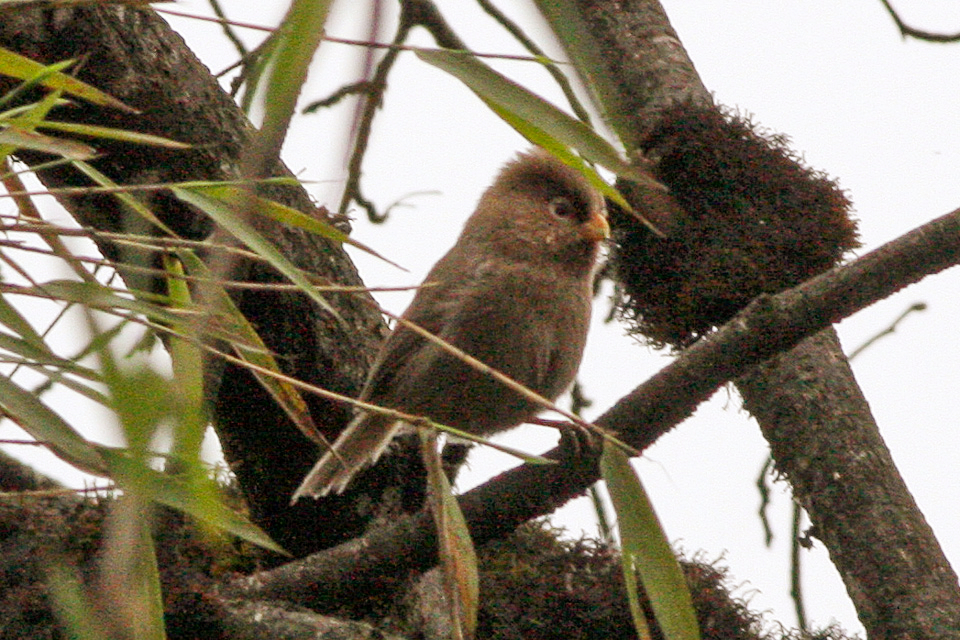
The Rüppell's Warbler is a small songbird, measuring about 13-14 cm in length with a wingspan of 17-20 cm. Adult males are easily recognized by their striking black throat patch bordered by white, which contrasts with their gray upperparts and pale underparts. The females and juveniles, however, display a more subdued coloration, with a less distinct throat patch and browner overall plumage, which helps blend in with their surroundings. Despite these differences, the general shape and size of the bird remain consistent across sexes and ages. In flight, Rüppell's Warbler exhibits a characteristic undulating pattern, with rapid wingbeats followed by short glides. When perched, they often hold their body upright, showcasing their white-edged tails. A potential source of confusion in the field is with the Sardinian Warbler, which shares a similar habitat and size. However, the Rüppell's Warbler can be distinguished by its darker throat and brighter white underparts. Another similar species is the Subalpine Warbler, but it lacks the distinctive black throat patch of the Rüppell's Warbler. Observers should also note the bird's behavior, as Rüppell's Warbler often flicks its tail while foraging, a useful identification trait.
Having trouble telling birds apart? Upload a photo to our bird identification tool for an instant species match.
Rüppell's Warbler Habitat and Range
Preferred Habitat
Rüppell's Warbler primarily inhabits Mediterranean-type scrublands, known as maquis, which feature dense, thorny bushes and scattered small trees. These areas offer the perfect mix of cover and open spaces for foraging and nesting. They are also frequently found in coastal regions, where they utilize low shrubbery for nesting and protection. During the breeding season, Rüppell's Warblers prefer elevations up to 1,500 meters, though they may venture higher or lower depending on habitat availability. In the non-breeding season, they migrate to North Africa, where they occupy semi-arid regions and coastal dunes. This seasonal habitat shift illustrates their adaptability to different ecological conditions, including urban fringes where natural vegetation persists. Despite their adaptability, Rüppell's Warblers are generally absent from heavily urbanized environments, preferring areas where native vegetation remains intact.
Geographic Range
Rüppell's Warbler breeds primarily in the eastern Mediterranean, with a range that includes southern Greece, the Aegean islands, parts of Turkey, and the southern Balkans. During the breeding season, they are often found in dense shrublands and coastal areas conducive to their nesting habits. As migratory birds, they embark on long journeys to wintering grounds in northeastern Africa, including Egypt, Libya, and Sudan. Migration corridors often involve passage through the Middle East, where they rest and refuel in suitable habitats. Population densities tend to be higher in regions with extensive maquis and coastal scrub, such as the Greek islands of Lesvos and Rhodes, where the habitat is well-preserved. These areas serve as breeding hotspots and are crucial for maintaining population stability, especially given the challenges posed by habitat fragmentation and changes in land use. Conservation efforts focus on preserving these key habitats to support the species' migratory and breeding needs.
Want to know which birds visit your area? Browse our backyard birds by location guides for region-specific species lists.
What Does the Rüppell's Warbler Eat?
Rüppell's Warbler primarily feeds on insects, playing a significant role in controlling pest populations in their habitats. Their diet includes a variety of small arthropods, such as beetles, caterpillars, and spiders. During the breeding season, their feeding activity peaks, as they require additional energy to sustain themselves and their chicks. They forage actively among shrubs and low vegetation, using a combination of gleaning and sallying techniques to capture prey. Seasonal diet changes occur as they migrate, with warblers taking advantage of local prey availability. In wintering grounds, they may also consume small quantities of seeds and berries, especially when insect prey is less abundant. Rüppell's Warbler's feeding schedule is typically diurnal, with peak activity in the morning and late afternoon, coinciding with the highest availability of insects and cooler temperatures.
Rüppell's Warbler Behavior and Social Structure
Rüppell's Warbler exhibits a range of intriguing behaviors, particularly during the breeding season when males become highly territorial. They defend their territories aggressively, often engaging in vocal displays and chasing away intruders. Courtship involves elaborate displays, where males sing from prominent perches to attract females and establish dominance. Pair bonding is strong, and once formed, pairs remain together for the breeding season. Outside of the breeding season, these warblers are more solitary or found in loose flocks during migration. Their daily activity pattern is predominantly diurnal, with peak activity during the cooler parts of the day. In response to predators, Rüppell's Warblers rely on dense vegetation for cover, often launching into short flights to escape threats. Their alertness and quick flight response are critical survival traits, especially in regions with high predator density.
Rüppell's Warbler Nesting and Reproduction
Rüppell's Warbler constructs a cup-shaped nest, typically positioned low in dense shrubs or small trees, providing concealment from predators. Nests are made from grasses, twigs, and lined with finer materials like hair or feathers. The preferred nest location is within dense maquis scrub, where the birds can easily access foraging areas while maintaining security for their eggs and chicks. The typical clutch size ranges from 3 to 5 eggs, with an incubation period of about 12-14 days. Both parents share incubation duties, although the female does most of the brooding. After hatching, the chicks fledge in approximately 12-14 days, during which both parents are actively involved in feeding and protecting the young. Rüppell's Warblers may raise one to two broods per year, depending on environmental conditions and food availability.
Rüppell's Warbler Sounds and Vocalizations
Rüppell's Warbler is known for its rich and varied song, characterized by a series of rapid, melodious warbles and trills. The primary song is lively and delivered from prominent perches during the breeding season, serving both to attract mates and deter rivals. In addition to their song, these warblers produce a series of sharp call notes, often used to maintain contact with their mate or signal alarm. The alarm call is a sharp 'chack,' which is repeated rapidly when a predator is nearby. During the dawn chorus, males are particularly vocal, filling their territories with continuous singing. The song of Rüppell's Warbler is sometimes compared to that of the Sardinian Warbler but is distinguished by its faster tempo and more varied phrases.
Interesting Facts About the Rüppell's Warbler
- 1Rüppell's Warbler is named after Eduard Rüppell, a 19th-century German naturalist who explored Africa extensively.
- 2Despite their migratory nature, some Rüppell's Warblers can travel over 3,000 kilometers between breeding and wintering grounds.
- 3Rüppell's Warblers have a relatively short incubation period, with eggs hatching after just 12-14 days.
- 4The species' song is often heard at dawn, contributing significantly to the Mediterranean dawn chorus.
- 5Rüppell's Warblers play an essential role in pest control, as their diet primarily consists of insects.
- 6Their populations are stable, but habitat conservation remains crucial due to localized threats.
- 7Rüppell's Warbler's black throat patch is a distinguishing feature among Mediterranean warblers.
Rüppell's Warbler Conservation Status
Rüppell's Warbler is currently listed as a species of Least Concern on the IUCN Red List, with populations generally stable across its range. However, localized threats, such as habitat destruction and fragmentation due to agricultural expansion and urban development, pose challenges to certain populations. Conservation efforts focus on preserving critical breeding and migratory habitats, particularly in regions where human activity threatens natural ecosystems. Though historical population trends have been relatively stable, ongoing monitoring is essential to ensure that emerging threats do not lead to significant declines. International cooperation is crucial, given the bird's migratory nature, to protect habitats across multiple countries.
Other Sylviidae Species



Birds Similar to the Rüppell's Warbler
These species are often confused with the Rüppell's Warbler due to similar appearance or overlapping range.

