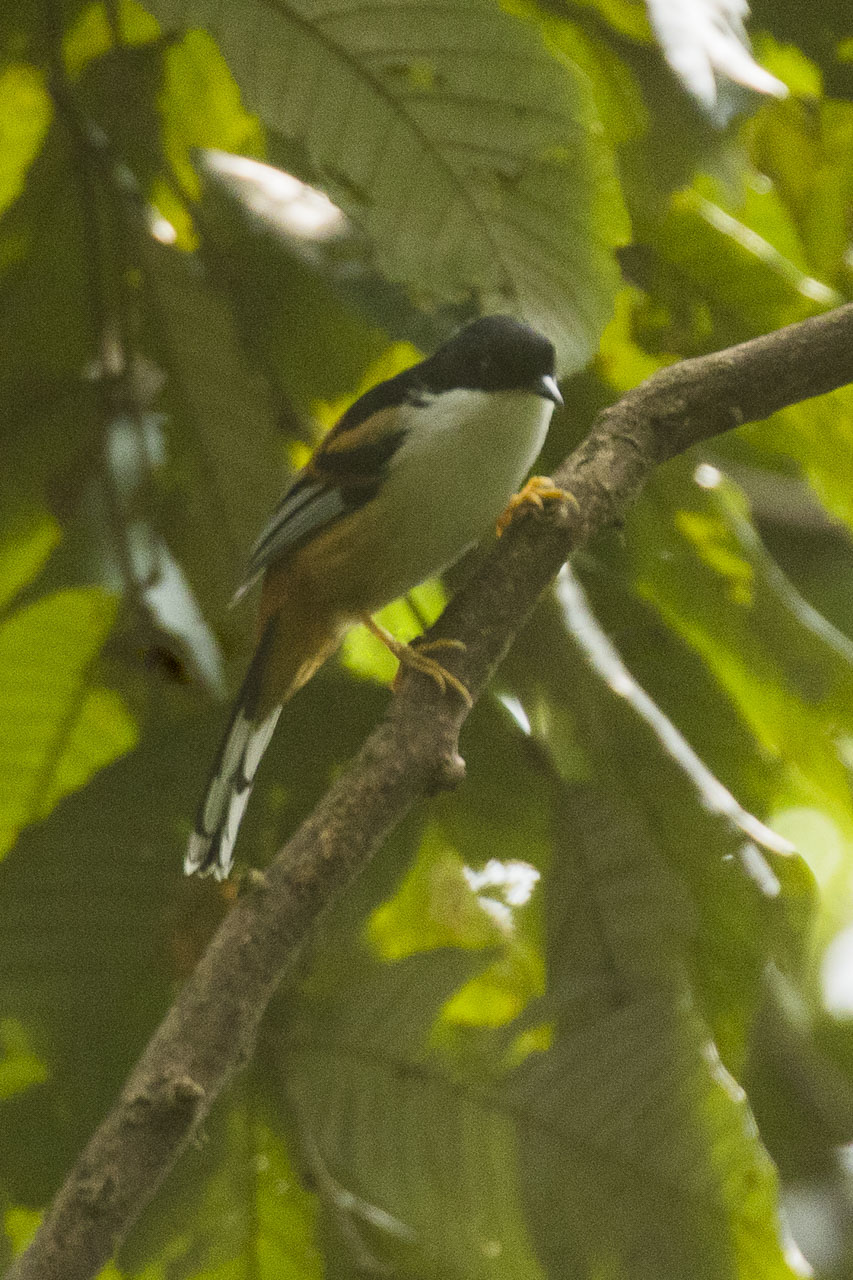
Red-tailed Minla
Minla ignotincta
Order: Passeriformes / Family: Leiothrichidae

Wikimedia Commons
About the Red-tailed Minla
The Red-tailed Minla (Minla ignotincta) is a small, visually captivating bird belonging to the family Leiothrichidae. With a distribution primarily across the subtropical and temperate regions of the Himalayas, this bird can be found in countries like Bhutan, Nepal, and extending into parts of northern India and Myanmar. Typically inhabiting montane forests, the Red-tailed Minla thrives in areas rich with dense undergrowth and bamboo thickets, which provide essential cover and foraging opportunities. This species plays a vital role in its ecosystem, contributing to insect population control and participating in seed dispersal through its varied diet. During the breeding season, the Red-tailed Minla becomes particularly significant as it engages in complex courtship displays and calls that add to the acoustic landscape of its habitats. The bird's ecological role extends beyond its immediate environment as it influences the population dynamics of various insect species and plants that depend on avian interaction for seed distribution. Observations indicate that these birds exhibit seasonal altitudinal movements, often descending to lower elevations in response to colder weather, thus maintaining their presence across various habitats year-round. Such movements ensure their adaptability and survival in changing climatic conditions, further underscoring their ecological importance.
The Red-tailed Minla belongs to the family Leiothrichidae, within the order Passeriformes. These birds typically live usually 4-6 years, with some individuals living up to 7 years..
How to Identify a Red-tailed Minla
Adult Red-tailed Minlas display a stunning combination of red, gray, and olive-green plumage. Their most distinctive feature, the red tail, contrasts sharply with the olive-green back and gray crown. The underparts are paler, with a subtle yellowish tone toward the flanks. Males and females exhibit similar coloration, though males may appear slightly more vibrant. Juveniles resemble adults but tend to have duller colors, and their tail feathers may have less pronounced red hues. In the field, the Red-tailed Minla might be confused with other minlas or similar-sized babblers. However, the combination of a red tail and the specific color pattern on the wings and back sets it apart. In flight, the Red-tailed Minla exhibits a rapid, undulating pattern, which, along with its vibrant tail, aids in identification. When perching, these birds often display an erect posture, often flicking their tails as they survey their surroundings.
Having trouble telling birds apart? Upload a photo to our bird identification tool for an instant species match.
Red-tailed Minla Habitat and Range
Preferred Habitat
The Red-tailed Minla predominantly inhabits montane broadleaf forests, where it favors areas with dense undergrowth. These forests, often situated at elevations ranging from 1,500 to 3,000 meters, provide the ideal environment for nesting and foraging. In Bhutan and Nepal, it can be found in temperate rhododendron forests and bamboo thickets. Seasonal changes may lead the Red-tailed Minla to descend to lower elevations during colder months, where it can be found in subtropical forest edges and secondary growth areas. Although generally absent from urban environments, the bird occasionally ventures into rural gardens and orchards, especially when food resources are plentiful. Its preference for dense vegetation makes it more commonly found in forest interiors than open areas.
Geographic Range
The Red-tailed Minla's range spans the Himalayas, where it can be found from eastern Nepal through Bhutan and into northeastern India, including the states of Sikkim and Arunachal Pradesh. Its range extends further east into northern Myanmar and parts of southern China, particularly in the Yunnan province. This species is primarily resident, showing limited migratory behavior, although some populations do undertake altitudinal migrations. In areas such as the Darjeeling hills, the Red-tailed Minla is often found at higher elevations during the breeding season, descending in winter. Population densities are generally higher in regions where suitable montane forest habitats remain intact, with notable hotspots in protected forest areas in Nepal and Bhutan.
Want to know which birds visit your area? Browse our backyard birds by location guides for region-specific species lists.
What Does the Red-tailed Minla Eat?
The Red-tailed Minla's diet mainly comprises insects, including caterpillars, beetles, and other small arthropods. During the breeding season, the demand for high-protein food increases, and these birds actively forage for a variety of insects. Outside of the breeding season, their diet diversifies to include fruits and berries, which provide essential nutrients and energy. Foraging typically occurs in small, active flocks, often alongside other forest birds, in what is known as a mixed-species feeding flock. This behavior not only enhances their foraging efficiency but also offers protection against predators. The Red-tailed Minla is an agile feeder, often seen gleaning insects from foliage or darting to catch flying insects.
Red-tailed Minla Behavior and Social Structure
The Red-tailed Minla is a social bird, frequently observed in small flocks, especially outside the breeding season. These flocks often include other species, allowing for cooperative foraging and increased vigilance against predators. The bird exhibits territorial behavior during the breeding season, with pairs actively defending their chosen nesting sites. Courtship involves a series of visual displays and vocalizations, where males display their vibrant tail feathers to attract mates. Daily activities peak during the early morning and late afternoon, aligning with cooler temperatures and optimal foraging conditions. In response to predators, the Red-tailed Minla relies on its agility and flocking behavior, quickly retreating to dense cover.
Red-tailed Minla Nesting and Reproduction
The Red-tailed Minla builds cup-shaped nests using twigs, leaves, and moss, strategically placed in dense foliage or bamboo clusters. Nesting sites are carefully selected to reduce predation risk, often at heights ranging from 1 to 5 meters above the ground. A typical clutch consists of 3 to 4 eggs, which are incubated solely by the female for about 14 to 16 days. Both parents participate in feeding the chicks, which fledge approximately 12 to 14 days post-hatching. The species generally raises one brood per year, although favorable conditions may lead to a second brood.
Red-tailed Minla Sounds and Vocalizations
The primary song of the Red-tailed Minla is a melodious series of high-pitched whistles and trills, often delivered from a concealed perch within dense vegetation. The song serves to establish territory and attract mates during the breeding season. Call notes are softer, often used for communication within flocks, while alarm calls are sharper and more urgent, alerting others to potential threats. During the dawn chorus, their song contributes to the rich tapestry of sounds typical of montane forest habitats.
Interesting Facts About the Red-tailed Minla
- 1The Red-tailed Minla often participates in mixed-species flocks, enhancing its foraging success.
- 2Unlike many birds, both male and female Red-tailed Minlas share similar plumage, making sex identification challenging.
- 3Researchers have observed Red-tailed Minlas descending over 1,000 meters in elevation during seasonal movements.
- 4Their nests are often built in bamboo thickets, leveraging the dense cover for protection.
- 5The Red-tailed Minla's vibrant tail feathers play a crucial role in courtship displays, showcasing their health and vitality.
Red-tailed Minla Conservation Status
Currently listed as Least Concern by the IUCN, the Red-tailed Minla maintains a stable population across its range. However, habitat degradation due to deforestation and agricultural expansion poses a potential threat. Conservation efforts focus on preserving montane forest habitats and implementing sustainable land-use practices. Protected areas in regions like Nepal and Bhutan play a crucial role in maintaining viable populations. Monitoring programs continue to track population trends, aiming to ensure the species remains common and widespread.
Other Leiothrichidae Species

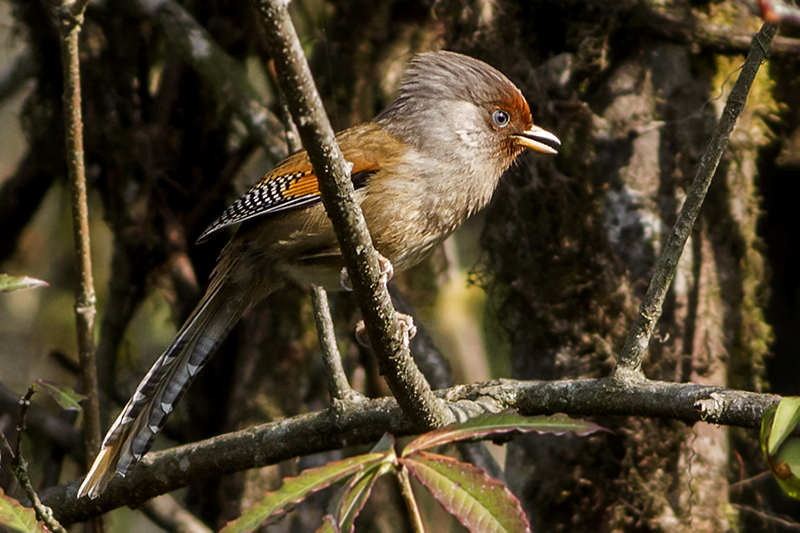

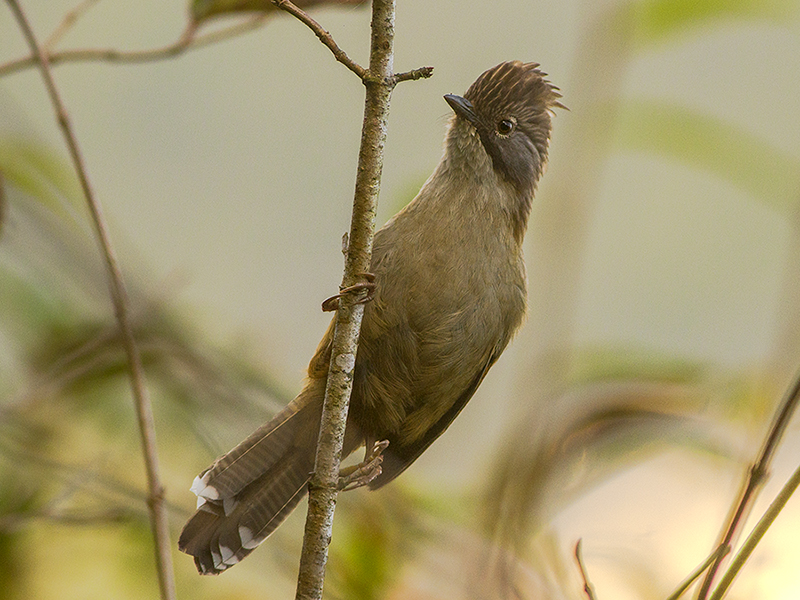
Birds Similar to the Red-tailed Minla
These species are often confused with the Red-tailed Minla due to similar appearance or overlapping range.