
Red-throated Swallow
Petrochelidon rufigula
Order: Passeriformes / Family: Hirundinidae
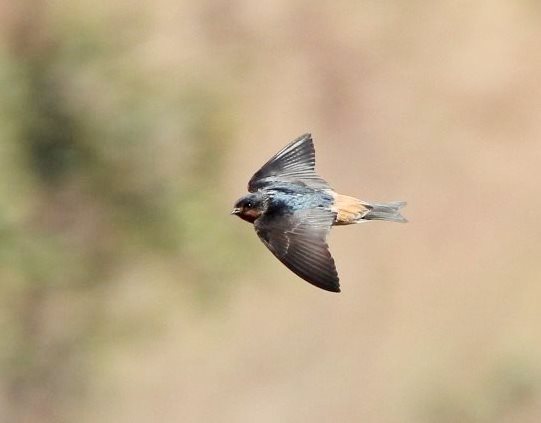
Wikimedia Commons
About the Red-throated Swallow
The Red-throated Swallow, scientifically known as Petrochelidon rufigula, is a captivating member of the Hirundinidae family. This small passerine bird is notable for its distinct red throat, which serves as a key identification feature. Native to sub-Saharan Africa, the Red-throated Swallow inhabits regions from West Africa to East Africa, showcasing a preference for open areas near water bodies. During breeding seasons, these swallows exhibit a fascinating behavior of constructing their nests from mud, often attaching them to human structures such as bridges and buildings. The ecological role of the Red-throated Swallow is significant, as it aids in insect population control through its diet primarily composed of flying insects. Their presence in various habitats, including savannas, wetlands, and agricultural areas, highlights their adaptability and importance in maintaining ecological balance. Seasonally, they may exhibit local movements in response to food availability, often gathering in large flocks during migration and non-breeding periods. This species plays an essential role in the ecosystems they inhabit by controlling insect populations, thus contributing to the health of their environment. The Red-throated Swallow's ability to thrive in both natural and human-modified landscapes demonstrates their resilience and adaptability, making them a species of interest for ornithologists and bird enthusiasts alike.
The Red-throated Swallow belongs to the family Hirundinidae, within the order Passeriformes. These birds typically live average 4-6 years, with some individuals living up to 8 years..
How to Identify a Red-throated Swallow
The Red-throated Swallow is a small bird, measuring approximately 13-15 cm in length, with a wingspan of around 30 cm. Adults display a striking red throat, which contrasts with their otherwise blue-black upperparts and white underparts. The crown and back exhibit a glossy blue sheen, while the tail is forked, aiding in their agile flight. Juveniles lack the vivid red throat, showing a more subdued coloration with a brownish tinge on the throat and breast. There is little sexual dimorphism in this species, with males and females appearing similar in plumage. Confusion with similar species such as the Barn Swallow can occur, but the Red-throated Swallow's distinctive throat coloration and shorter tail help differentiate them. In flight, they exhibit a streamlined silhouette, with rapid wingbeats and gliding interspersed with agile aerial maneuvers. When perched, they often sit on wires or branches, displaying their characteristic throat patch.
Having trouble telling birds apart? Upload a photo to our bird identification tool for an instant species match.
Red-throated Swallow Habitat and Range
Preferred Habitat
The Red-throated Swallow predominantly occupies open habitats near water, such as riverbanks, lakeshores, and wetlands. They are commonly found in savannas and agricultural landscapes, where they benefit from abundant insect prey. During different seasons, these swallows may shift their habitats slightly, staying close to areas that provide ample food resources. They are adaptable to both rural and urban environments, often nesting on human-made structures. Their elevation range is generally lowland areas, although they can be found at moderate altitudes where suitable conditions exist.
Geographic Range
The Red-throated Swallow's range extends across much of sub-Saharan Africa. They are resident breeders in regions from Senegal across to Ethiopia and south to Angola and Zambia. Their presence is notably dense in the eastern parts of Africa, including countries like Kenya and Tanzania. Migration patterns are not well-defined as they are largely non-migratory, though some populations may undertake local movements in response to changes in food availability. Population density hotspots include the Rift Valley and areas surrounding major waterways.
Want to know which birds visit your area? Browse our backyard birds by location guides for region-specific species lists.
What Does the Red-throated Swallow Eat?
The primary diet of the Red-throated Swallow consists of flying insects, such as flies, beetles, and moths. These swallows are adept aerial foragers, capturing prey mid-flight with precision. Their diet may vary seasonally, with a focus on abundant insect populations during breeding seasons to support their increased energy demands. The swallows often forage in open areas, sometimes joining mixed-species flocks to exploit food resources. Prey size is generally small to medium, aligning with their ability to capture and consume quickly while on the wing. They are most active during daylight hours, with peak feeding times occurring in the early morning and late afternoon.
Red-throated Swallow Behavior and Social Structure
Red-throated Swallows are social birds, often seen in pairs or small flocks. They exhibit territorial behavior during breeding seasons, defending nest sites from intruders. Courtship displays include aerial chases and vocalizations, with males showcasing their agility and plumage to attract mates. Outside of breeding seasons, they may form larger flocks, particularly during migration or in response to food availability. These swallows exhibit a strong response to potential predators, often mobbing intruders to protect their nests. Daily activity patterns involve periods of intense foraging interspersed with rest and preening, typically observed perched on wires or branches.
Red-throated Swallow Nesting and Reproduction
The Red-throated Swallow constructs flask-shaped nests using mud, often reinforced with grass or feathers. These nests are typically attached to vertical surfaces, including cliffs, bridges, and buildings. They prefer locations near water, which provide easy access to mud for nest construction. Clutch size ranges from 2 to 4 eggs, with both parents sharing incubation duties over a period of approximately 14 to 16 days. Fledging occurs about three weeks after hatching, with parental care continuing until the young swallows become independent. This species typically raises one or two broods per year, depending on environmental conditions.
Red-throated Swallow Sounds and Vocalizations
The primary song of the Red-throated Swallow is a series of rapid, twittering notes delivered in flight. The rhythm is brisk, with a cheerful and light quality that resonates across their open habitats. Call notes include sharp chips and chirps, used for communication within flocks and between mates. Alarm calls are more urgent, often triggering mobbing behavior against predators. During the dawn chorus, their song is a prominent feature, blending with the calls of other early risers. Their vocalizations are reminiscent of other swallows but possess a distinct tonal quality that aids in identification.
Interesting Facts About the Red-throated Swallow
- 1Red-throated Swallows construct their nests using over 1,000 individual mud pellets, showcasing their intricate building skills.
- 2The species can consume up to 1,000 insects per day during peak feeding times, playing a crucial role in insect population control.
- 3Red-throated Swallows are known to travel up to 50 km from their nests to forage, highlighting their extensive daily range.
- 4Their nests are often reused for multiple breeding seasons, sometimes by different pairs, reflecting their efficient use of resources.
- 5The Red-throated Swallow's flight speed can reach up to 30 km/h, allowing them to deftly navigate through aerial obstacles.
Red-throated Swallow Conservation Status
Currently, the Red-throated Swallow is classified as of Least Concern by the IUCN, with populations considered stable. Primary threats include habitat loss due to agricultural expansion and urbanization. However, their adaptability to modified landscapes mitigates some of these impacts. Conservation efforts focus on preserving wetland habitats and ensuring the availability of nesting sites. Historical data suggest that population levels have remained relatively constant, aided by their broad range and flexible habitat preferences.
Other Hirundinidae Species


Birds Similar to the Red-throated Swallow
These species are often confused with the Red-throated Swallow due to similar appearance or overlapping range.

