
Reed Parrotbill
Paradoxornis heudei
Order: Passeriformes / Family: Sylviidae

Wikimedia Commons
About the Reed Parrotbill
The Reed Parrotbill, Paradoxornis heudei, is a small passerine bird of significant interest due to its specialized habitat preferences and unique adaptive features. Found primarily in eastern Asia, this bird makes its home in the dense, often impenetrable reed beds that flourish in wetlands and marshy environments. Regions such as the Yangtze River basin in China and coastal areas of Korea provide the ideal conditions for the survival of this species. The Reed Parrotbill plays a crucial role in its ecosystem by contributing to the control of insect populations within these reed habitats. Its presence also assists in the seed dispersal of various plant species, promoting genetic diversity and ecosystem resilience.
The bird's significance extends beyond its ecological contributions. Culturally, it has been a subject of fascination and study among ornithologists and bird watchers alike. Its vibrant presence and complex behaviors add to the biological tapestry of the wetland areas it inhabits. The seasonal behaviors of the Reed Parrotbill are notably influenced by the availability of resources and climatic conditions. During the breeding season, it exhibits increased territoriality, often defending its nesting site vigorously against intruders. Outside of this period, it may display more social behavior, sometimes forming small flocks that forage together in search of food.
The Paradoxornis heudei's ecological role is further emphasized by its interaction with the surrounding flora and fauna. By foraging for insects and seeds, it aids in maintaining a balanced ecosystem. The bird's movements within the reeds help in aerating the soil and promoting healthy plant growth, which in turn supports a wide range of other species. As a bioindicator species, the Reed Parrotbill's presence or absence can signal changes in the health of the wetland environment, making it a valuable focus for conservation efforts.
The Reed Parrotbill belongs to the family Sylviidae, within the order Passeriformes. These birds typically live approximately 5-7 years in the wild..
How to Identify a Reed Parrotbill
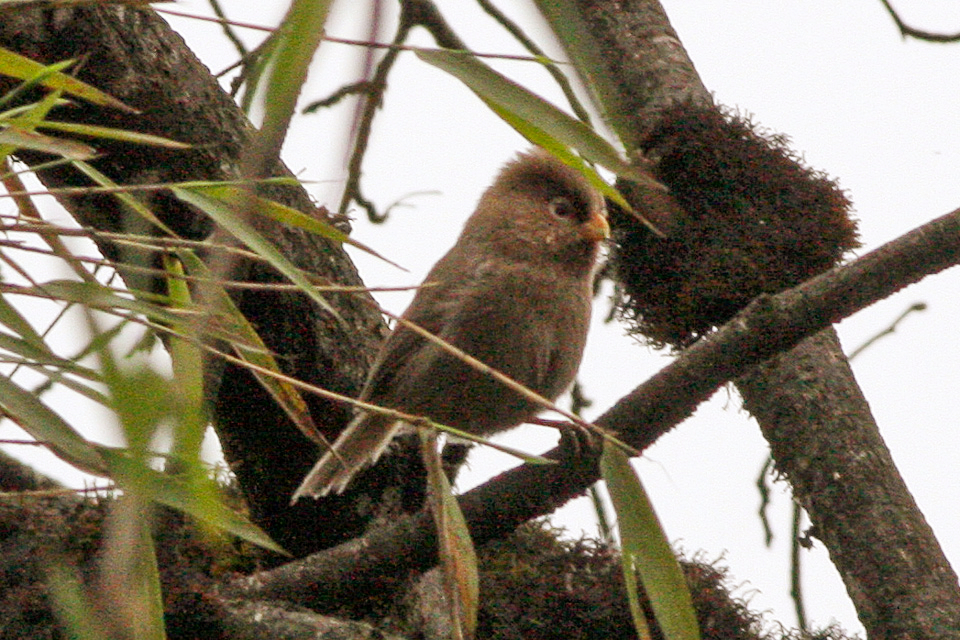
The Reed Parrotbill can be identified by its distinct plumage and form. Adult birds display a combination of warm brown and gray tones on their upperparts, with a lighter, more buff-colored underbelly. An unmistakable feature of this species is its large, robust bill, which is a pale pinkish or yellowish color and distinctly curved, adapted for extracting seeds from tough reeds and capturing insects.
Juvenile Reed Parrotbills resemble the adults but often have slightly duller plumage, lacking the full vibrancy of the mature birds. There is little sexual dimorphism between males and females, making them difficult to distinguish in the field based solely on appearance. However, the robust bill is consistently a key identifying trait across all ages and sexes.
In flight, the Reed Parrotbill exhibits a characteristic silhouette with broad wings and a relatively short tail. When perched, it often clings to vertical reeds, showing off its agility and balance. This posture can sometimes lead to confusion with other reed-dwelling species, such as the Bearded Reedling, but the parrotbill's distinctive bill size and shape provide a reliable identification marker.
Having trouble telling birds apart? Upload a photo to our bird identification tool for an instant species match.
Reed Parrotbill Habitat and Range
Preferred Habitat
The preferred habitat of the Reed Parrotbill is dense reed beds, often located in wetlands and marshes across eastern Asia. These habitats provide an abundance of food resources and suitable nesting sites. The bird typically resides at low elevations, aligning with the distribution of extensive reed beds near bodies of water such as lakes, rivers, and coastal marshes.
Seasonal shifts in habitat use are minimal due to the bird's reliance on reed beds, which remain a constant feature of its environment. While primarily associated with rural, natural areas, the Reed Parrotbill has occasionally been observed in more urban-like settings where suitable habitat patches exist. The species does not typically migrate, thus maintaining a year-round presence in these environments.
Geographic Range
The Reed Parrotbill's range is primarily concentrated in eastern Asia, where it breeds and resides year-round. Notable countries within its range include China, particularly in the Yangtze River basin, as well as parts of Korea. Within China, the species has been recorded in provinces such as Jiangsu and Zhejiang, where extensive reed beds provide optimal living conditions.
The Reed Parrotbill does not exhibit typical migratory behavior. Instead, its movements are more localized, often dictated by food availability rather than seasonal migration patterns. Population density hotspots include well-preserved wetland areas, where the bird can be found in higher concentrations due to the abundance of its preferred habitat.
Despite its relatively restricted range, the Reed Parrotbill's presence in these areas is significant, as it serves as an indicator of wetland health and biodiversity. Its stability in these regions underscores the importance of conservation efforts aimed at protecting these critical habitats from degradation and loss.
Want to know which birds visit your area? Browse our backyard birds by location guides for region-specific species lists.
What Does the Reed Parrotbill Eat?
The diet of the Reed Parrotbill primarily consists of insects and seeds, which it forages from its reed bed habitat. Insects, such as beetles and caterpillars, provide a rich source of protein, particularly during the breeding season when energy demands are high. The bird's large, curved bill is well-adapted for extracting seeds from the tough reeds that dominate its environment.
Seasonal variations in diet are evident, with a shift towards a higher intake of seeds during periods of reduced insect availability, such as in colder months. This adaptability in diet is a critical factor in the bird's ability to thrive in its specific habitat.
The Reed Parrotbill employs a methodical foraging technique, often seen clinging to vertical reed stems as it searches for food. It is a diurnal feeder, with peak activity observed in the early morning and late afternoon. The size of prey varies, but generally, it targets small to medium-sized insects and seeds, aligning with its physical capabilities.
Reed Parrotbill Behavior and Social Structure
The Reed Parrotbill exhibits a range of behaviors that are both intriguing and complex. Socially, it is known to form small flocks, particularly outside of the breeding season. These groups facilitate cooperative foraging and offer protection against predators. Territoriality becomes more pronounced during the breeding season, with individuals defending their nesting sites vigorously.
Courtship displays of the Reed Parrotbill are subtle but involve a combination of vocalizations and visual signals. Males may engage in singing to attract females and establish dominance over a territory. The bird's response to predators involves a mix of vocal alarm calls and rapid retreat into the dense reed beds that offer ample cover.
The daily activity pattern of the Reed Parrotbill is diurnal, with peak activity occurring during the cooler parts of the day. It spends considerable time foraging and maintaining its plumage. During rest periods, the bird often remains hidden within the reeds, minimizing exposure to potential threats.
Reed Parrotbill Nesting and Reproduction
Reed Parrotbills construct their nests within the dense reed beds they inhabit. The nest is typically a cup-shaped structure made from woven reeds, grasses, and other plant materials, providing a well-camouflaged and secure environment for the eggs and young.
Preferred nesting locations are usually low to the ground, suspended between upright reed stems. The clutch size generally ranges from three to five eggs, which are incubated primarily by the female. The incubation period lasts approximately 12-14 days, after which the chicks hatch.
Both parents participate in feeding the young, which fledge after about 16-18 days. The Reed Parrotbill may produce one or two broods per year, depending on environmental conditions and food availability. Parental roles are fairly balanced, with both adults contributing to the care and protection of the offspring.
Reed Parrotbill Sounds and Vocalizations
The primary song of the Reed Parrotbill is a simple, melodic series of whistles that can be described as clear and sweet. This song serves both to attract mates and establish territory. The pitch is moderate, and the rhythm is steady, providing a pleasant auditory experience.
Call notes are more abrupt and can serve as contact calls between individuals or as alarm signals when a predator is nearby. These calls are sharp and carry well across the dense reed environments, ensuring that other birds within the flock remain alert to potential dangers.
The Reed Parrotbill participates in a dawn chorus, with singing most vigorous in the early morning. This behavior is typical of many passerines and serves to reinforce territorial boundaries while fostering social bonds within the flock.
Interesting Facts About the Reed Parrotbill
- 1The Reed Parrotbill's large, curved bill is specifically adapted to manipulate and extract seeds from tough reed stems, setting it apart from many other passerines.
- 2Despite its small size, the Reed Parrotbill is known for its strong territorial instincts, particularly during the breeding season when it fiercely defends its nesting site.
- 3This bird is a year-round resident in its range and does not migrate, making it a consistent presence in the reed beds of eastern Asia.
- 4Reed Parrotbills have a unique foraging behavior, often clinging vertically to reeds, which facilitates the capture of insects and seeds.
- 5The Reed Parrotbill plays a crucial role in its ecosystem as a bioindicator species, its presence or absence reflecting the health of wetland environments.
- 6During the breeding season, the Reed Parrotbill's song becomes more frequent and is used to attract mates and establish territory boundaries.
- 7Their nests are expertly woven from reeds and grasses, demonstrating a high degree of skill in constructing secure, camouflaged homes.
Reed Parrotbill Conservation Status
The IUCN currently lists the Reed Parrotbill as a species of Least Concern, with populations considered stable across its range. However, ongoing threats such as habitat loss due to wetland drainage and reed bed destruction pose significant risks. Conservation efforts focus on preserving wetland habitats and maintaining the ecological integrity of areas where the Reed Parrotbill resides. Historically, population changes have been closely tied to the availability and quality of its habitat. Efforts to protect and restore wetland areas are crucial in ensuring the long-term survival of this species. Additionally, research and monitoring programs help track population trends and inform conservation strategies.
Other Sylviidae Species



Birds Similar to the Reed Parrotbill
These species are often confused with the Reed Parrotbill due to similar appearance or overlapping range.
