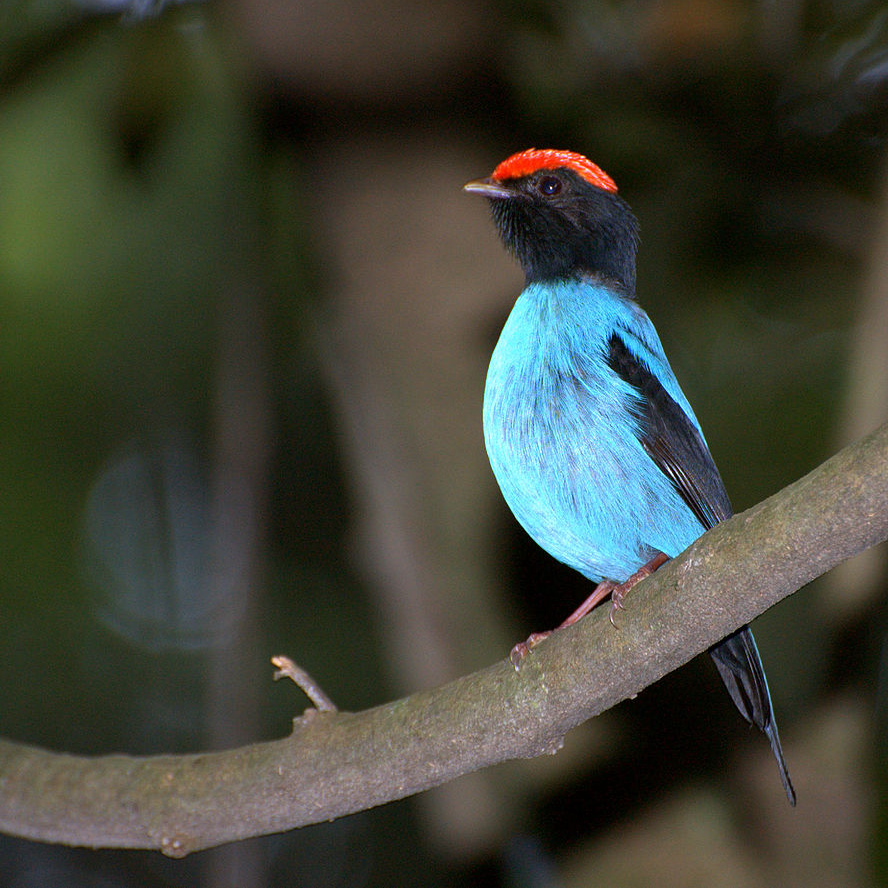
Serra do Mar Tyrant-Manakin
Neopelma chrysolophum
Order: Passeriformes / Family: Pipridae

Wikimedia Commons
About the Serra do Mar Tyrant-Manakin
The Serra do Mar Tyrant-Manakin, Neopelma chrysolophum, is a small yet captivating songbird native to the verdant forests of eastern Brazil. This bird is primarily found within the Serra do Mar mountain range, which stretches along the Atlantic coast. These forests provide a lush, humid environment that is ideal for the Serra do Mar Tyrant-Manakin, which thrives in the dense canopy and understory. The bird plays a crucial role in its ecosystem, acting as both a seed disperser and an insect predator, thereby contributing to the health and balance of the forest. The species is particularly significant in maintaining the biodiversity of its habitat, as it aids in the control of insect populations and the propagation of various plant species through its foraging activities. As a predominantly sedentary bird, the Serra do Mar Tyrant-Manakin exhibits limited seasonal movement, generally remaining within its established territories throughout the year. However, it may undertake local movements in response to food availability or climatic changes. The bird is most active during the early morning and late afternoon, taking advantage of cooler temperatures and lower competition for resources. During the breeding season, which aligns with the wet season between September and February, the male Serra do Mar Tyrant-Manakin becomes more visible and vocal, engaging in elaborate displays intended to attract a mate. These displays are characterized by a series of acrobatic flights and calls, showcasing the male's vigor and fitness. The Serra do Mar Tyrant-Manakin's presence within its habitat underscores the intricate web of interactions that sustain the forest's ecological integrity. As a species endemic to a specific geographic region, it serves as an important indicator of environmental health. Conservation efforts aimed at preserving the Serra do Mar's unique biodiversity must consider the specific needs and behaviors of this and other resident species.
The Serra do Mar Tyrant-Manakin belongs to the family Pipridae, within the order Passeriformes. These birds typically live typically around 5 years in the wild..
How to Identify a Serra do Mar Tyrant-Manakin
The Serra do Mar Tyrant-Manakin is a small, compact bird, measuring approximately 12 cm in length. Its most distinctive feature is the bright yellow crest that adorns the top of its head, a trait more pronounced in males. The back and wings are olive-green, providing effective camouflage within the forest canopy. The underparts are paler, with a whitish belly that contrasts subtly with the upper body. Juvenile birds resemble adults but with a less vibrant yellow crest and more subdued overall coloration, which aids in blending into their environment as they mature. Males and females are similar in appearance, though females tend to have a slightly less vivid crest. In flight, the Serra do Mar Tyrant-Manakin exhibits a swift, direct flight pattern with rapid wingbeats, characteristic of many small passerines. When perched, it often sits upright, with its crest prominently displayed, especially during territorial or courtship displays. Confusion could arise with the Swallow-tailed Manakin, another species found in overlapping ranges, but the latter's distinctive tail and blue-black plumage set it apart.
Having trouble telling birds apart? Upload a photo to our bird identification tool for an instant species match.
Serra do Mar Tyrant-Manakin Habitat and Range
Preferred Habitat
The Serra do Mar Tyrant-Manakin inhabits the humid, subtropical forests of the Serra do Mar mountain range, predominantly found at elevations ranging from 600 to 1800 meters. These forests, characterized by dense vegetation and a multi-layered canopy, offer ample shelter and foraging opportunities. The bird prefers areas with thick understory and abundant leaf litter, where it can forage for insects and other small prey. Seasonal habitat shifts are minimal, as the species is largely sedentary. However, minor movements may occur in response to changes in food availability, especially during the breeding season. While the bird's presence in urban areas is rare, it may occasionally be found in forest fragments within or near cities, provided adequate cover and food resources are available.
Geographic Range
The Serra do Mar Tyrant-Manakin's range is limited to the Atlantic Forest biome of southeastern Brazil, particularly within the states of São Paulo, Rio de Janeiro, and Paraná. This area is a biodiversity hotspot, housing numerous endemic species. The bird is non-migratory, residing year-round in its established territory within the Serra do Mar mountain range. While population densities vary, the species is most commonly found in well-preserved forest areas with minimal human disturbance. The bird does not undertake long-distance migrations, instead relying on the rich resources of its native habitat to sustain it throughout the year.
Want to know which birds visit your area? Browse our backyard birds by location guides for region-specific species lists.
What Does the Serra do Mar Tyrant-Manakin Eat?
The Serra do Mar Tyrant-Manakin primarily feeds on insects and other small arthropods, which it gleans from foliage in the dense forest understory. Its diet includes a variety of insect orders such as Coleoptera and Lepidoptera, as well as spiders and other invertebrates. During the wet season, when insect abundance is at its peak, the bird's diet becomes more diverse, incorporating a wider range of prey. The bird employs a sit-and-wait foraging strategy, often perching quietly before sallying forth to capture prey. It may also engage in brief aerial pursuits to snatch insects mid-flight. Fruit consumption is occasional, mostly involving small berries and seeds, contributing to seed dispersal within its habitat. Feeding activity peaks during the cooler hours of dawn and dusk, aligning with the periods of highest prey availability.
Serra do Mar Tyrant-Manakin Behavior and Social Structure
The Serra do Mar Tyrant-Manakin exhibits solitary behavior outside of the breeding season, although it may occasionally join mixed-species foraging flocks to exploit abundant food sources. Territoriality is pronounced during the breeding season, with males vigorously defending their territories through song and visual displays. Courtship involves intricate aerial displays, where the male showcases his agility and the vibrant yellow crest to attract potential mates. These displays are accompanied by vocalizations that serve to establish dominance and allure females. Flocking is uncommon, as the species typically forages alone or in pairs. In response to predators, the bird relies on its cryptic plumage and swift flight to escape detection. Daily activity follows a bimodal pattern, with peaks in the early morning and late afternoon, corresponding to periods of optimal foraging conditions.
Serra do Mar Tyrant-Manakin Nesting and Reproduction
The Serra do Mar Tyrant-Manakin builds its nest in dense vegetation, often selecting sites within the understory or lower canopy. The nest is a small, cup-shaped structure constructed from twigs, leaves, and moss, bound together with spider silk. Females typically lay a clutch of two eggs, which are incubated for approximately 16-18 days. Both parents participate in feeding the chicks, which fledge about 18-20 days after hatching. The species often raises one or two broods per year, depending on environmental conditions and food availability. Parental care is extensive, with both adults sharing responsibilities such as feeding and protecting the young from predators.
Serra do Mar Tyrant-Manakin Sounds and Vocalizations
The primary song of the Serra do Mar Tyrant-Manakin consists of a series of high-pitched, melodious notes delivered in rapid succession. The rhythm is lively, with a clear and ringing quality that carries well through the dense forest. Call notes are simpler, typically comprising short, sharp 'chip' sounds used for communication between mates or to signal alarm. During the dawn chorus, the bird's song is particularly prominent, contributing to the rich acoustic tapestry of the forest. Alarm calls are more abrupt and harsh, serving to alert conspecifics to the presence of potential threats.
Interesting Facts About the Serra do Mar Tyrant-Manakin
- 1The Serra do Mar Tyrant-Manakin's yellow crest is not only for display; it also helps in camouflage among sunlit foliage.
- 2Unlike many manakins, the Serra do Mar Tyrant-Manakin does not perform lekking displays, preferring solitary courtship.
- 3This bird's diet shift towards more fruit during the rainy season aids in seed dispersal across its habitat.
- 4The Serra do Mar Tyrant-Manakin can be elusive, often heard before seen, due to its preference for dense forest cover.
- 5The species' habitat within the Atlantic Forest is one of the most biodiverse and endangered ecosystems on the planet.
Serra do Mar Tyrant-Manakin Conservation Status
The Serra do Mar Tyrant-Manakin is currently classified as Near Threatened by the IUCN due to habitat loss and fragmentation. The Atlantic Forest, home to this species, has experienced significant deforestation for agriculture and urban development. Despite these pressures, the population trend is considered stable in some well-protected areas, thanks to conservation efforts. These efforts include the establishment of protected reserves and reforestation projects aimed at restoring degraded habitats. Historical population data are limited, but continued monitoring and habitat preservation are crucial to ensure the species' survival.